
When the Pump Became the Protest
Today, protests over fuel prices are unfolding in cities and towns across multiple continents, driven by a global energy crunch now well into its seventh month. Oil prices have climbed back above $100 a barrel following renewed U.S. strikes on Iranian oil tankers and reignited fighting in Yemen threatening shipping through the Bab al-Mandab Strait. For millions of people far from the front lines of that conflict, the war has arrived instead at the gas pump — and patience, in more than a few countries, has run out.
A Crisis With No Single Address
The disruption traces back to the closure of the Strait of Hormuz, through which more than 20% of the world's oil trade normally passes, combined with attacks on energy infrastructure across Iran and several Gulf states. In Syria, the government's decision to raise diesel prices by roughly 40%, to 175 Syrian pounds (about $1.43) per liter, and gas prices by more than 25%, set off demonstrations that turned confrontational: protesters in the country's east burned tires, blockaded the Hasaka-Deir ez-Zor highway, and stopped oil tankers outright, with further unrest reported in Aleppo. In the Philippines, trade unions and student groups have staged protests for months, folding fuel costs into a broader anger over the cost of living. "We might not have been hit by bombs," one union leader said earlier this year, "but we are being hit by poverty and hunger because of the rise in oil prices."
Wealthier nations haven't been spared, even if the impact lands differently. American households are facing elevated gas prices at the pump alongside forecasts that winter heating oil costs could climb as much as 30% this year. In Ireland, where fuel taxes already make up more than half the price at the pump, diesel prices have risen roughly 28% and petrol about 25% since the war began, prompting the country's own organized fuel protests. Across every one of these countries, the specific grievances differ, but the throughline is the same: a war being fought thousands of miles away, arriving as a monthly bill that keeps climbing.
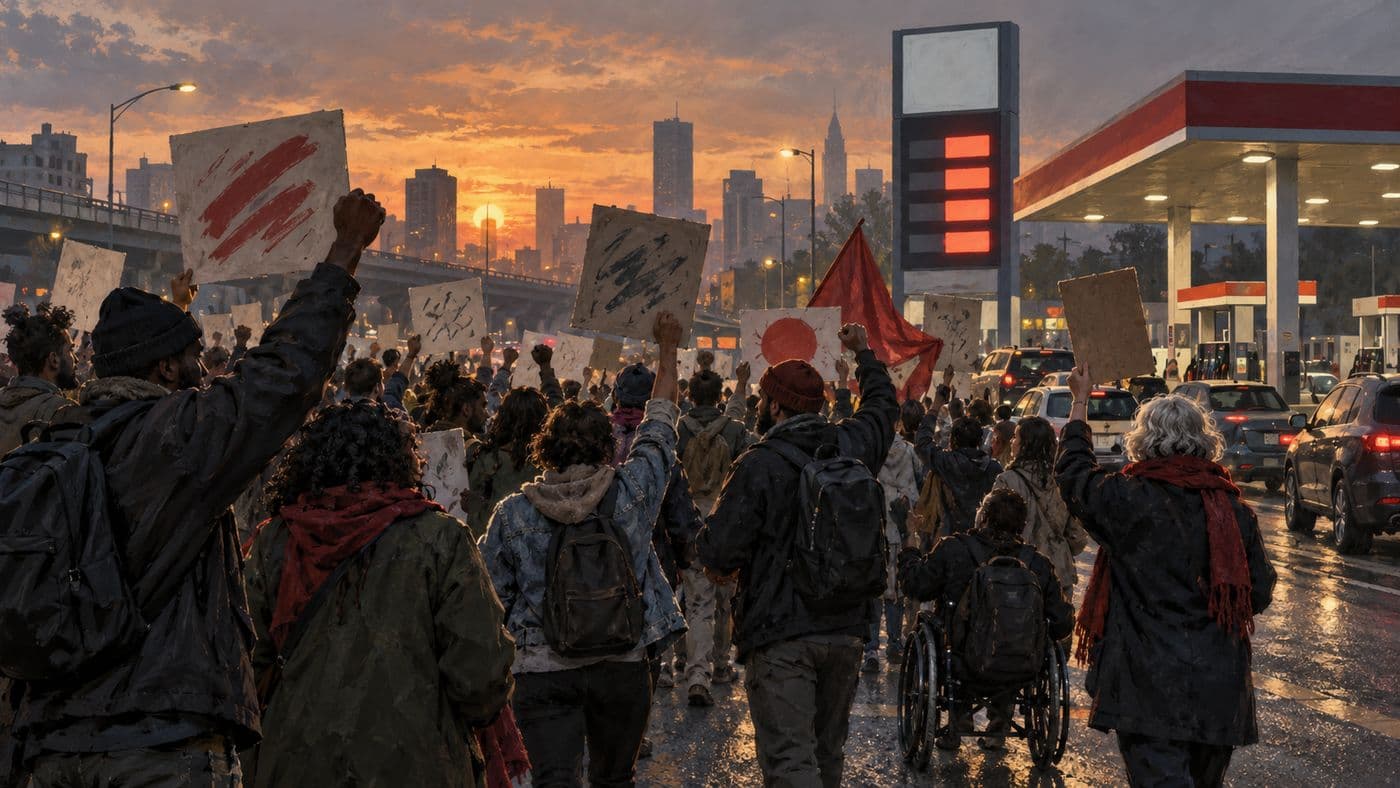
Fuel price protests have a long, well-worn history of toppling governments and reshaping policy — from France's Yellow Vest movement to Nigeria's repeated fuel subsidy uprisings. What makes this moment distinct is its geographic spread: rather than a single country's domestic policy failure, this is one war's economic shockwave breaking simultaneously across borders, currencies, and political systems that otherwise have little in common. However the conflict itself eventually resolves, the anger building at gas stations and highway blockades around the world is unlikely to simply disappear with it.