
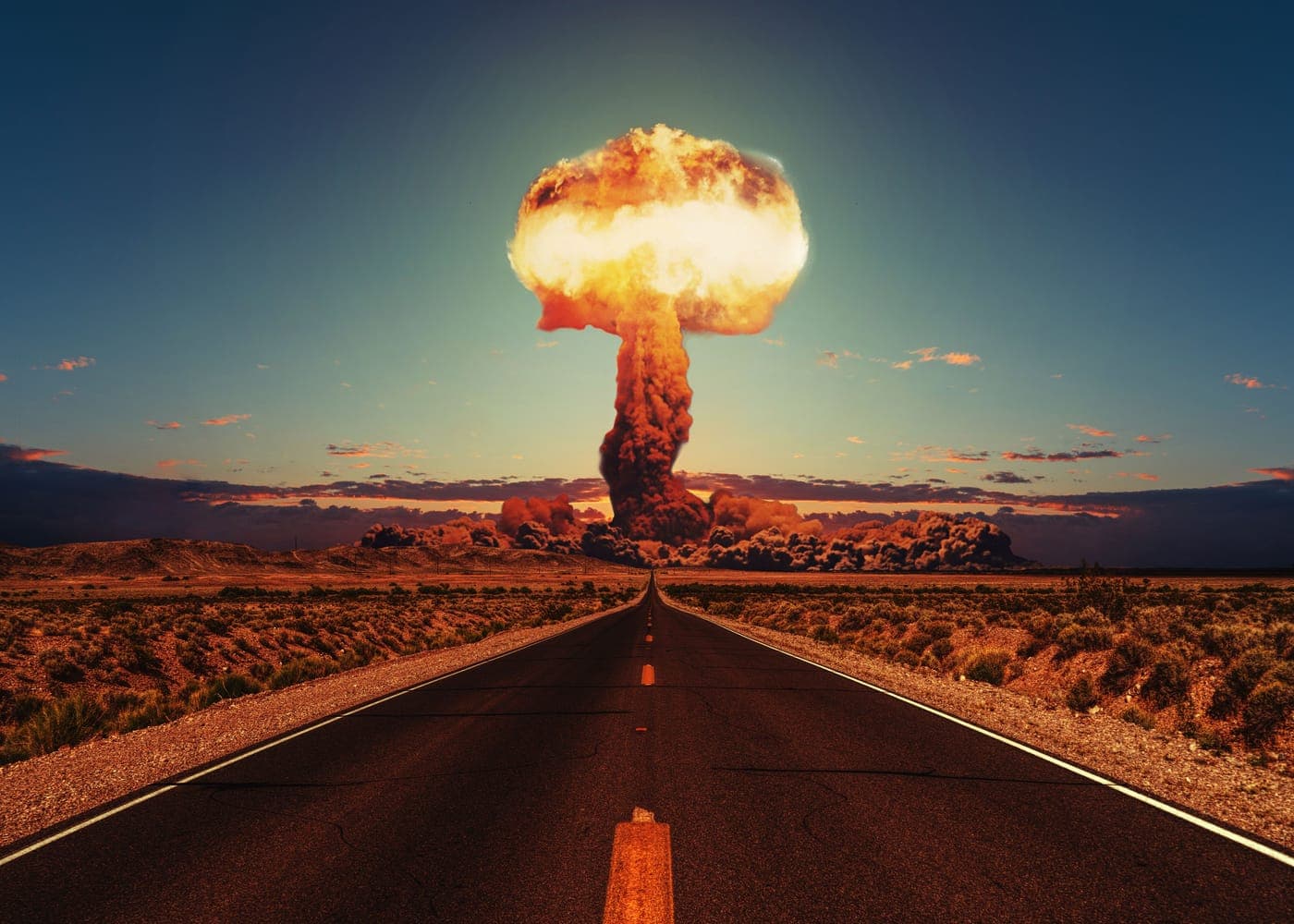
Between 1955 and 1963, the United States, Soviet Union, and other nations detonated hundreds of nuclear weapons above ground. The fallout from those tests — the radiation, the ash, the contaminated rain — is the part most people know about. What most people don't know is what those tests did to the atmosphere's chemistry, and how that change ended up inside the teeth of every person alive during that era — where it's been sitting ever since.
Above-ground nuclear testing nearly doubled the concentration of carbon-14 in Earth's atmosphere. Carbon-14 is a naturally occurring radioactive isotope of carbon that exists in trace amounts in the air, in plants, in animals, and in every human body. It's the same isotope used in radiocarbon dating to determine the age of ancient artifacts. Under normal conditions, its atmospheric concentration stays relatively stable. Nuclear explosions produce enormous quantities of it, and by the time testing peaked in 1963, the global atmospheric level had spiked dramatically — a moment scientists now call the "bomb pulse."
That spike didn't stay in the air. Carbon-14 reacts with oxygen to form carbon dioxide, which plants absorb through photosynthesis. Animals eat the plants. Humans eat both. The elevated carbon-14 moved through the entire food chain and was incorporated into the tissues of every living thing on Earth during that period — including human teeth. And teeth, unlike most other tissues, don't exchange carbon with the environment after they form. Whatever was in the atmosphere when your tooth enamel developed is locked in permanently. It cannot be updated, replaced, or metabolized away.
Forensic scientists realized what this meant. If tooth enamel records the atmospheric carbon-14 level at the time it formed — and the atmospheric level changed in a known, precisely documented way over those years — then measuring the carbon-14 in a tooth could tell you exactly when that tooth developed. And since tooth enamel forms during a specific window of childhood, that date maps almost directly to a person's birth year. A 2005 study published in Nature confirmed this: analyzing carbon-14 in tooth enamel could determine a person's year of birth with an average error of just 1.6 years. Later research pushed that accuracy to 1.2 years.
The forensic applications were immediate. Unidentified remains — bodies discovered with no documents, no fingerprints on file, no DNA match — had previously been nearly impossible to age precisely. Bomb-pulse dating gave investigators a new tool: a single tooth could now tell them not just roughly how old a person was, but when they were born, with a precision that traditional skeletal analysis couldn't match. The technique was used to help identify victims of the 2004 Southeast Asian tsunami, where conventional identification methods were overwhelmed by the scale of the disaster.
The applications extended beyond forensics. Researchers used the same principle to study cell turnover in the human body — measuring carbon-14 in different tissues to determine when those cells were last replaced. One of the most significant findings came from studies of neurons: brain cells showed almost no carbon-14 turnover, confirming that most neurons in the human brain are never replaced after birth. The bomb pulse, intended as a weapon, inadvertently became one of the most useful tools in the history of biological research.
The window for this technique is closing. Since above-ground testing was banned in 1963, atmospheric carbon-14 has been declining steadily — mixing into the oceans and absorbed by plant life — returning toward its pre-bomb baseline. Researchers estimate that by around 2030, the bomb pulse will have faded enough that it will no longer be reliably detectable in newly formed tissues. Anyone born after that point will carry no trace of it. The accidental timestamp written into the teeth of everyone alive between 1955 and the mid-1960s will have no equivalent in the generations that follow.
The nuclear tests of the Cold War left consequences that scientists are still discovering decades later. One of them is sitting in the teeth of anyone old enough to have been alive when the bombs were going off — a permanent chemical record of one of the most reckless periods in human history, now used to identify the dead and understand how living cells work.