
1 What It Means
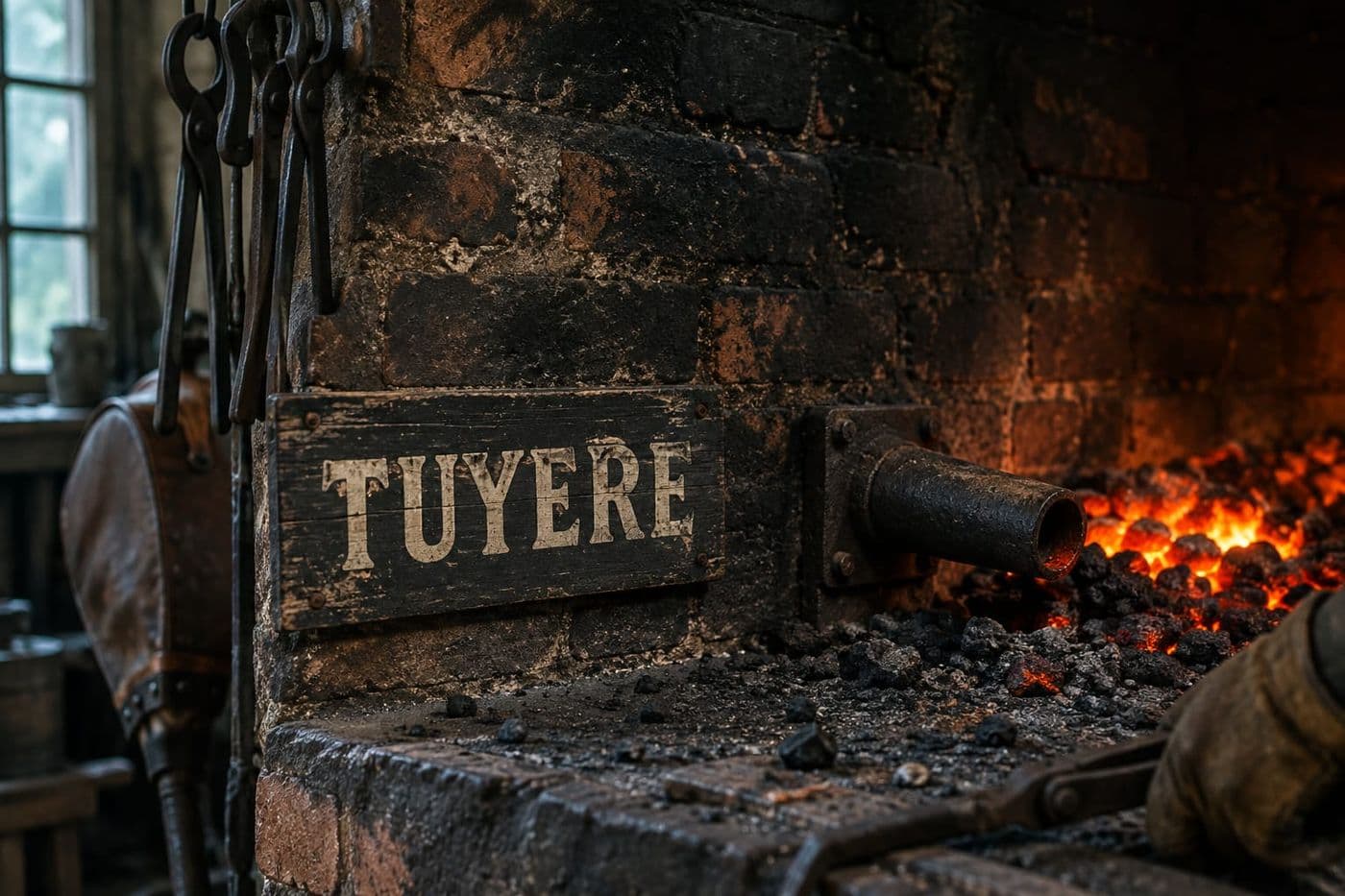
The nozzle or pipe through which a blast of air is forced into a forge or furnace to make the fire burn hotter.
2 Caught in the Wild
The smith checked the tuyere before lighting the coal, because a pipe clogged with clinker starves a fire faster than any bad fuel.
Illustrative usage. · Undated.
3 Where It Comes From
English took the word from French in the 1700s, when British ironmasters were studying how continental furnaces were run. French tuyère comes from tuyau, meaning pipe, and the deeper ancestry of tuyau is debated, so the trail goes soft there. English never adopted it for everyday talk because there was never a household object to attach it to. A kitchen has a bellows nozzle at most. The word lived in forges, foundries, and steelworks, where the people who needed it were few and spelled it however the foreman did. Variants like twyer show up in older ironworking texts. Once furnaces moved behind plant gates and out of village life, the word went with them.
4 The World Behind the Word
Fire needs air, and a forge fire needs a lot of it, aimed at the right spot. A blacksmith's hearth holds a bed of burning coal or charcoal. Beside or beneath it, a pipe delivers air from a bellows or a motorized blower. The end of that pipe poking into the fire is the tuyere. Its job is narrow. It sends a steady stream into the heart of the fuel, so the heat gathers where the metal sits instead of leaking across the whole bed. Scale it up and you reach the blast furnace, a tower of iron ore, coke, and limestone. Ring its base with tuyeres, blow air through them, and the coke burns hot enough to melt iron. At that scale the nozzles have a problem. The flame at their tips is hotter than copper melts, so modern ones are copper with water running through them.
5 Use It Yourself
Save it for any narrow opening that forces air where it is wanted. The pinched spout of a leaf blower. The straw you puff through to revive a campfire. At a barbecue, announcing that your grill has a clogged tuyere will earn a blank look, then respect once you explain. Register trap: it is pronounced like a French word and sounds fancier than the job. Among metalworkers it is plain shop talk, so nobody there will think you are showing off.
Try it out loud
The fire kept dying until we realized ash had plugged the tuyere and nothing was getting air.
🗝️The Deep Cut File
In 1828 a Scottish engineer named James Beilby Neilson patented a change that sounded backward: heat the air before it enters the furnace. Cold blast chilled the zone around each tuyere and wasted fuel making up the difference. Preheated air let furnaces run on far less fuel, and in some Scottish works it allowed raw coal to replace coke, which cut costs sharply. A generation later Henry Bessemer's steelmaking converter put tuyeres in the bottom of the vessel, so air bubbled up through the molten iron itself. One small nozzle sat at the center of both revolutions.