
1 What It Means
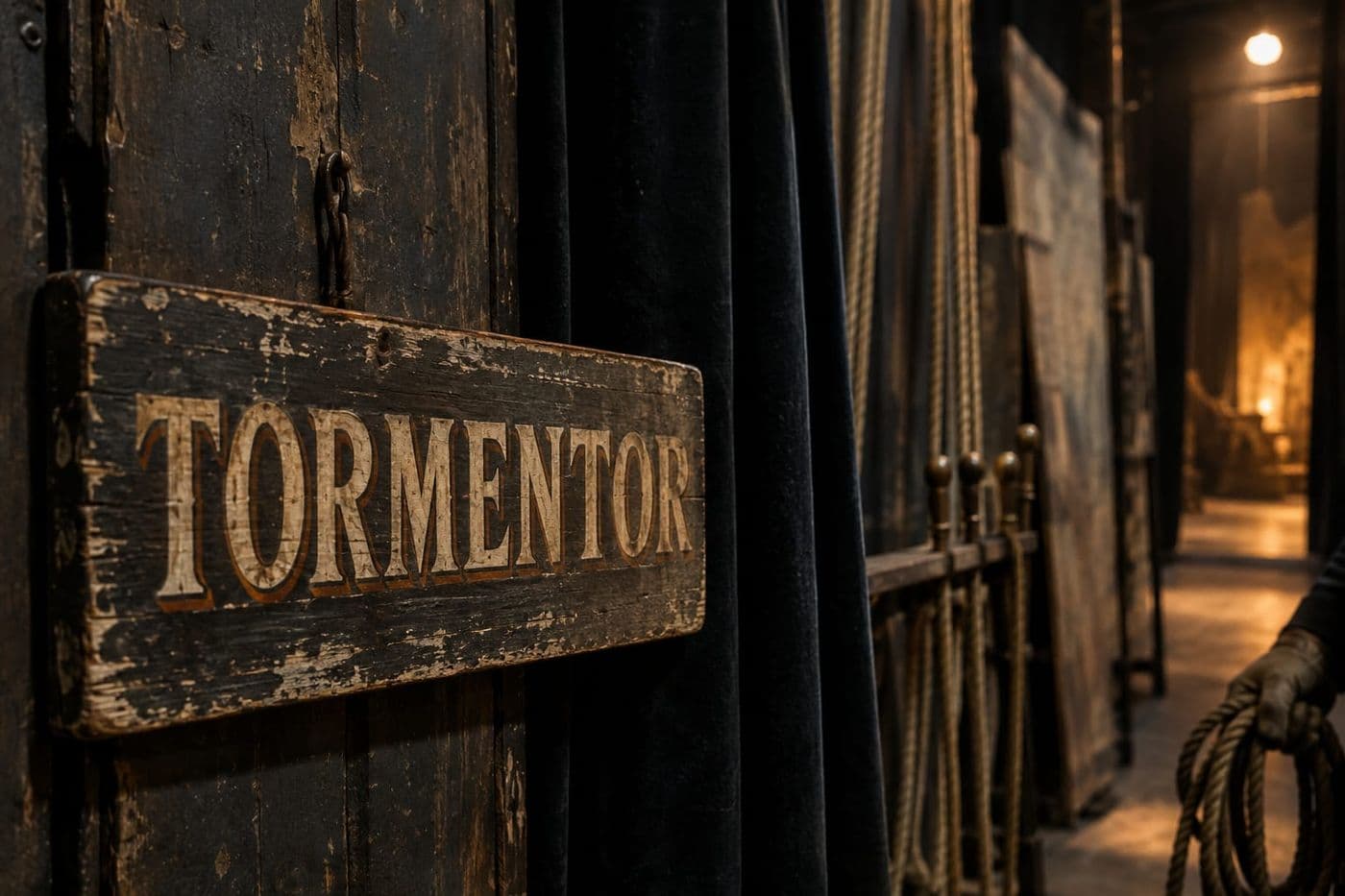
The tall curtain or flat at each side of a stage, just behind the proscenium, that narrows the opening and hides the wings from the audience.
2 Caught in the Wild
The stage manager asked the crew to pull the tormentors in two feet so the side lights stayed out of the audience's sightline.
Illustrative usage. · Undated.
3 Where It Comes From
The word looks like an ordinary agent noun, something that torments. Whether the stage sense grew from that verb is not firmly documented, and the trail goes cold on exactly why theater people chose it. What can be said is how it stayed put. A tormentor is a piece of equipment, not a concept, and it lives in a space the public never sees. Audiences watch what the tormentors frame. They never need to name the frame. So the word circulated among stagehands, carpenters, and designers, passed along on load-ins and in technical rehearsals, and never had a reason to leave the building. Meanwhile the everyday noun tormentor kept its cruel meaning in general English, which crowded out any chance of the theatrical sense getting noticed.
4 The World Behind the Word
Most traditional theaters use a proscenium, the arch that frames the stage like a picture frame. Behind that arch sits a problem. The stage is much wider than the picture. Past the edges are the wings, where actors wait, crew move scenery, and lights, ropes, and clutter pile up. Audiences should not see any of it. Stagecraft solves this with masking, which means hiding things with fabric or flats. Overhead, a short curtain called a teaser hides the lighting pipes and rigging. At each side, a tormentor does the same job vertically. Tormentors are often adjustable, so a designer can narrow the opening for an intimate scene or widen it for a crowded one. They are usually black, because black absorbs light and vanishes. Crews also hang lights behind them. A good tormentor is one you never notice.
5 Use It Yourself
Anyone who has framed a video call knows the problem: you want the viewer to see the speaker and not the pile of laundry. You have just placed a tormentor. It also fits home projects, such as a bookshelf angled to hide a messy desk. Mention it at a community theater and people will nod. Mention it elsewhere and expect a puzzled look, because to most listeners it sounds like a person who annoys others. Say 'stage tormentor' once, and you will be understood.
Try it out loud
Move the left tormentor in a bit, because I can see the guy with the sandwich in the wings.
🗝️The Deep Cut File
Tormentors have a close cousin in the teaser, the short curtain hung across the top of the stage opening. Between them they form a second, adjustable frame inside the proscenium, sometimes called a portal. That detail matters more than it seems. A touring show can arrive at a hall with a huge arch and still present the same picture, because the crew sets the tormentors and teaser to match the show's own frame rather than the building's. The audience in a small theater and the audience in a grand one then see the same composition. The stage looks fixed. In fact, it was resized for them a few hours earlier by people holding ropes.