
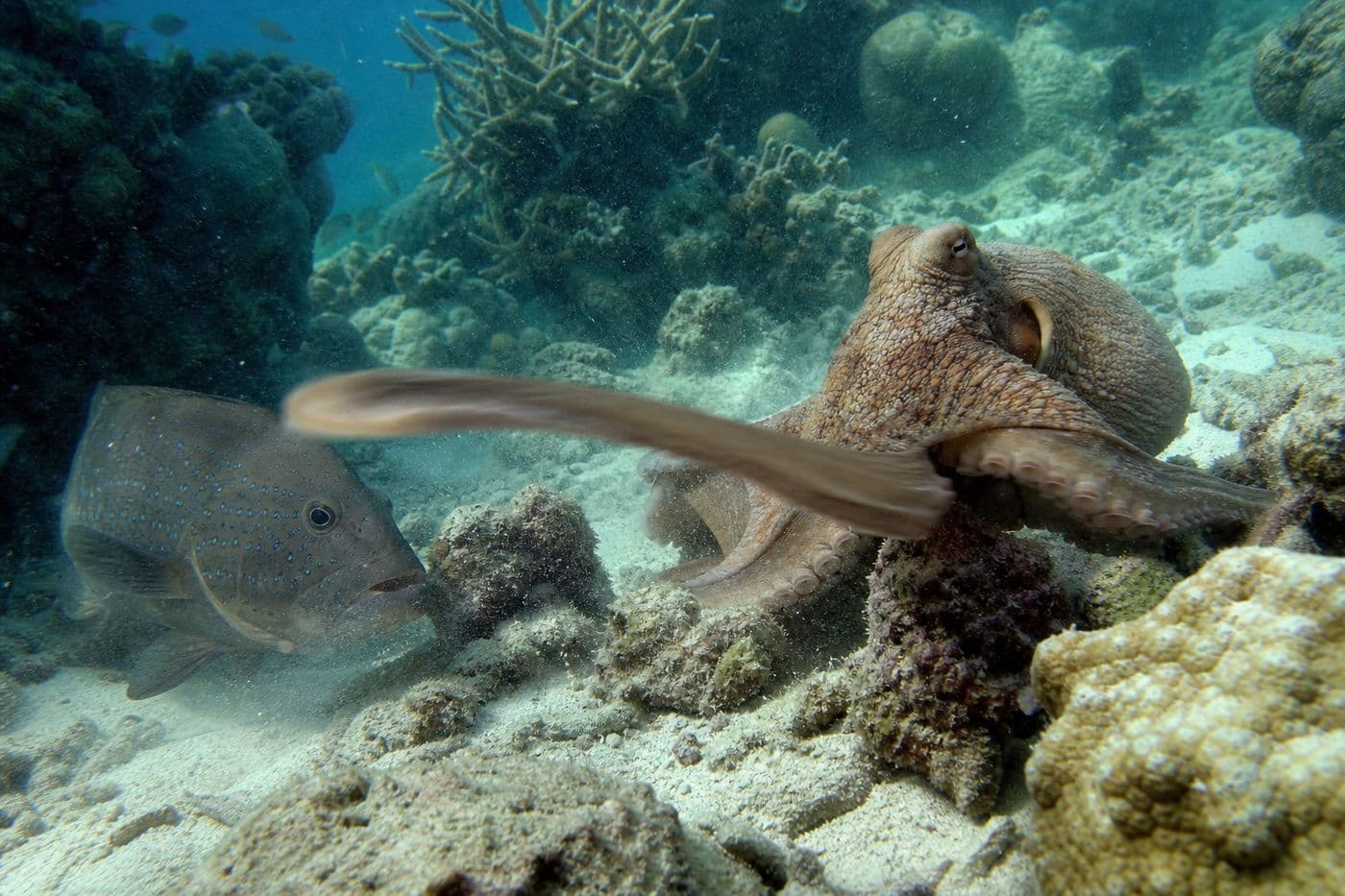
Off the coast of Australia and Egypt, researchers filming reef life kept spotting something odd during group hunts between octopuses and fish. The octopus, mid-hunt, would suddenly lash out and strike a fish with one of its arms, seemingly unprovoked.
At first the footage looked like random aggression, the kind of thing easy to dismiss as noise in the data. But the punches kept happening across multiple hunts, multiple locations, and multiple octopus individuals, which ruled out coincidence.
These hunts aren't solo affairs. Octopuses often hunt cooperatively with fish like groupers, each species flushing prey toward the other in a loose but real partnership formed over repeated encounters.
So why would a hunting partner get punched? Researchers led by Eduardo Sampaio found the strikes weren't random at all — they were a form of active partner management.
Octopuses appeared to be punishing fish that weren't pulling their weight, striking freeloaders that lingered near the group without actively helping flush out prey.
In some cases, the punch even shifted the group's dynamic, scattering a slacking fish away and letting a more cooperative one take its place in the hunt formation.
It's one of the first documented cases of a solitary, notoriously non-social animal actively regulating the behavior of a completely different species in real time.