
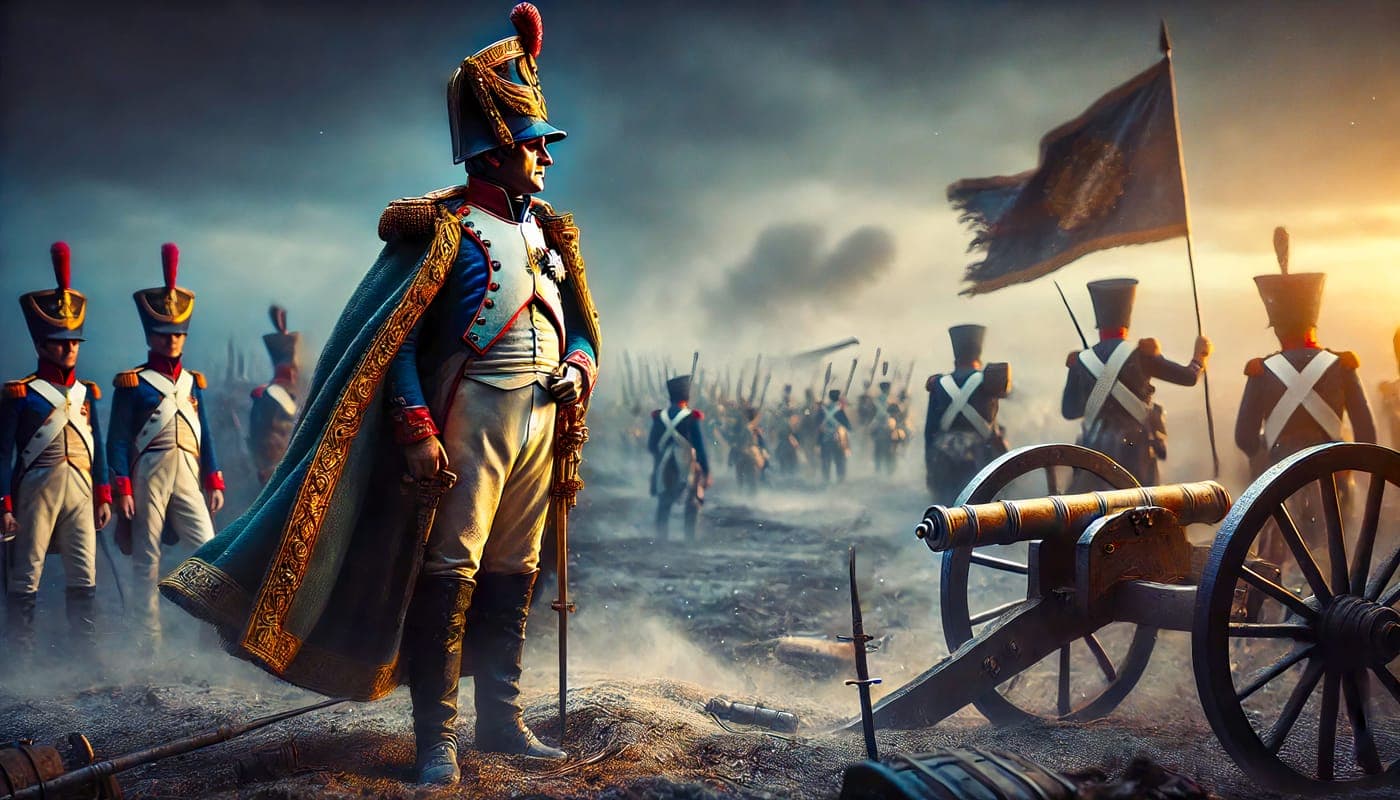
In 1812, Napoleon Bonaparte assembled the largest invasion force in European history — 600,000 soldiers — and marched them toward Moscow. What happened next is remembered as one of history's greatest military disasters. But the story most people know gets the cause completely wrong. It wasn't the Russian army that destroyed Napoleon's Grand Army. It wasn't even the winter. It was a louse.
Body lice carrying the bacterium Rickettsia prowazekii — the cause of epidemic typhus — had been traveling with the army since before the invasion began. Soldiers lived in close quarters, rarely bathed, and shared clothing. The conditions were perfect. By the time the Grand Army reached Moscow, typhus had already killed more men than any battle. Estimates suggest the disease accounted for somewhere between 80,000 and 200,000 deaths during the campaign — dwarfing combat casualties.
This isn't speculation. In 2001, researchers excavating a mass grave in Vilnius, Lithuania — a site linked to Napoleon's retreat — found the teeth of soldiers still carrying DNA evidence of Rickettsia prowazekii. The bacteria had been preserved for nearly 200 years. It was the first time molecular evidence directly confirmed typhus as a major killer of the Grand Army.
Typhus didn't just kill soldiers — it collapsed the army's fighting capacity before major engagements even began. Infected men suffered high fevers, severe headaches, delirium, and a characteristic rash. Those who survived were often too weak to fight. Entire units arrived at battlefields already broken. The Russian strategy of retreating and burning their own territory — denying Napoleon's army food and shelter — accelerated an collapse that disease had already set in motion.
Of the 600,000 men who crossed into Russia, fewer than 100,000 returned. For generations, historians credited Russian resistance and the brutal winter. Both played a role. But the louse got there first — and hit hardest. Napoleon himself reportedly said his greatest enemies were "General Janvier and General Février" — January and February. He never mentioned the louse. He may not have known.
The same bacterium would go on to devastate armies in nearly every major conflict through World War II, killing more soldiers than bullets in multiple wars. It wasn't until the development of DDT and modern antibiotics that typhus lost its grip on warfare. The most powerful army in the world wasn't undone by a rival general or a strategic blunder — it was undone by something invisible, traveling in the seams of a soldier's shirt.