
The Day the Sun Splits Time in Half
Today at 8:05 p.m. EDT, the sun crosses directly over Earth's equator, marking the precise astronomical moment fall begins in the Northern Hemisphere. It's one of only two days each year — this one and its springtime counterpart in March — when the sun's most direct rays fall exactly on the equator, and when day and night come closest to perfectly equal length across the entire planet.
A Tilt, Not a Distance
Despite popular assumption, the changing seasons have nothing to do with Earth moving closer to or farther from the sun — Earth's orbit is nearly circular. The real cause is the planet's 23.5-degree axial tilt. As Earth orbits the sun, that tilt means different hemispheres lean toward or away from direct sunlight at different points in the year. Today marks the crossover point: from here through the winter solstice in late December, the Northern Hemisphere tilts increasingly away from the sun, bringing shorter days, longer nights, and the seasonal shift into cooler weather that much of the hemisphere is now beginning to feel.
The equinox also produces one of the more delightful urban astronomical coincidences in American cities: "Chicagohenge." Twice a year, near the spring and fall equinoxes, Chicago's street grid — laid out in near-perfect alignment with true east and west — briefly lines up with the rising and setting sun, sending sunlight streaming directly down major east-west corridors like Chicago's grid streets, an effect similar to England's famously aligned Stonehenge, hence the nickname. Photographers and commuters alike gather along the city's straightest avenues around sunrise and sunset this week to catch the alignment, a small, temporary reminder that even a modern city's grid sits inside a much older, much larger astronomical clock.
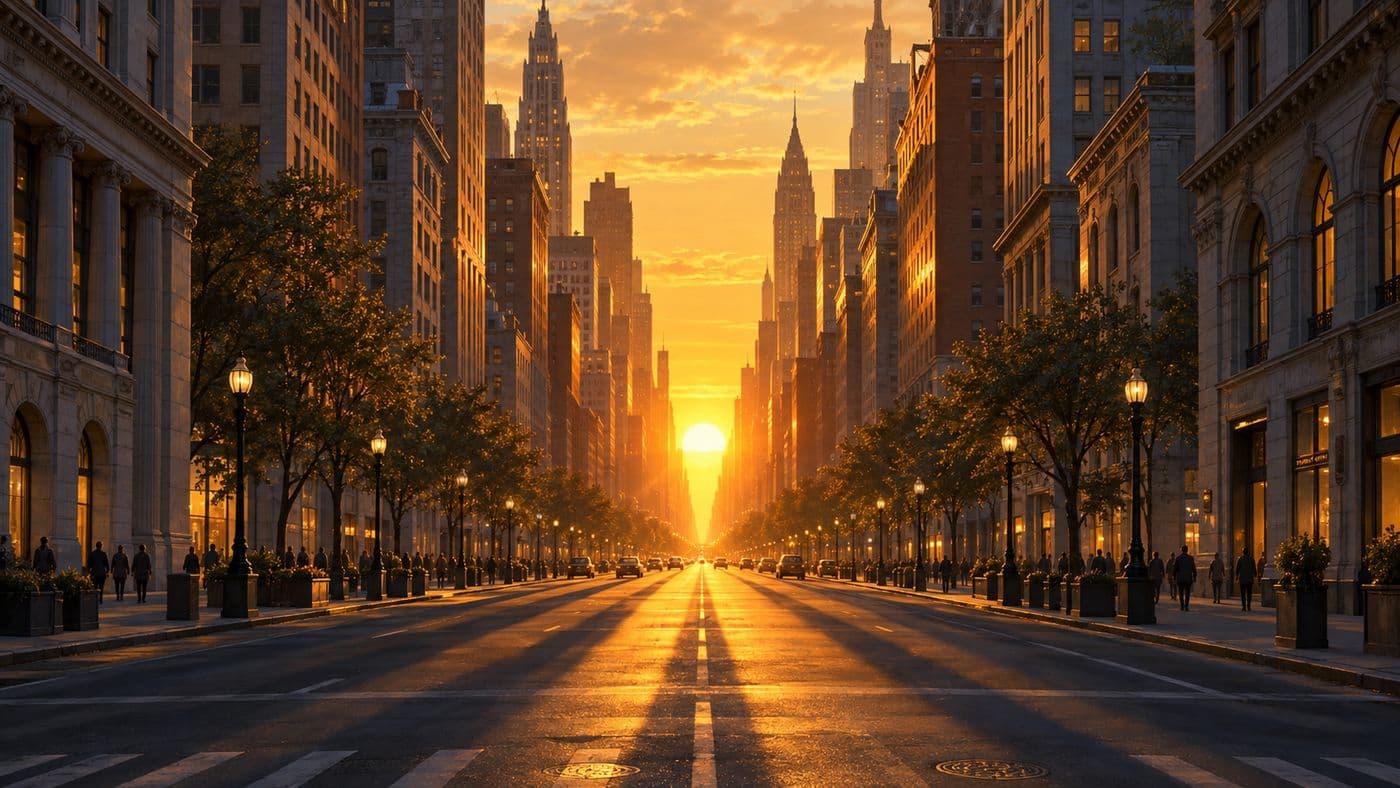
Humans have marked this astronomical turning point for millennia, long before anyone understood axial tilt or orbital mechanics — ancient harvest festivals across cultures cluster around this exact window, tied to the practical rhythms of shortening daylight and ripening crops. The equinox endures today for much the same reason it always has: it's one of the rare moments the sky itself hands you a clear, visible marker of time passing, whether you're watching from a wheat field or a downtown sidewalk in Chicago.