
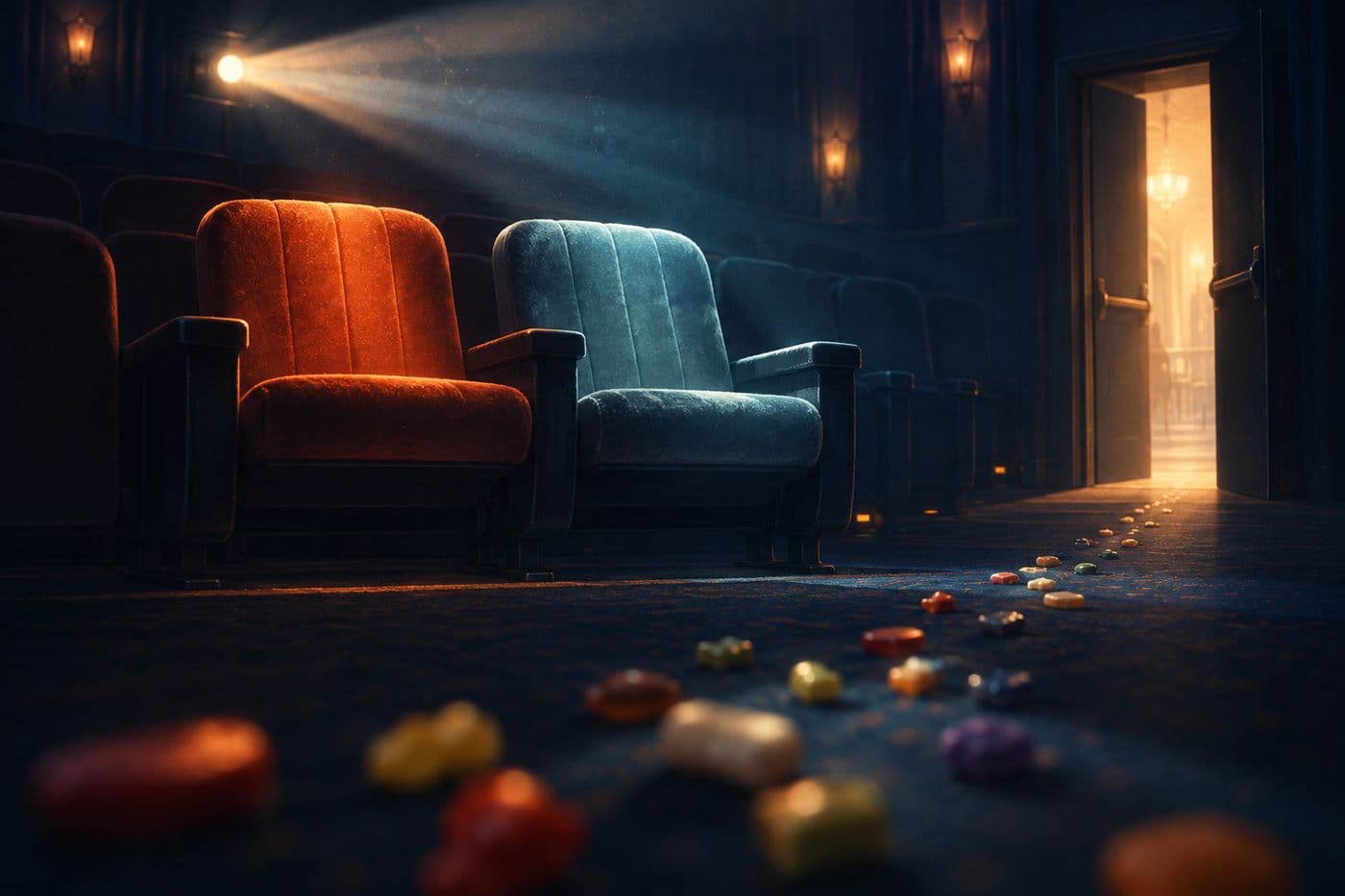
Claim A says Reese's Pieces sales jumped 300% after E.T. featured them in 1982. Claim B says Junior Mints sales jumped 300% after Ghostbusters featured them in 1984. Claim A is true, and Claim B is completely made up.
When Steven Spielberg's team came knocking about a candy trail for a lonely alien to follow home, M&M's parent company Mars said no thanks. That single decision handed Hershey a golden opportunity, and they said yes to featuring Reese's Pieces in E.T. the Extra-Terrestrial.
The movie hit theaters in June 1982, and the candy world felt the shockwave almost immediately. Within just a few weeks of release, Reese's Pieces sales spiked roughly 300%, turning a relatively modest peanut butter candy into a household name overnight.
Hershey hadn't even paid a massive fee for the placement — reports suggest it cost them very little compared to the marketing windfall they received. The film's iconic scene, where Elliott lures E.T. out of hiding with a trail of the candy, became one of the most famous examples of product placement paying off in movie history.
The success story is often cited in marketing textbooks as the moment Hollywood studios and brands realized how powerful an on-screen candy cameo could be. Mars, meanwhile, reportedly spent years regretting the missed opportunity.
The Junior Mints and Ghostbusters story never happened. There's no notable candy tie-in or sales spike connected to that film, and no such product placement deal was ever made for it.
Would you have guessed which one was the real Hollywood candy legend?