September 9: The End of an Era in China, a Nation Declared in Pyongyang, and a Comedian Born in Brooklyn
September 9 is a day for the end of one chapter and the beginning of another. In 1976, the man who had led China through revolution, civil war, and decades of radical social transformation died in Beijing at the age of eighty-two — leaving behind a country he had remade utterly, at a cost in human life that remains one of the largest in modern history, and a political vacuum that his successors would fill with reforms he would have despised. Twenty-eight years earlier, in a city on the other side of the peninsula that had just watched its southern half become a separate republic, a communist state was proclaimed that would become one of the most isolated and heavily armed nations on earth, and that has dominated the security calculations of East Asia ever since. And in 1966, in a Brooklyn hospital, a baby was born who would grow up to become one of the most commercially successful comedians in American film history — a fact that would have seemed, at various points in his career, both inevitable and genuinely surprising, sometimes simultaneously. Three September ninths. Three beginnings that had been shaped by everything that came before them.
The Chairman
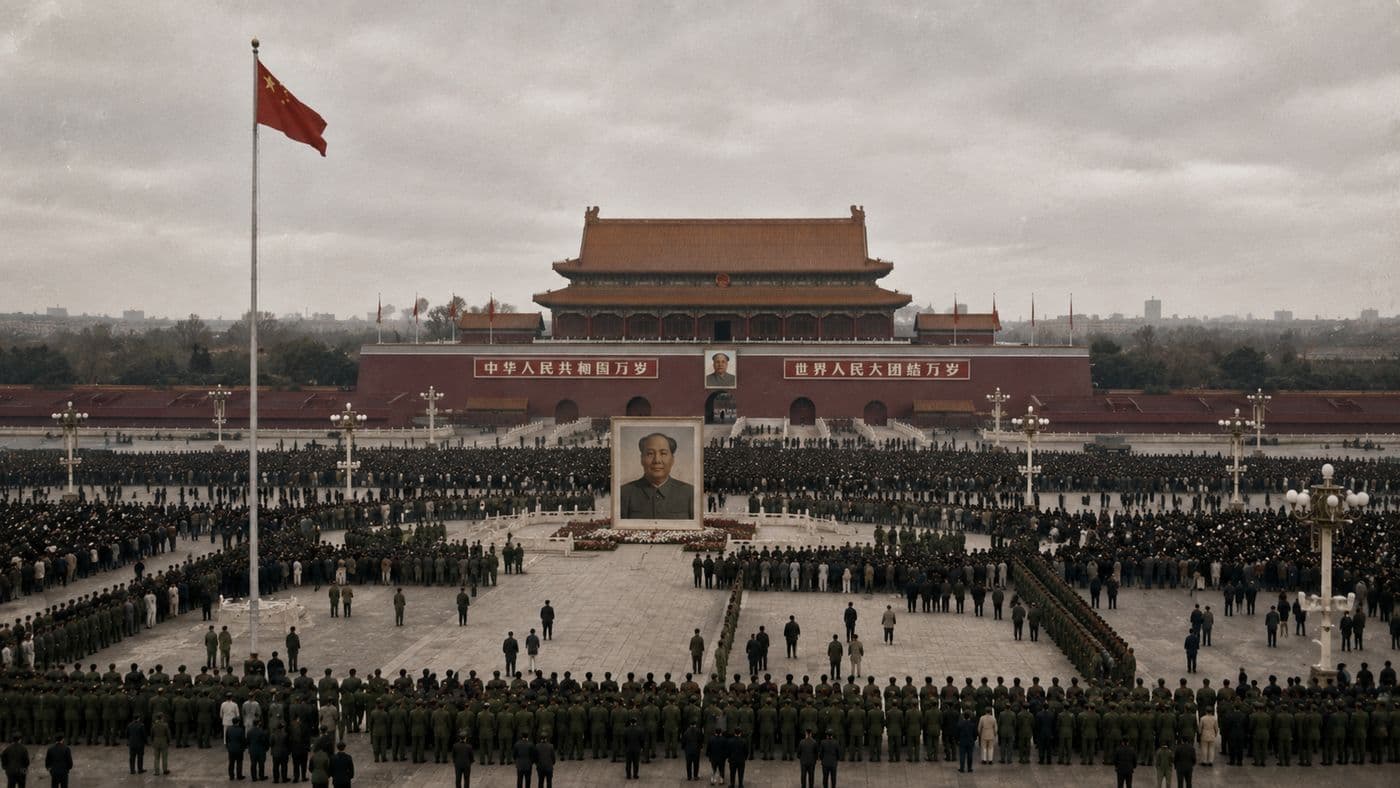
On September 9, 1976, Mao Zedong died in Beijing at the age of eighty-two, ending a political career that had begun with his co-founding of the Chinese Communist Party in 1921 and culminated in the establishment of the People's Republic of China in 1949. Mao had ruled China for twenty-seven years, presiding over a series of campaigns that transformed the country — the land reforms and collectivization of the early 1950s, the Great Leap Forward of 1958-1962, and the Cultural Revolution of 1966-1976 — in ways that produced industrialization and social transformation alongside a human catastrophe of nearly incomprehensible scale. Historians estimate that Mao-era policies contributed to the deaths of between 40 and 80 million people, primarily through the famine caused by the Great Leap Forward's agricultural policies and the violence of the Cultural Revolution. Mao's health had been declining for several years before his death, and power had been quietly shifting to other factions, but the formal end came on September 9.
The death of Mao on September 9, 1976, opened a period of intense political struggle in China that was resolved within weeks by the arrest of the Gang of Four — including Mao's widow Jiang Qing, who had been a dominant force in the Cultural Revolution — and the eventual rise of Deng Xiaoping, who had been twice purged by Mao and who would guide China through a period of economic liberalization and opening to the outside world that produced the remarkable growth of the following decades. The China that Deng built — pragmatic, market-oriented, authoritarian but not ideologically totalitarian in the Maoist mode — is the China of the present day. Mao's legacy in China itself is officially maintained as seventy percent positive and thirty percent negative, a formula that acknowledges the catastrophes without abandoning the founding mythology of the People's Republic. Outside China, the assessment tends to run differently. The man who died on September 9, 1976, transformed the world's most populous country — and the question of whether what he built was worth what it cost has never been resolved to anyone's full satisfaction.
The Democratic People's Republic
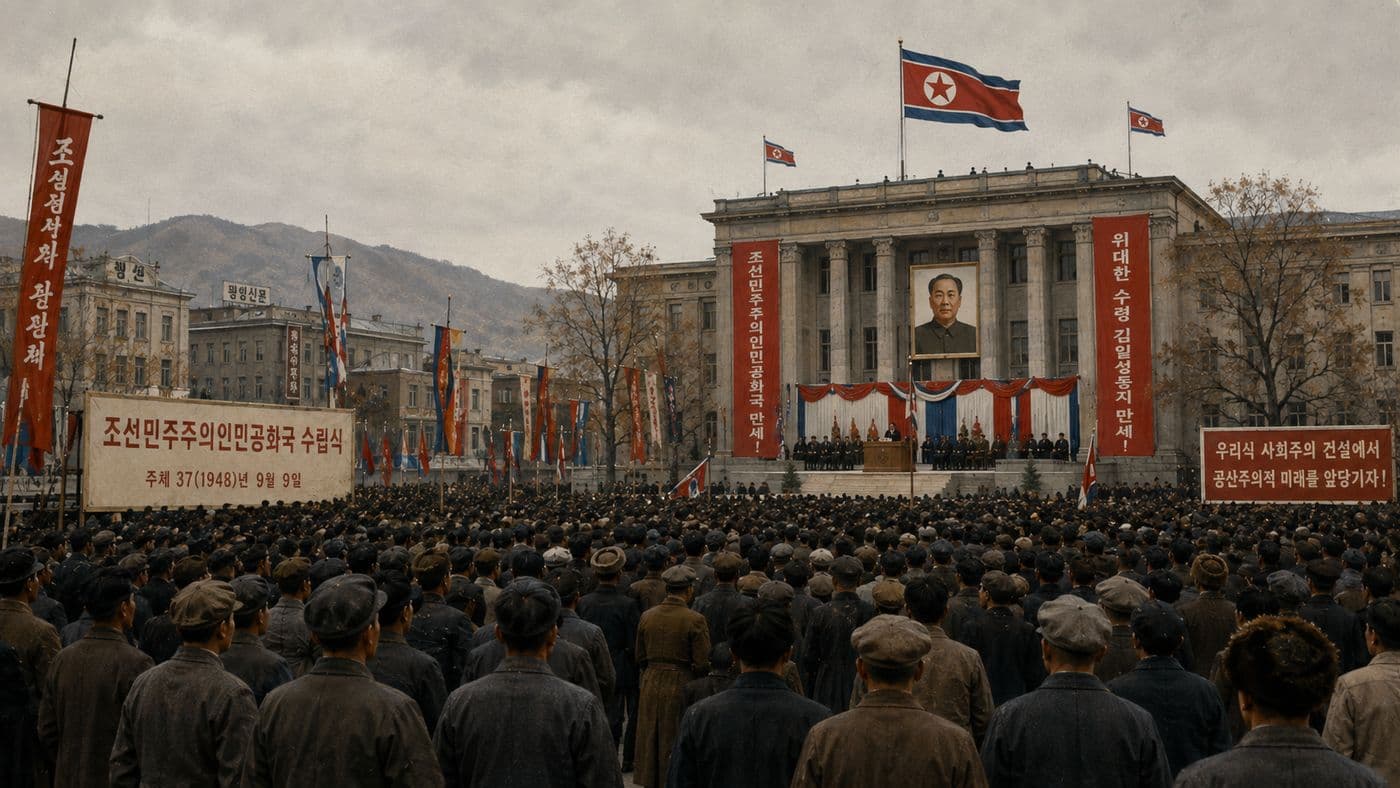
On September 9, 1948, the Democratic People's Republic of Korea was officially proclaimed in Pyongyang, formalizing the establishment of a communist state in the northern half of the Korean Peninsula under the leadership of Kim Il-sung — a former anti-Japanese guerrilla fighter who had been installed by Soviet occupation authorities following Japan's defeat in 1945. The proclamation came twenty-three days after the Republic of Korea had been established in Seoul under Syngman Rhee on August 15, creating two governments that each claimed sovereignty over the entire peninsula and refused to recognize the other's legitimacy. The parallel establishments were the formalization of a division that had begun with the Soviet and American occupation zones drawn at the 38th parallel in 1945 — a line chosen for administrative convenience rather than historical significance that became one of the most consequential borders in modern geopolitics.
The Democratic People's Republic proclaimed on September 9, 1948, invaded South Korea in June 1950, triggering the Korean War, which ended in a 1953 armistice — not a peace treaty — that left the two Koreas divided along virtually the same line as before, at the cost of an estimated three million lives. Kim Il-sung ruled North Korea until his death in 1994; his son Kim Jong-il succeeded him, followed by his grandson Kim Jong-un in 2011, making North Korea the world's only communist hereditary monarchy. The country the DPRK has become — a nuclear-armed state of approximately 26 million people living under one of the most comprehensive surveillance and control systems in human history, with a leadership cult of extraordinary intensity and an economy that has produced periodic famines — is the direct descendant of the state proclaimed in Pyongyang on September 9, 1948. The Korean War that followed its creation ended in an armistice that has technically never been replaced by a peace agreement. The Korean Peninsula remains, in the most literal sense, still at war.
Brooklyn, 1966
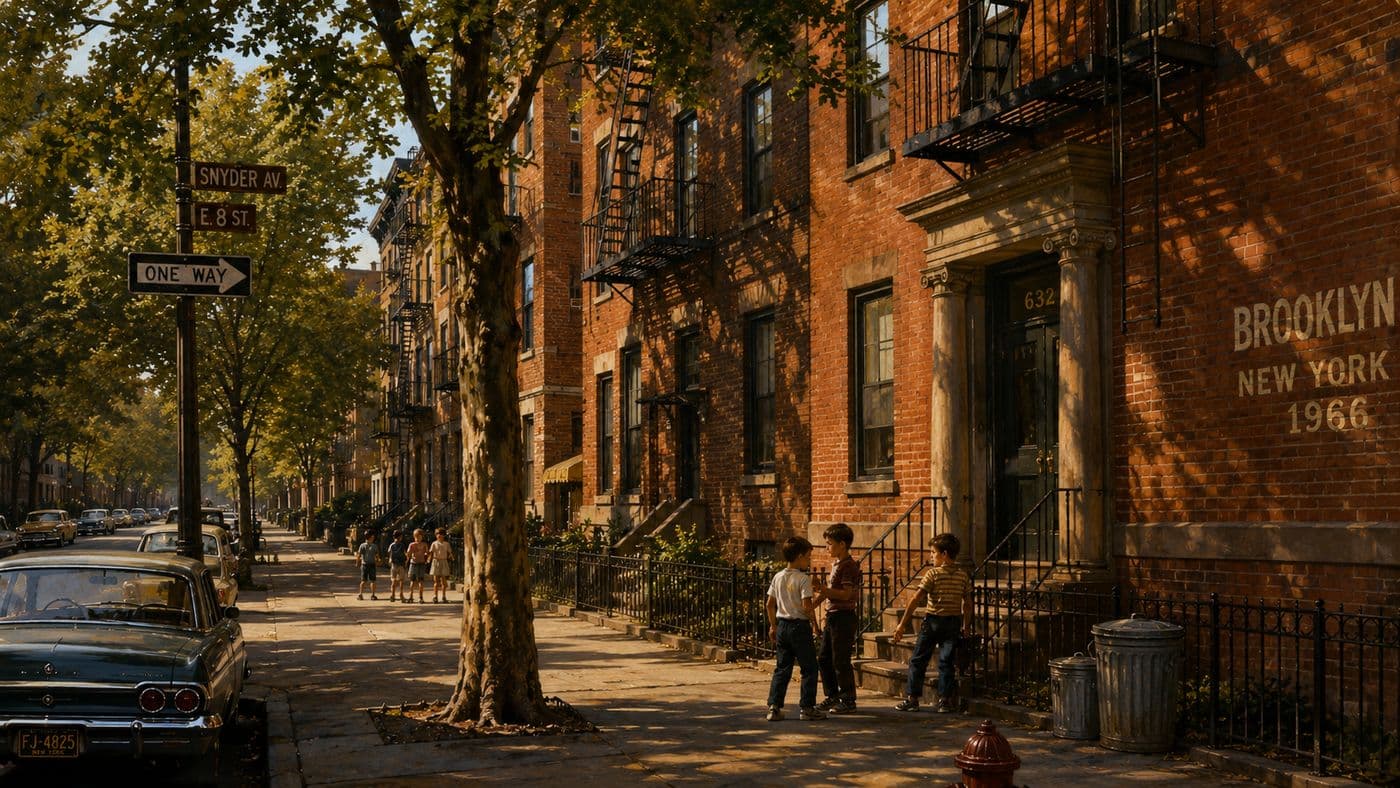
On September 9, 1966, Adam Sandler was born in Brooklyn, New York, and his family subsequently moved to Manchester, New Hampshire, where he grew up and began performing at local venues as a teenager. He studied acting at New York University, performed stand-up comedy in New York clubs, and was discovered performing at a Boston club by comedian Dennis Miller, which led to an appearance on The Cosby Show and eventually, in 1990, to a job as a writer and performer on Saturday Night Live. His SNL characters — Operaman, the Hanukkah Song, the comedic musical sketches that leaned into his particular brand of cheerful arrested development — built the kind of devoted following that translated directly into movie stardom. His first starring film role came in 1993, and his films through the 1990s — Billy Madison, Happy Gilmore, The Wedding Singer, The Waterboy, Big Daddy — established him as one of the most commercially reliable performers in Hollywood, with an audience that returned for each new film regardless of critical reception.
The career arc of Adam Sandler since September 9, 1966, has been one of the more interesting in American comedy — both because of its commercial durability and because of the periodic critical reassessments it has prompted. His Netflix deal, signed in 2014, has produced films that have drawn hundreds of millions of views regardless of their quality; his dramatic performances in Punch-Drunk Love (2002) and Uncut Gems (2019) have prompted critics who had dismissed him to acknowledge that the comedic toolset he had developed was deployable, under the right director, in ways that were genuinely powerful. He has maintained, through a career now spanning more than three decades, a consistency of persona — the loyal friend, the overgrown child, the good-natured lout who turns out to be capable of unexpected depth — that his audience has proven remarkably willing to keep watching. The baby born in Brooklyn on September 9, 1966, became one of the most commercially successful comedians in the history of American film, a fact that the more earnest quarters of the critical establishment have always found slightly difficult to fully acknowledge.