September 7: A Voice Is Silenced, a Channel Launches, and a Crown Is Placed
September 7 is a day threaded through by the peculiarly American relationship between entertainment, ambition, and violence. In 1996, a rapper whose talent and cultural reach had made him one of the most significant figures in American music was shot four times on a Las Vegas boulevard and died six days later — a death that has generated more theories, arguments, and artistic responses than almost any other in the history of popular music, and that robbed hip-hop of a voice it has never quite replaced. Seventeen years earlier, in a modest Connecticut studio, a new television network launched on the premise that sports could fill twenty-four hours of programming per day and that someone would watch — a bet that turned out to be one of the most successful in the history of American media. And in 1921, on the boardwalk of Atlantic City, a sixteen-year-old from Washington was crowned the first Miss America in a pageant conceived as a tourist promotion that became something far more complicated. Three September sevenths. Three things that announced themselves to the world and lasted longer than anyone had expected.
Las Vegas Boulevard
On the night of September 7, 1996, Tupac Shakur — twenty-five years old, the most commercially successful rapper in the country and one of the most culturally significant figures in the history of hip-hop — was riding in a BMW driven by Death Row Records CEO Suge Knight along Las Vegas Boulevard after attending a Mike Tyson fight at the MGM Grand, when a white Cadillac pulled alongside the car at a traffic light and an unknown assailant opened fire. Tupac was struck four times. He was taken to the University Medical Center of Southern Nevada, where he was placed on life support; he died six days later, on September 13, 1996. He was twenty-five years old. In 2024 — nearly three decades after the shooting — Duane "Keffe D" Davis, a former gang leader long considered a key figure in the case, was indicted on murder charges in connection with the killing, bringing the closest thing to a legal reckoning the case has yet produced.
Tupac Shakur had recorded five studio albums in five years, sold tens of millions of records, acted in films, written poetry, and produced a body of work of extraordinary range and ambition before his death at an age when most artists are just beginning to find their mature voice. His music addressed police brutality, poverty, Black masculinity, the contradictions of fame, and his own mortality with a directness and literary intelligence that distinguished him from virtually every other rapper of his era and that has only grown more resonant in the decades since. The East Coast-West Coast hip-hop rivalry that provided the backdrop for his death — and that claimed the life of the Notorious B.I.G. six months later — was real in its commercial and personal dimensions but has also been significantly mythologized by the music industry, the media, and the documentaries that have proliferated in the years since. Tupac Shakur released more music posthumously than during his lifetime — a measure both of how much he recorded and of how thoroughly the industry mined that archive after he was gone. The voice silenced on September 7, 1996, has never been replaced.

Bristol, Connecticut
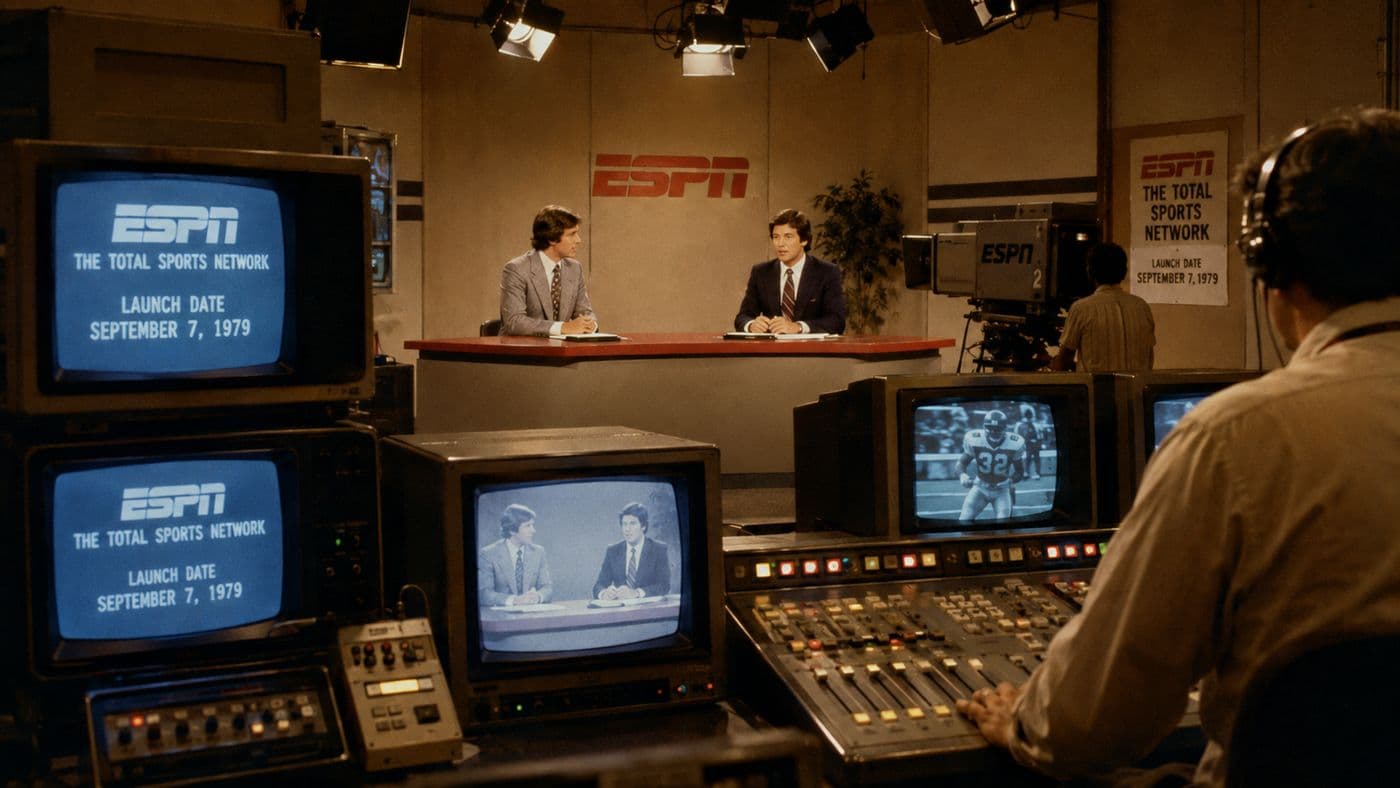
On September 7, 1979, ESPN — the Entertainment and Sports Programming Network — launched from a studio in Bristol, Connecticut, with a broadcast hosted by Lee Leonard and George Grande that featured highlights and a slow-pitch softball tournament from the Amateur Softball Association World Series. The network had been founded by Bill Rasmussen and his son Scott Rasmussen, who had been laid off from their jobs and conceived, during a period of financial desperation in 1978, a cable channel devoted entirely to sports programming that would fill twenty-four hours a day, seven days a week. The concept was considered audacious by the cable industry and financially risky by most potential investors — there was genuine skepticism that enough sports content existed, or could be acquired at feasible cost, to fill a continuous broadcast schedule. Getty Oil provided the initial financing. The premise turned out to be correct.
The network that launched from Bristol on September 7, 1979, has become the most valuable sports media property in the world. ESPN is carried in approximately 70 million American households, generates more than $10 billion in annual revenue, and has shaped American sports culture so thoroughly that its signature program, SportsCenter — which launched with the network — is the longest-running daily sports news program in television history and has influenced how generations of fans talk, think, and argue about sports. The network secured the broadcast rights to major professional and college sports leagues progressively through the 1980s and 1990s, changing the economics of sports broadcasting and driving the enormous increases in franchise values and player salaries that define professional sports today. ESPN's model — continuous sports content, highlight culture, debate programming — has been replicated by networks around the world and has fundamentally altered the relationship between sports and media. The idea that two recently unemployed men had in 1978, and launched on September 7, 1979, from a Connecticut studio, has turned out to be one of the most consequential in the history of American television.
Atlantic City, 1921
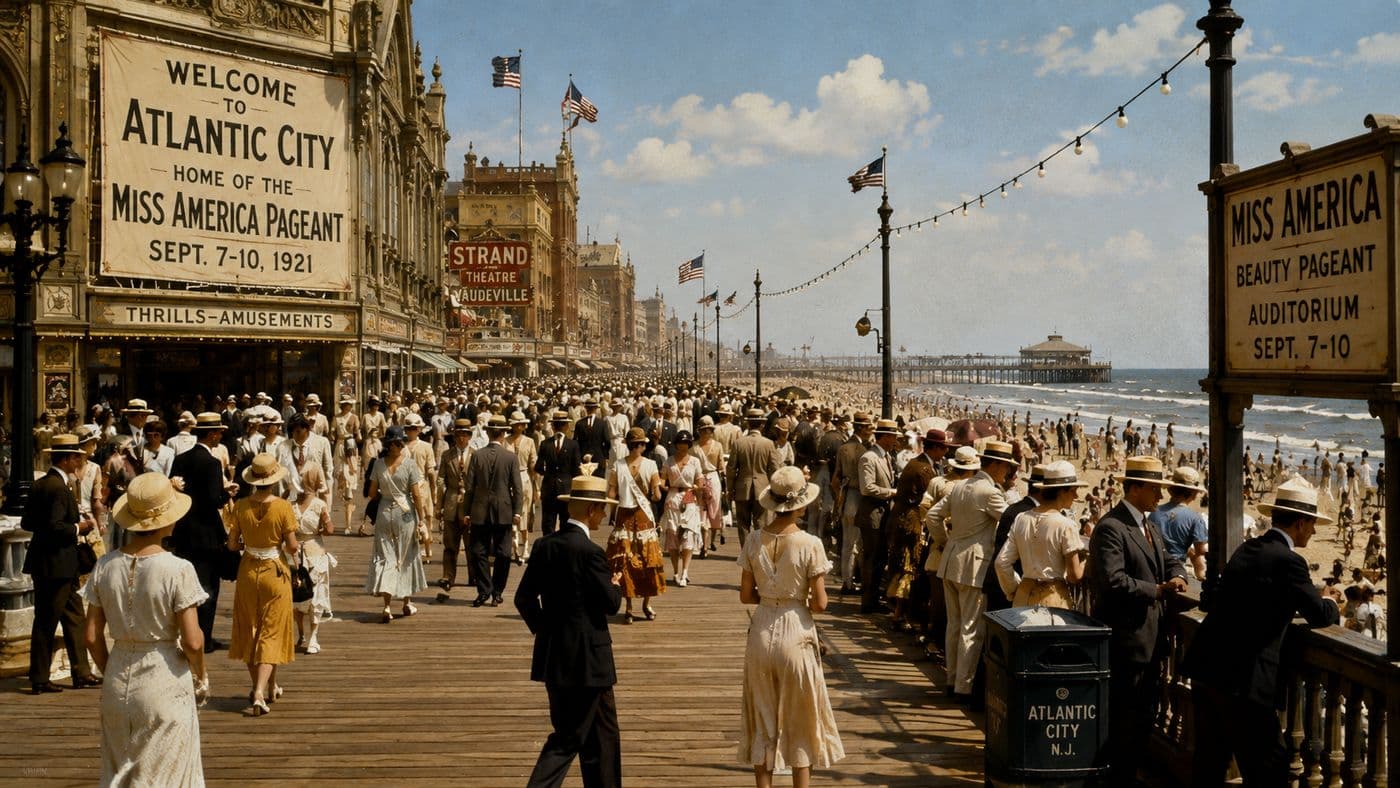
On September 7, 1921, the first Miss America Pageant was held on the boardwalk of Atlantic City, New Jersey — an event conceived by the city's Business Men's League as a promotional stunt to extend the summer tourist season beyond Labor Day and keep visitors in town for an additional week. The competition drew participants from several coastal cities on the Eastern Seaboard, and the winner — chosen by a panel of artists, including Howard Chandler Christy — was Margaret Gorman, a sixteen-year-old from Washington, D.C., who stood five feet one inch tall and weighed 108 pounds. Gorman was photographed extensively and described in press coverage in terms that reflected the era's beauty standards and its comfort with describing a sixteen-year-old girl's body in newspaper copy. The pageant was an immediate success in drawing tourists to Atlantic City and was repeated the following year, beginning the tradition that would eventually become one of the most recognized — and most debated — cultural institutions in American life.
The Miss America Pageant has been a mirror of American culture's evolving and contradictory attitudes toward women for more than a century. In its early decades it was largely a beauty competition, eventually adding a talent component in 1938 and a scholarship program in 1945 that transformed it, at least in theory, into something more than a measure of physical appearance. The pageant's history includes moments of genuine barrier-breaking — Bess Myerson became the first Jewish Miss America in 1945; Vanessa Williams became the first African American in 1984, as we covered in the July 23 post — and moments of institutional failure and cultural controversy that the scholarship framing has not always been able to contain. The organization has struggled for relevance in an era of changed cultural attitudes toward women's beauty and competition, reformatting the swimsuit competition, renaming itself Miss America 2.0, and facing questions about whether the institution conceived on the Atlantic City boardwalk on September 7, 1921, remains a meaningful or defensible form of recognition for women in the twenty-first century. The pageant continues. The argument about it continues with at least equal vigor.