September 6: The Iron Man, an Assassination, and a Billion People Saying Goodbye
September 6 is a day for things that had been building for a long time. In 1995, a shortstop from Baltimore played in his 2,131st consecutive game and broke a record that had stood for fifty-six years and been considered, by most serious observers of the sport, essentially unbreakable — and the crowd at Camden Yards gave him a standing ovation that lasted twenty-two minutes, because what he had done was not just statistically remarkable but morally resonant in a way that baseball had needed. In 1901, a president was shot twice while shaking hands with the public at a world's fair in Buffalo, in an act of political violence that killed him eight days later and elevated his vice president, Theodore Roosevelt, to the presidency — changing the course of American history in ways that the assassin almost certainly did not intend. And in 1997, a funeral at Westminster Abbey was watched by an estimated 2.5 billion people worldwide — the largest television audience in history to that point — for a woman who had died six days before and whose death had produced a scale of public grief that no one had fully anticipated. Three September sixths. Three encounters with how much human beings are capable of feeling, for very different reasons.
2,131
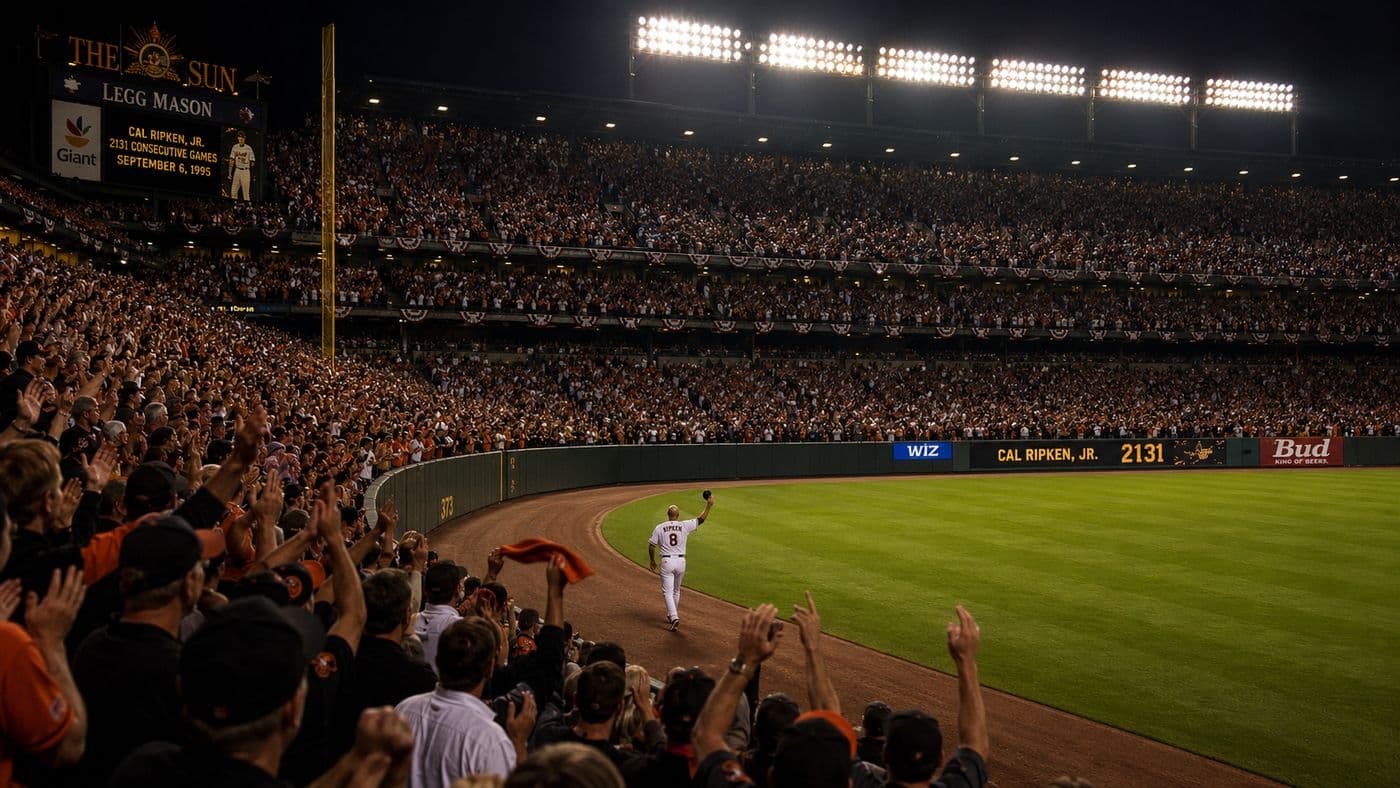
On September 6, 1995, Cal Ripken Jr. of the Baltimore Orioles played in his 2,131st consecutive major league baseball game — surpassing the record of 2,130 consecutive games set by Lou Gehrig of the New York Yankees between 1925 and 1939, a record that had stood untouched for fifty-six years and that most baseball people had long assumed would never be broken. Ripken had begun his consecutive games streak on May 30, 1982, and had played through injuries, slumps, and the various disruptions of a thirteen-year career without missing a single game. The record officially became his when the game against the California Angels became official — after the Orioles had completed their half of the fifth inning — and what happened next at Camden Yards in Baltimore has become one of the most replayed moments in baseball history: Ripken emerging from the dugout at the insistence of his teammates for a lap around the stadium's warning track, shaking hands with fans who had reached over the railing, the crowd rising and staying on its feet for twenty-two minutes.
The record Ripken broke on September 6, 1995, came at a specific moment in baseball's troubled history: the 1994-95 players' strike had cancelled the World Series for the first time in ninety years and had alienated a significant portion of the sport's fan base, leaving the game's relationship with its public genuinely uncertain. Ripken's streak — and the celebration of September 6 — offered something the sport badly needed: a story about values rather than economics, about showing up rather than holding out, about a player whose commitment to the game and to his team was legible and admirable in a way that the strike's arguments about revenue sharing were not. There was an element of conscious mythology-making in how the moment was received, but there was also something real at its core: Ripken had played in 2,131 consecutive games because he was very good, very durable, and deeply committed to the idea that you played unless you couldn't. He went on to extend the record to 2,632 consecutive games before voluntarily sitting himself down in 1998. No one else has come within a thousand games of that number.
The Temple of Music
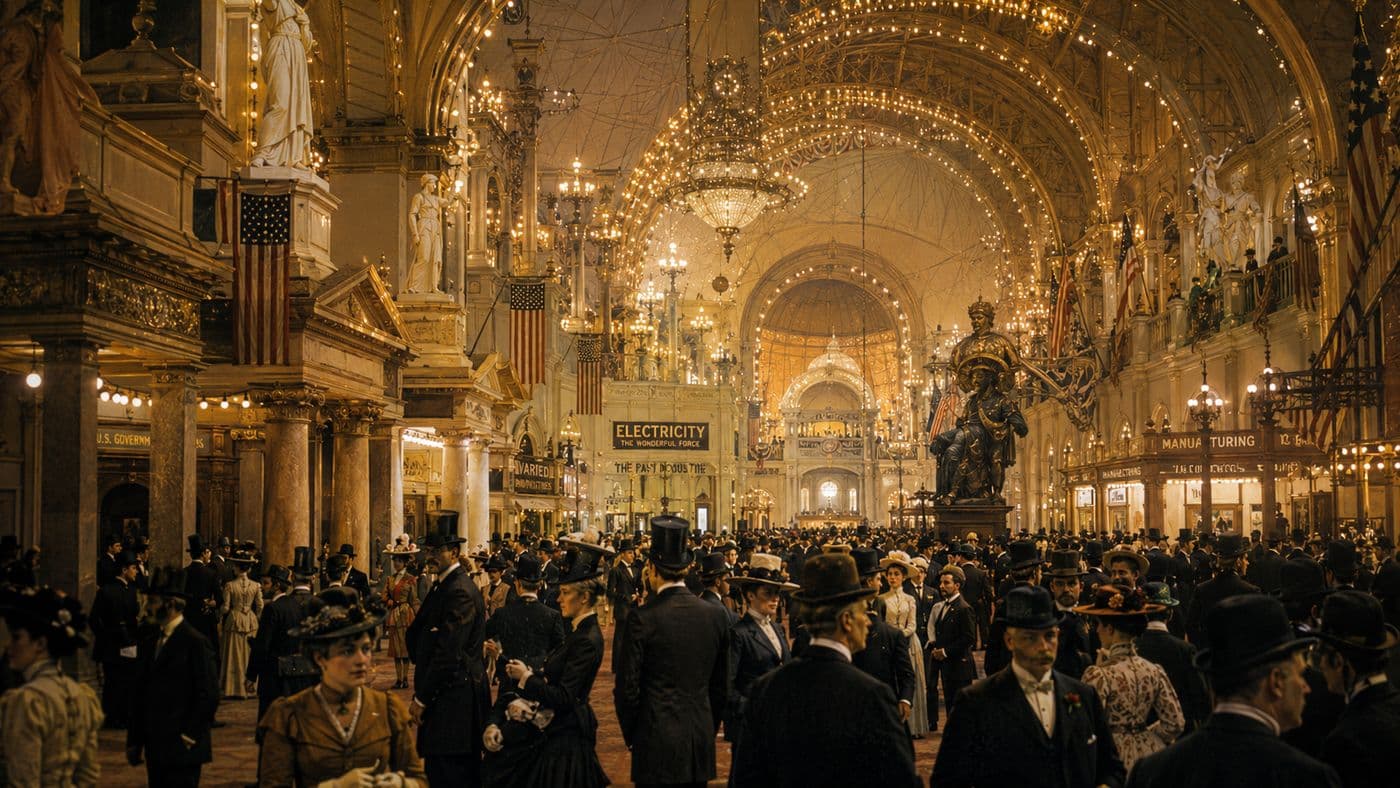
On September 6, 1901, President William McKinley was shaking hands with members of the public at a reception in the Temple of Music at the Pan-American Exposition in Buffalo, New York — a world's fair celebrating the industrial and cultural achievements of the Western Hemisphere — when a twenty-eight-year-old anarchist named Leon Czolgosz approached him in line with a revolver hidden beneath a bandaged hand and shot him twice at close range. One bullet grazed McKinley's sternum; the other entered his abdomen and was never found. McKinley was treated at the exposition's emergency hospital and then moved to a private residence in Buffalo; initial reports were cautiously optimistic, and Vice President Theodore Roosevelt, who had rushed to Buffalo, left to rejoin his family in the Adirondacks when doctors indicated McKinley appeared to be recovering. He was not recovering. Gangrene had set in around the abdominal wound, and McKinley died on September 14, 1901, eight days after the shooting.
The assassination of McKinley on September 6, 1901, was the third presidential assassination in thirty-six years — after Lincoln in 1865 and Garfield in 1881 — and produced an immediate and lasting transformation of presidential security. The Secret Service, which had existed since 1865 but had not been formally assigned to presidential protection, was given that responsibility as a direct result of McKinley's death; the physical protocols that now surround any American president — the security perimeters, the advance teams, the prohibition on unvetted close contact — began taking shape in 1901. The political consequence of the assassination was equally significant: the death of McKinley elevated Theodore Roosevelt to the presidency at the age of forty-two, making him the youngest president in American history, and Roosevelt's eight years in office produced a transformation of American progressive politics that the more conservative McKinley would almost certainly not have attempted. Czolgosz was tried, convicted, and executed by electric chair on October 29, 1901 — less than two months after the shooting. The man he killed left a legacy partly defined by the consequences of his own death.
Westminster Abbey
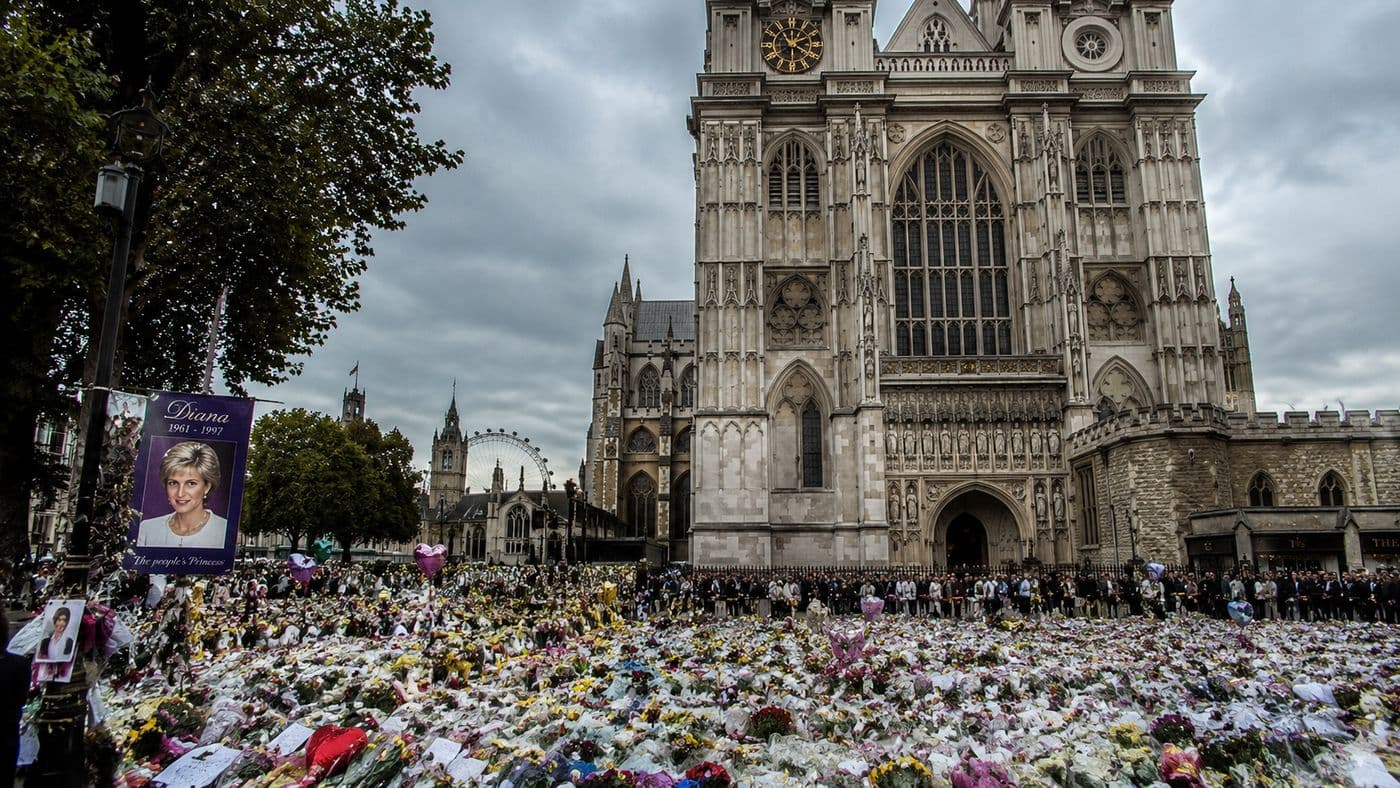
On September 6, 1997 — six days after her death in the Pont de l'Alma tunnel in Paris — Princess Diana's funeral was held at Westminster Abbey in London, attended by approximately 2,000 people inside the church and watched by an estimated 2.5 billion people on television worldwide, making it one of the most-watched broadcasts in the history of the medium. The streets between Kensington Palace and Westminster Abbey were lined with millions of mourners who had gathered in London from across Britain and the world; the route from the Abbey to her family estate at Althorp, where she was buried, passed through crowds of similar scale. The ceremony was conducted with the full ceremonial weight of a state funeral — though Diana, who had been stripped of her HRH title after her divorce from Prince Charles the previous year, was not technically entitled to one — and included a reading of a poem by her brother, Earl Spencer, and a performance of a reworked version of "Candle in the Wind" by Elton John.
The funeral of September 6, 1997, was both a genuine communal expression of loss and a media event of a scale and kind that had no real precedent. The grief that it channeled had surprised even those who had been observing Diana's relationship with the public closely: the outpouring in the week between her death and her burial — the flowers, the vigils, the public weeping, the queues stretching for miles — suggested that she had occupied a place in the emotional lives of people around the world that celebrity culture had created but not previously been called on to honor in quite this way. Earl Spencer's eulogy, which included a pointed critique of the media's treatment of his sister and a veiled criticism of the royal family that produced spontaneous applause from the crowd outside the Abbey, became one of the most discussed pieces of public rhetoric of the 1990s. The 2.5 billion who watched on September 6, 1997, were watching something that had never happened before — a global funeral for a figure who was neither a head of state nor a religious leader but who had, through the particular alchemy of her public life, become something the world felt it had lost personally.