September 5: A Massacre at the Olympics, a Republic Gets Its First President, and a Barrier Falls at the News Desk
September 5 carries three very different kinds of historical weight. In 1972, the Summer Olympics in Munich — conceived as a celebration of a new, democratic, open Germany, a deliberate contrast with the 1936 Games that had served Hitler — were shattered by a terrorist attack on the Israeli delegation that killed eleven athletes and coaches and demonstrated, permanently, that no gathering of the world's nations could be considered safe from political violence. One hundred and thirty-six years earlier, a former Tennessee governor who had reinvented himself as a Texas revolutionary was elected the first president of the Republic of Texas by a margin so overwhelming it barely counted as a contest. And in 2006, a woman sat down at the anchor desk of the CBS Evening News for the first time in the program's history — the first solo female anchor of a major American evening newscast — in a moment that had been coming since the medium itself was young. Three September fifths. Three arrivals, each one redefining something that had seemed fixed.
September 5, 1972
In the early hours of September 5, 1972, eight members of Black September — a Palestinian militant group — scaled the fence of the Olympic Village in Munich, made their way to the building housing the Israeli delegation, and took eleven members of the Israeli Olympic team hostage, killing two in the initial assault who resisted. The attackers demanded the release of 234 Palestinian prisoners held in Israeli jails and two German-held militants, and threatened to kill the hostages if their demands were not met. German authorities negotiated through the day while the world watched live television coverage of a crisis that unfolded, with extraordinary surrealism, within an event whose entire purpose was international peace and athletic celebration. West German officials, unwilling to release the prisoners, devised a rescue operation that collapsed at a military airbase at Fürstenfeldbruck that night — in a chaotic confrontation in which all nine remaining hostages were killed, along with a West German police officer and five of the eight attackers. The three surviving attackers were later released by the West German government following the hijacking of a Lufthansa flight — a release that Israel neither forgave nor forgot.
The Munich massacre of September 5, 1972, was a watershed moment in the history of modern terrorism — the first major terrorist attack to be broadcast live to a global television audience, demonstrating that international media events of sufficient visibility could be exploited to give small groups the attention of the entire world. The International Olympic Committee's response has been disputed ever since: the Games continued after a twenty-four-hour suspension, a decision that IOC President Avery Brundage justified with the phrase "the Games must go on" and that critics argued prioritized the Olympic brand over the lives of the murdered. Israel launched Operation Wrath of God in the years that followed, targeting the planners and organizers of the attack across Europe and the Middle East in a campaign that continued for years. The Israeli government's formal acknowledgment and the IOC's official memorial to the eleven victims were both slow in coming and remain contested. The name of each athlete and coach killed in Munich — Moshe Weinberg, Yossef Romano, Ze'ev Friedman, David Berger, Yakov Springer, Eliezer Halfin, Yossef Gutfreund, Kehat Shorr, Mark Slavin, André Spitzer, Amitzur Shapira — belongs on any honest account of the day.

The First President of Texas
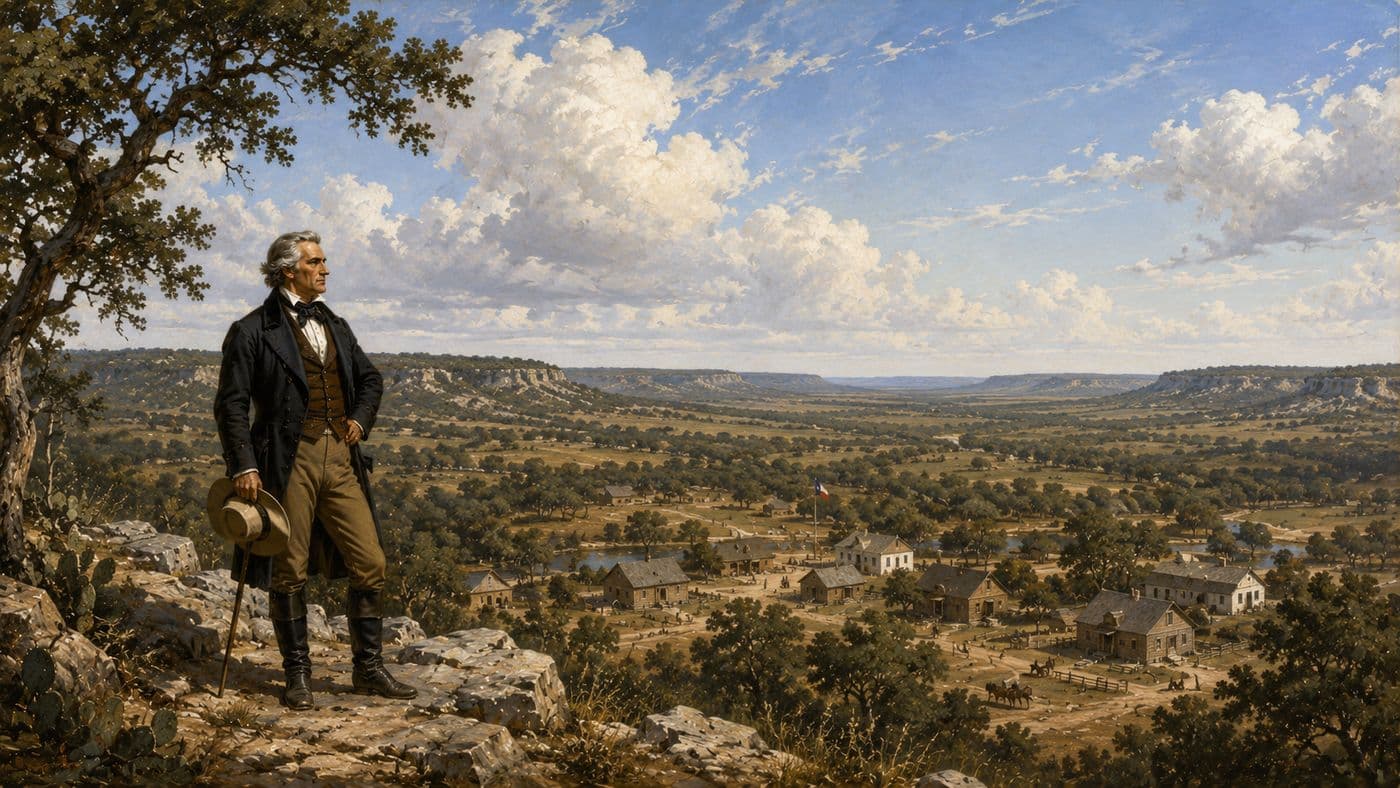
On September 5, 1836, Sam Houston was elected the first president of the Republic of Texas, winning more than 5,100 votes against his nearest competitor's 745 — a margin of victory so overwhelming that it required less an explanation of why he won than of why anyone ran against him. Houston had arrived in Texas in 1832, having served as governor of Tennessee, spent time living with the Cherokee Nation after his first marriage collapsed, and reinvented himself with the kind of frontier drama that the early nineteenth century seemed to produce and reward. He commanded the Texan forces in the revolution against Mexico, and his surprise victory at the Battle of San Jacinto on April 21, 1836 — a eighteen-minute engagement in which he captured Mexican General Santa Anna and effectively ended the war — had made him the dominant figure in Texan public life. The election of September 5 formalized what the battle had already decided.
The Republic of Texas that Houston was elected to lead on September 5, 1836, was a precarious entity from its first day — in debt, militarily vulnerable, diplomatically unrecognized by most of the world, and governed by a constitution that legalized slavery in a territory that abolitionist opinion in the United States was already beginning to contest. Houston served as president, was constitutionally barred from consecutive terms, served again, and then presided over Texas's annexation by the United States in 1845. He subsequently served as a U.S. Senator and then as governor of the state of Texas — giving him the distinction of being the only American to have served as governor of two different states and as the head of state of an independent republic. When Texas voted to secede from the Union in 1861, Houston refused to take the oath of loyalty to the Confederacy and was removed from the governorship — a final act of political independence from a man whose entire career had been defined by following his own judgment regardless of the consequences. He died in 1863, before the war's end. The man elected first president of Texas on September 5, 1836, turned out to have a longer and more complicated story than even that extraordinary beginning suggested.
The Anchor Desk
On September 5, 2006, Katie Couric made her debut as anchor and managing editor of the CBS Evening News, becoming the first woman to serve as the sole anchor of a major American evening newscast — a position that had been held exclusively by men since the form was invented. Couric had spent fifteen years as co-host of NBC's Today show, where she had built one of the most recognized profiles in American television journalism, before being recruited by CBS with a reported annual salary of $15 million — the highest in television news at the time. Her arrival at the Evening News was framed, within CBS and by the broader media industry, as a potentially transformative moment for a format that had been losing viewers steadily for decades as cable news and the internet fragmented the audience that had once gathered reliably every evening for a half-hour of network news.
The debut of September 5, 2006, drew approximately 13.6 million viewers — a strong opening that did not sustain itself. Couric's tenure at the CBS Evening News proved difficult: ratings remained lower than CBS had hoped, and critical reception was mixed in ways that often seemed to reflect the same gendered assumptions about authority and gravitas that her appointment was supposed to have challenged. She left CBS in 2011 after five years. Her legacy in the role is complicated but real: she demonstrated that a woman could anchor a major evening newscast, and every woman who has held or sought such a position since has done so in a landscape that her September 5, 2006 debut had changed. The glass ceiling she cracked at the anchor desk has not fully shattered — the major evening newscasts have continued to be predominantly male — but the argument that it was impossible ended on September 5, 2006, when someone sat down and did it.