
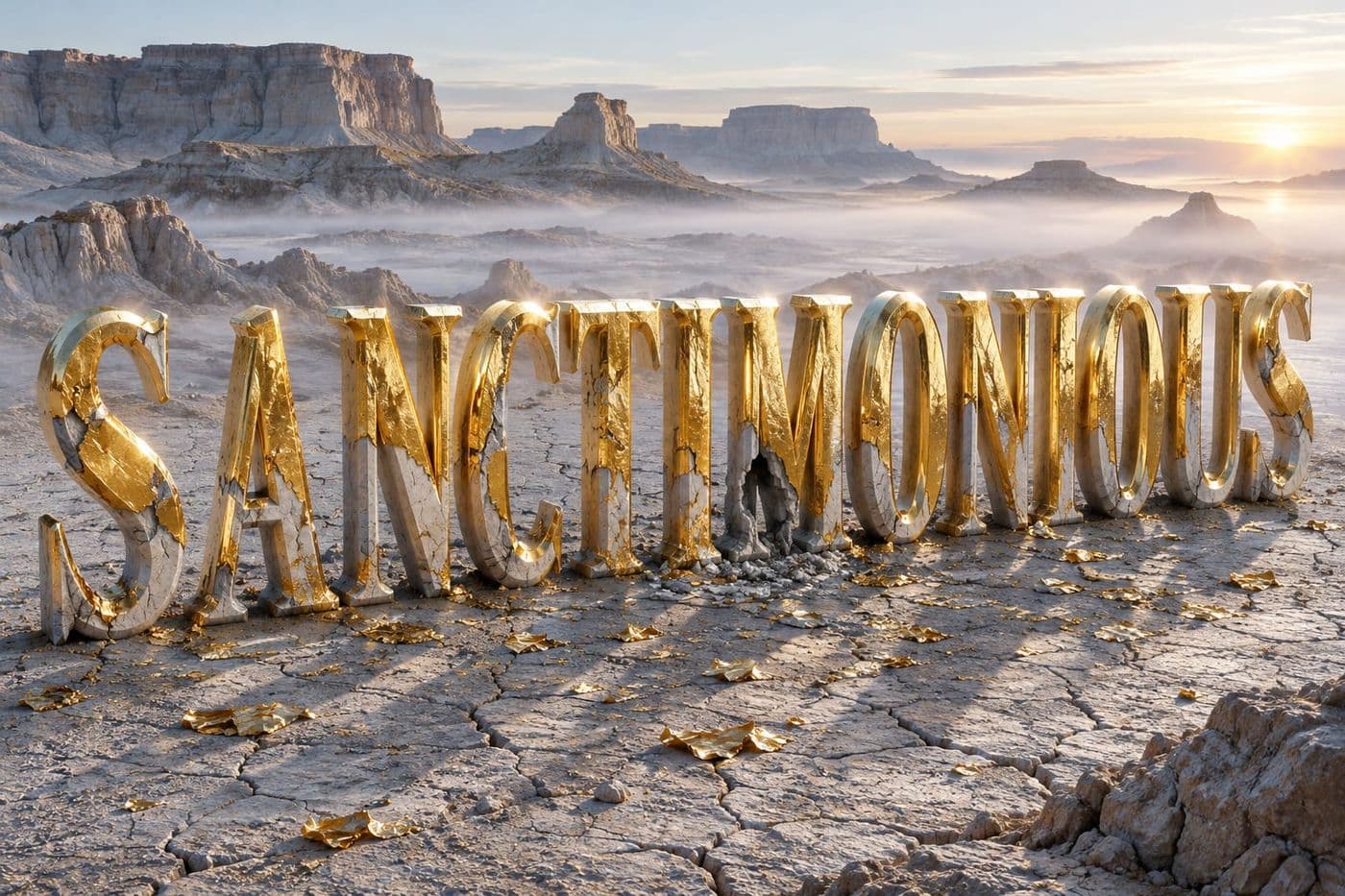
1 Definition
Making a show of being morally superior to other people, often in a way that feels hypocritical or self righteous rather than genuinely virtuous.
2 In Use
He scrolled past her sanctimonious post about ethical shopping, knowing full well she'd flown first class to get there.
3 Word Origin
sanctus Lat. · holy, sacred → sanctimonia Lat. · holiness, sanctity → sanctimonious 16th c. English
Sanctimonious traces back to the Latin sanctus, meaning holy or sacred, which gave rise to sanctimonia, a noun denoting genuine holiness or sanctity. When the word entered English in the sixteenth century as sanctimonious, it initially carried that same neutral, reverent sense of true moral purity. Over time, as public displays of piety became associated with pretense rather than sincerity, the word curdled into something sharper. By the time Shakespeare used it, the meaning had already tilted toward the hollow, performative virtue we recognize in the word today.
💡Fun Fact
Shakespeare helped cement the word's modern, critical edge: in Measure for Measure, the term appears in a context already tinged with suspicion of false holiness, suggesting the shift from reverence to reproach was well underway by the early 1600s. The word has since become a favorite tool for calling out moral grandstanding, especially in politics and social media, where public displays of virtue can mask private contradictions. Its close cousin, sanctity, kept the original positive meaning intact, making the two words a rare case of siblings that drifted in opposite moral directions. Today, calling someone sanctimonious is rarely a compliment, no matter how holy they sound.