
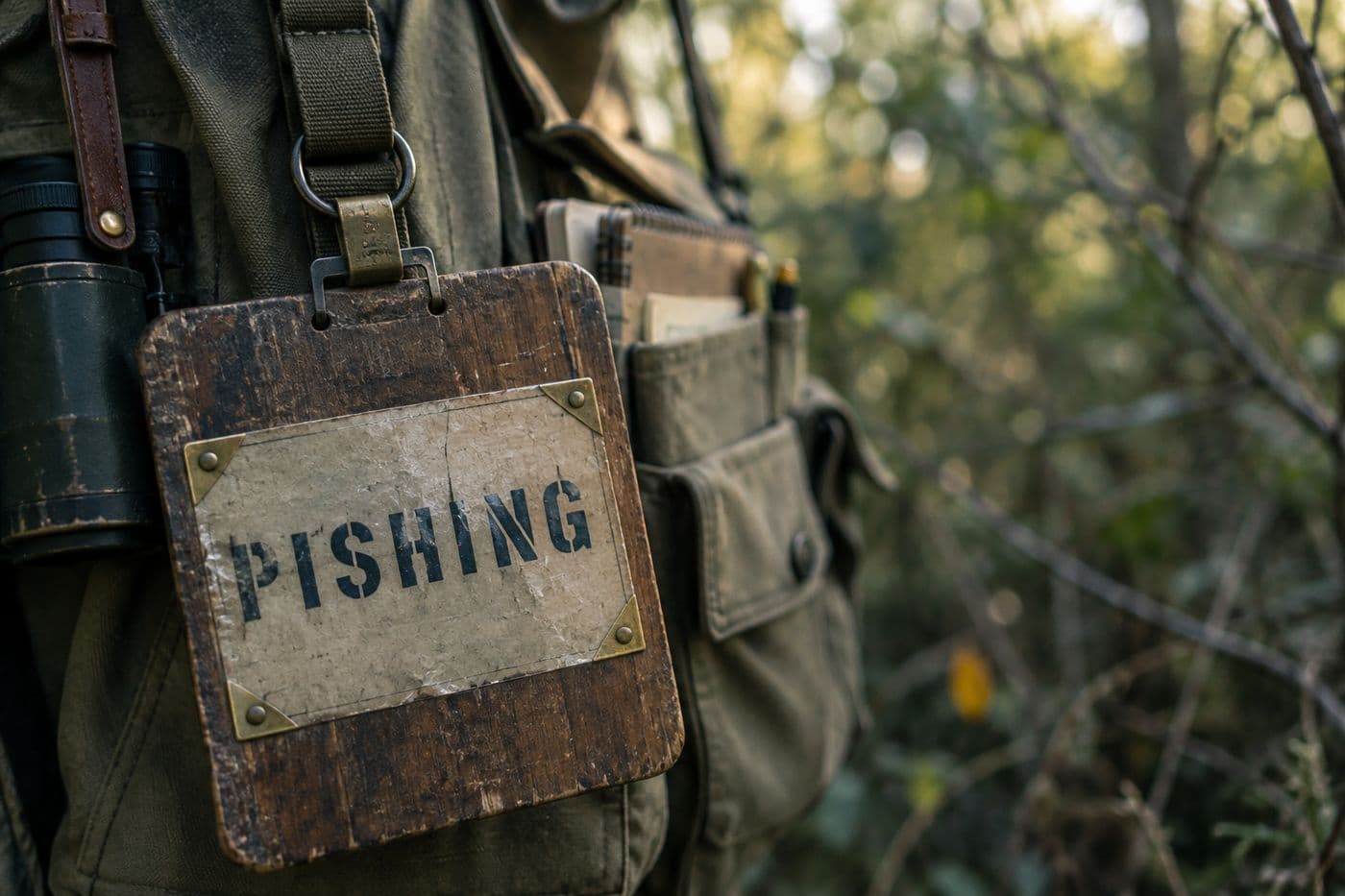
1 What It Means
To make repeated hissing or squeaking sounds through the teeth or lips to lure small songbirds out of dense cover for a closer look.
2 Caught in the Wild
Illustrative usage: "He crouched by the hedge, pishing softly until a chickadee popped up to investigate."
Illustrative usage. · Undated
3 Where It Comes From
Nobody can point to a single coiner. The word seems to have grown straight out of the sound itself, a bit of birder onomatopoeia that stuck sometime in the mid-twentieth century as field guides and bird clubs started teaching the technique formally. It never migrated into general English because the action it names has no use outside watching birds. You do not pish at anything else. The word stayed exactly where it was born, inside a hobby that kept refining its own private vocabulary for decades while the rest of the language had no reason to borrow it.
4 The World Behind the Word
Small songbirds like warblers, chickadees, and wrens often stay buried in thickets, more heard than seen. Many species respond to a sharp, repeated hiss because it resembles the scolding alarm calls birds make when they spot a predator like an owl or a snake. Curiosity and mobbing instinct pull them into the open to investigate the threat, giving a birder a few seconds of clear view. Different mixes of pish, sibilant hisses, and squeaky kissing sounds work on different species and in different regions, and experienced birders develop a personal repertoire. It works best on breeding grounds during nesting season, when parent birds are primed to defend territory, and barely at all on some species that never evolved to respond to alarm-like noise at all.
5 Use It Yourself
Drop this on a hike when someone asks how you got the warbler to show itself. It also works as a knowing aside if you spot someone crouched by a bush making odd hissing noises at a hedge. Nobody outside the hobby will know the word, so it doubles as a quiet handshake between birders, and it never reads as an insult even though it sounds a little like one.
Try it out loud
She pished twice near the brambles and a whole flock of chickadees came boiling out to see what was wrong.
🗝️The Deep Cut File
Birders argue endlessly over technique, and there is a small canon of pishing styles with their own reputations: the "psshh-psshh-psshh," the tongue-click, the squeaky kiss made against the back of the hand. Some species, especially in the American West, respond so reliably that certain nature reserves post signs discouraging visitors from pishing near nesting areas, since repeated false alarms can stress breeding birds and pull them away from guarding eggs. So the same trick that gets you a great look at a warbler can, overused, become a small act of harassment, which is why serious birding guides now teach restraint alongside the technique itself.