
1 What It Means
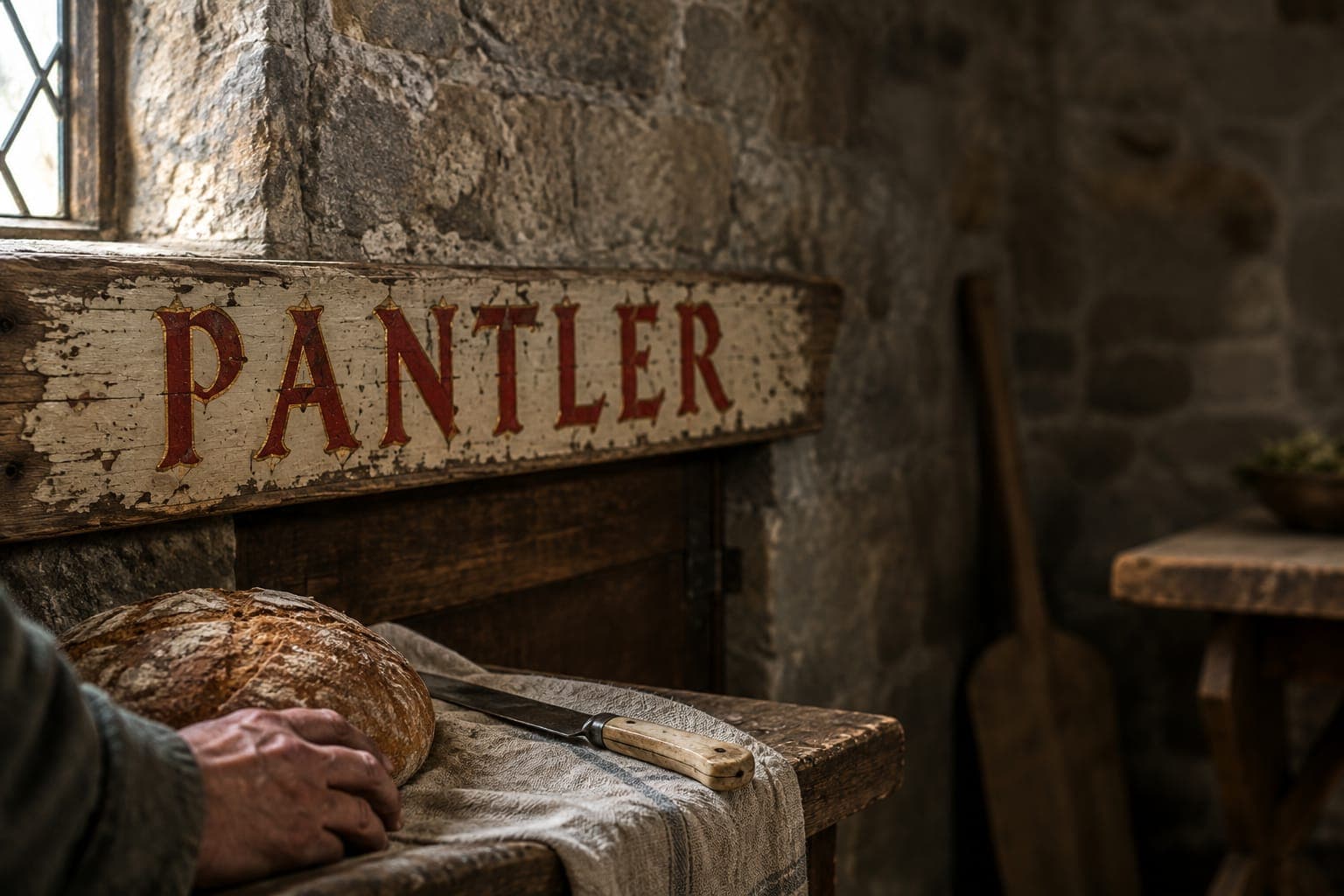
The medieval household officer who ran the pantry, guarding the bread supply and setting out the loaves, knives, and salt for the lord's table.
2 Caught in the Wild
The pantler cut the loaves, laid the knives beside the salt, and answered for every crumb of bread that left his keeping.
Illustrative usage. · Undated.
3 Where It Comes From
Pantler came into English from Anglo-Norman, the French spoken by England's ruling class after 1066. Its root is the Latin panis, bread, and it is a close relative of the French panetier, the bread officer. The word's spelling wobbled over the centuries, and the surname Panter is a likely leftover. So why did it die? The job went first. Great households shrank, bread came from commercial bakers, and the old division of labor into separate departments blurred. Duties drifted to the butler and the steward, and the title had nothing left to hold. Its cousin did better, because we still say pantry. The room outlived the man who ran it.
4 The World Behind the Word
A great medieval household worked like a small company with departments. Each one had its own room and its own officer. The pantry held bread, and the pantler answered for it. That mattered because bread was more than food. Stale loaves were cut into thick slices called trenchers, which served as plates, so the pantler was also running the tableware. Bread was handled by rank, and the lord's table was meant to get the best of it. The pantler was also tied to the ceremony of setting the table, which included the knives and the salt. Salt marked who sat above or below the seat of honor, so where it went was a statement about status. The household needed one accountable person for all of this because bread was a daily cost, and daily costs vanish if nobody is counting. The title was a job description and an accounting line in one.
5 Use It Yourself
Pantler earns its keep as a joke title. Hand it to whoever in your house guards the bread box, or to the one coworker who controls the office snack cabinet and rations it like a steward. It works well in a group chat about who is bringing rolls to Thanksgiving. The register trap is simple: almost nobody knows it, so you will need to explain it. That is half the fun. Say it with a straight face and wait for someone to ask.
Try it out loud
My brother appointed himself pantler at Thanksgiving and stood guard over the rolls until the turkey was carved.
🗝️The Deep Cut File
The pantler left a trail in the phone book. Panter and Pantler are English surnames, and they most likely began as nicknames or job labels for people who worked in a household's bread department. Surnames outlived the job the same way the pantry outlived the pantler. His French cousin made a longer journey. The Old French paneterie, the bread room, is the source of our pantry, so every kitchen cupboard labeled that way is a small monument to a vanished official. Look at the root and it gets stranger: pantry, panic-free as it sounds, shares its ancestor with companion, literally the person you share bread with, and with pannier, a bread basket. One Latin word for bread, four English words, and only one of them died.