
October 29: The 1.6-Million-Pound Recall That Might Be in Your Fridge
If you’ve bought hot dogs, bacon, sausage, or deli meat since spring, take a minute to check your refrigerator and freezer. Kayem Foods, a Massachusetts meat company, is recalling about 1.58 million pounds of ready-to-eat meat and poultry products that may have been stored at unsafe temperatures. The U.S. Department of Agriculture classified it as a Class I recall, its most serious level. No illnesses have been confirmed. See the full list of recalled products here.
How to Check Your Kitchen
The USDA’s Food Safety and Inspection Service announced the recall on October 17. It covers products made between about March 31 and October 7, 2026, including hot dogs, bacon, sausages, turkey breasts, hams, and other deli meats. They were shipped to stores and restaurants nationwide under several brand names, including Kayem, Al Fresco, McKenzie, Triple M, Deutschmacher, and Jordan’s. To find out whether your package is included, look for the USDA mark of inspection, a small circle printed on the label, and check for one of these establishment numbers inside it: EST. M/P 7839, EST. P 20935A, or EST. M 9520. If you have a recalled product, don’t eat it. Throw it away or return it to the store where you bought it for a refund.
The problem was discovered on October 1, when a retail customer complained that products arrived warm. Kayem investigated and found that a cooler in one of its warehouses had been malfunctioning. That matters because ready-to-eat meats like hot dogs and deli slices are often eaten without being cooked again, so there is no final heating step to kill bacteria that may have grown during storage. Food safety experts call 40 to 140 degrees Fahrenheit the “danger zone,” the range where bacteria multiply fastest. Because many of these products last for weeks in the refrigerator and months in the freezer, recalled packages may still be in kitchens across the country.
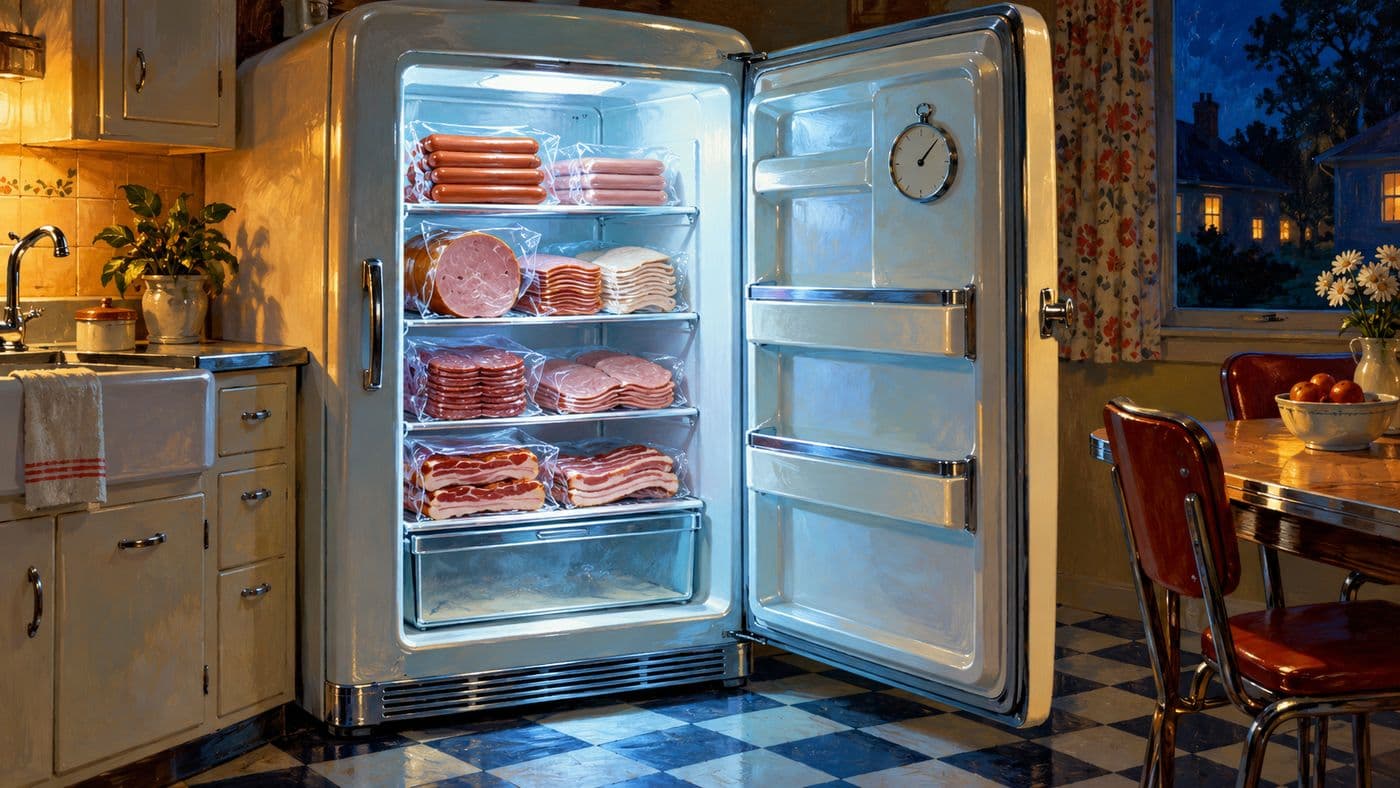
The small stamp you check for on that package has a history of its own. In 1906, Upton Sinclair published The Jungle, a novel that exposed filthy conditions in Chicago’s meatpacking plants and shocked the country. Within months, President Theodore Roosevelt signed the Federal Meat Inspection Act, which created the federal inspection system behind the USDA mark you see on meat today. More than a century later, that same system is how a problem in one warehouse cooler can be traced to specific products and pulled from shelves across the country.