
October 19: The Night Limoges Burned
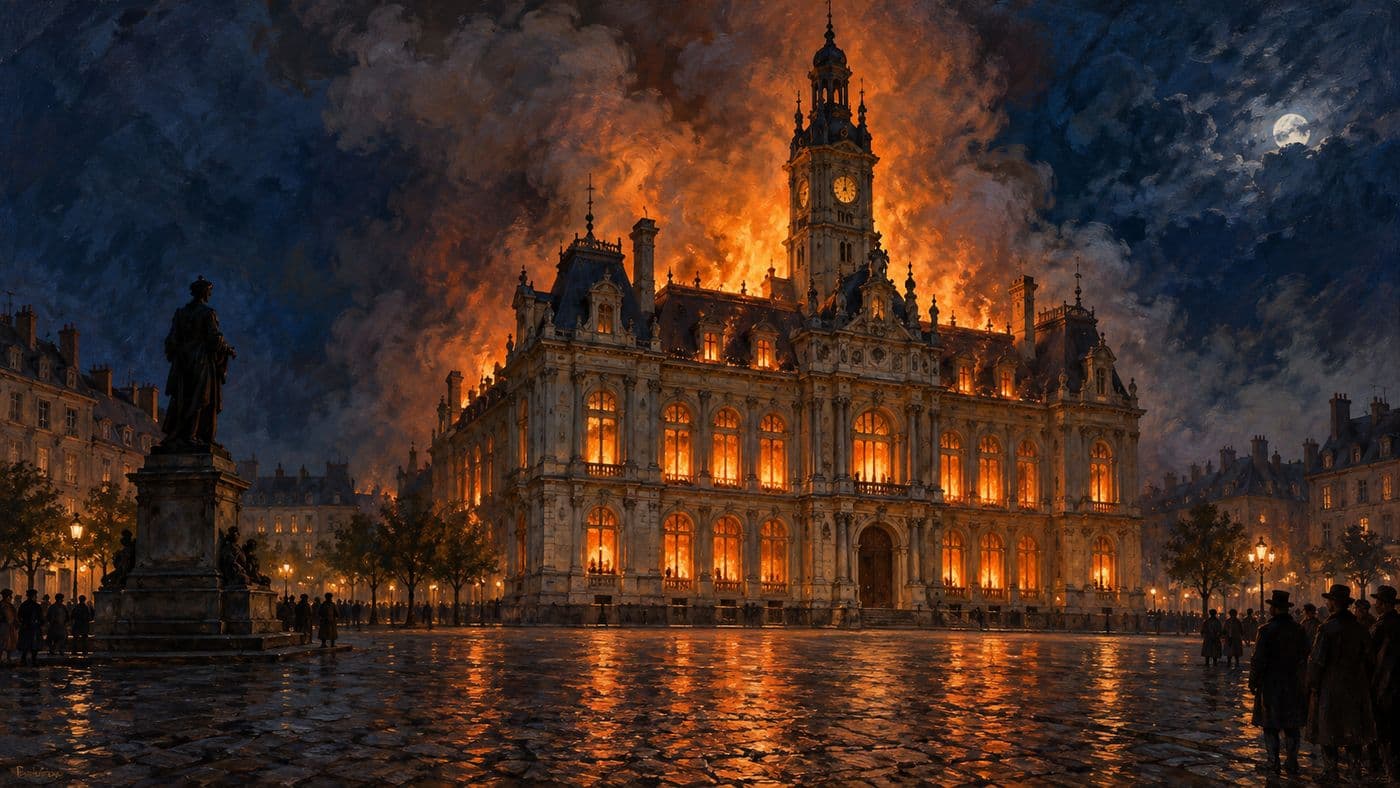
France is taking stock this week after Saturday, October 17, when nationwide marches over the rising cost of living and conditions in the country’s schools turned into some of the most destructive unrest it has seen in decades. By Sunday, authorities reported at least 1,800 arrests, hundreds of looted shops, and one devastating image that came to stand for the whole crisis: the 143-year-old city hall of Limoges, engulfed in flames, its clock tower collapsing into the fire.
A Republic’s Symbol in Flames
The day started peacefully. Interior Minister Laurent Nuñez put nationwide turnout at about 550,000 people, while the CGT union counted 800,000. Hundreds of thousands marched in scores of cities, in a movement that grew out of student protests over school conditions. As the afternoon went on, masked groups broke away from the marches. They attacked police, looted supermarkets and luxury boutiques, and set fire to public buildings, including several city halls. In Limoges, a city in central France famous for its porcelain, the regional prefect, Maurice Barate, said “radical troublemakers” forced their way into the 1883 city hall while elected officials, employees, and members of the public were inside, and deliberately set it alight. By the time the fire was brought under control on Sunday, the roof and tower had fallen in and most of the building was destroyed.
The human and political toll grew quickly. Officials said more than 500 police officers, gendarmes, and firefighters were injured. France’s police watchdog opened investigations into at least two dozen allegations of police violence, including a case in which a teenager reportedly lost a hand after picking up a stun grenade. President Emmanuel Macron called an emergency meeting of senior officials and promised to hold accountable those who, in his words, “sought to bring down the Republic.” Prime Minister Sébastien Lecornu wrote that “no one will impose their political agenda through violence.” Within hours, politicians across the spectrum were arguing over who was to blame and over the economic grievances that had brought so many peaceful marchers into the streets.
France has a long history of protest in the streets. Parisians stormed the Bastille in 1789. Students and workers brought the country to a standstill in May 1968. Three weeks of riots spread from the Paris suburbs in 2005. The Gilets Jaunes, or yellow vests, filled roundabouts across the country in 2018, and riots over pension reform and police violence followed in 2023. Each wave changed French politics in some way, and many observers already see this weekend as part of that tradition. Reporters for Agence France-Presse wrote that Saturday’s unrest appeared to surpass the scale and intensity of earlier episodes. The coming weeks will decide what this moment means: whether the anger over living costs and schools leads to reform, or whether the burned city hall in Limoges is remembered as the start of a longer crisis.