
The Show the World Cup Never Had
This morning, FIFA announced that Shakira, Madonna, and BTS will co-headline the first-ever halftime show at a FIFA World Cup Final — an 11-minute performance at MetLife Stadium in East Rutherford, New Jersey, on July 19, 2026, curated by Coldplay's Chris Martin and broadcast live to a global audience that will dwarf almost any other event in television history. The announcement — made via a video featuring Martin, Elmo, Miss Piggy, Kermit the Frog, and a FaceTime cameo from BTS — introduces a Super Bowl-style spectacle to a tournament that has never had one, in a country that changed its relationship with soccer the last time it hosted this tournament, and that is about to do so again.
From Empty Stadiums to Elmo: How America Learned to Love the World Cup
When FIFA awarded the 1994 World Cup to the United States in July 1988, the international soccer establishment was skeptical in a way that bordered on contempt. The North American Soccer League had folded four years earlier. The country had no professional league. A survey taken before the tournament found that a majority of Americans didn't even know the World Cup was coming to their country. Skeptics in Europe and South America argued that a nation more interested in football, baseball, and basketball had no business hosting the world's most popular sport. What happened instead was one of the most successful sporting events in history: 3.6 million spectators filled stadiums from Los Angeles to New York, an all-time World Cup attendance record that still stands 32 years later. The tournament required FIFA to mandate the creation of a professional soccer league as a condition of the hosting bid — and so Major League Soccer was born, launched in 1996 with 10 teams and now home to 30 clubs across North America. The 1994 World Cup didn't just host soccer in America. It planted it.
The 2026 World Cup — the first in U.S. history to be co-hosted with Canada and Mexico, the first to feature 48 teams, and the first to stage a Super Bowl-style halftime show at its final — arrives in a fundamentally different country than the one that welcomed the world in 1994. Two of today's three announced headliners have headlined the Super Bowl halftime show themselves: Madonna took the field at Super Bowl XLVI in Indianapolis in 2012; Shakira co-headlined with Jennifer Lopez in Miami in 2020. Both understand exactly what this stage demands. BTS — the South Korean group whose global fanbase, the BTS ARMY, represents perhaps the most organized and passionate fan culture in the history of popular music — brings a kind of international reach that no Super Bowl halftime show has ever assembled. Together, the three acts span Colombia, the United States, and South Korea, covering, between them, a significant portion of the planet's musical imagination. The World Cup final is the most-watched annual sporting event on earth. This July, it will be the most-watched musical performance too.
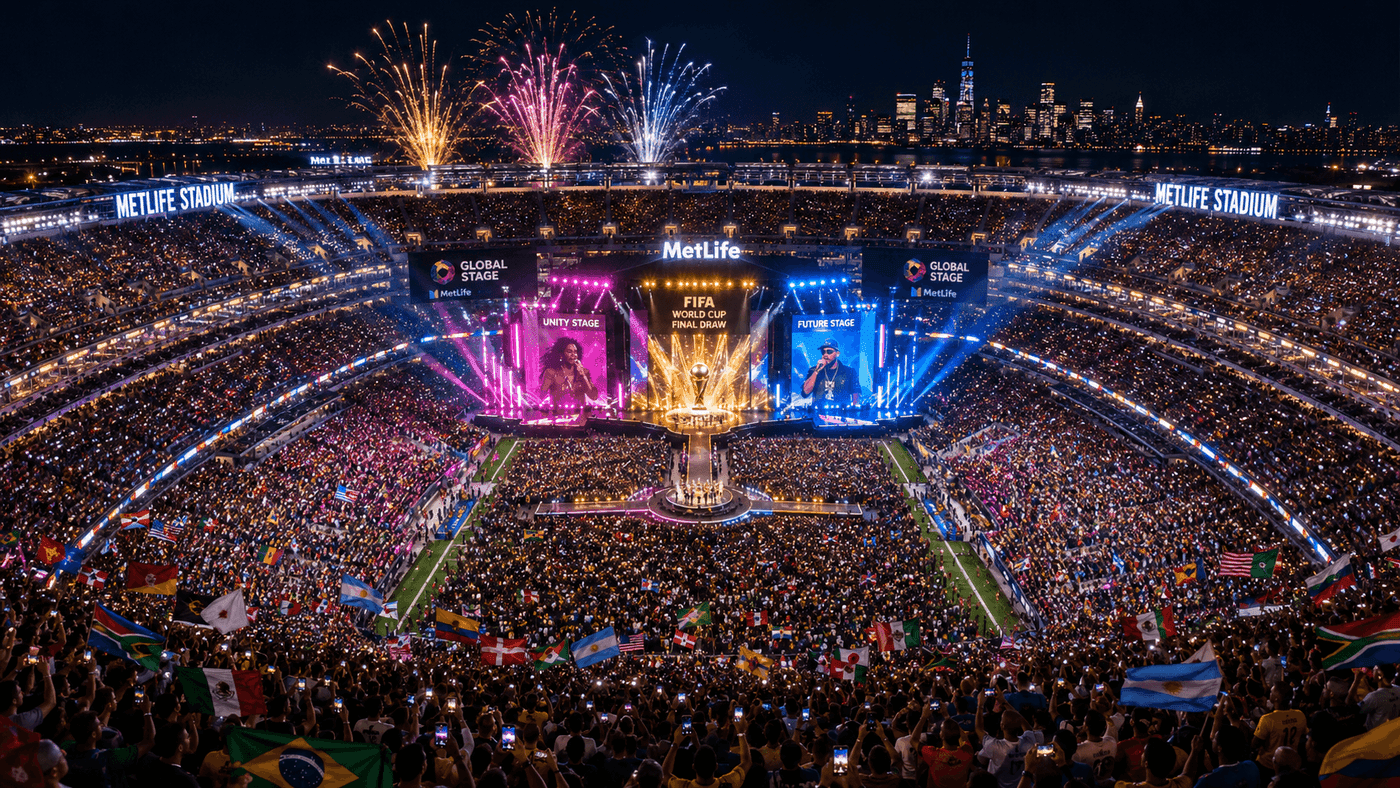
Shakira, specifically, carries her own World Cup history to this stage: she performed the official song of the 2010 World Cup in South Africa — "Waka Waka (This Time for Africa)" — a track that became one of the best-selling World Cup songs ever recorded, and performed at the 2024 Copa América final. Now she headlines the 2026 final halftime show and has recorded "Dai Dai," the official song of this year's tournament, with Burna Boy. For an artist whose career has been intertwined with the World Cup for 16 years, July 19 at MetLife Stadium will be something close to a full circle. For American soccer, which started with a majority of the country not knowing the World Cup was coming in 1994 and arrives at 2026 with the world's most famous musicians competing to perform at its final, it is something closer to a transformation complete. The tournament starts June 11 in Mexico City. The show is July 19 in New Jersey. The world is invited.