
The Week That Could Change the World
Today and tomorrow, May 13 and 14, 2026, President Donald Trump meets with Chinese President Xi Jinping at the Great Hall of the People in Beijing — the first American president to set foot in China since Trump himself did so in November 2017, and the first U.S.-China summit to take place against the backdrop of an active American war since the Cold War. The agenda spans the entire architecture of the 21st-century world order: trade and tariffs, rare earth minerals, artificial intelligence, Taiwan, the Iran ceasefire, the Strait of Hormuz, and the question of whether the world's two largest economies can find a stable equilibrium before the pressures pulling them apart grow too great to manage. Elon Musk traveled with the president. Taiwan is watching every word. Iran is watching every word. The Strait of Hormuz remains contested. And in Beijing, Xi Jinping — who told his cadres that "the East is rising and the West is declining" — is hosting an American president who needs his help and knows it. History has seen visits like this before. The last one was called "the week that changed the world."
Only Nixon Could Go to China. Now Everyone Goes to China.
On the morning of February 21, 1972, Air Force One touched down in Beijing and Richard Nixon became the first American president ever to set foot in the People's Republic of China — ending 23 years of diplomatic silence between the two nations. Nixon had spent his entire political career as a ferocious anti-communist; his willingness to fly to Beijing was so counterintuitive that it produced an enduring political maxim: "Only Nixon could go to China," meaning only a politician with unimpeachable credentials among those who would most oppose the act could credibly perform it. Nixon's purpose was triangulation: by opening to China, he hoped to pressure the Soviet Union into arms negotiations and pressure North Vietnam into a peace settlement. He got the first — within two months of returning from Beijing, Nixon flew to Moscow and signed the SALT I arms treaty. He did not get the second: China declined to pressure Hanoi, and the Vietnam War ground on. Taiwan was left unsettled, with the Shanghai Communiqué leaving each side free to maintain its own position on the island's status in deliberately ambiguous language that would define every subsequent American administration's China policy — and that is being renegotiated, by implication, in Beijing this week.
The parallel between 1972 and today is striking and deliberately invoked — and it is also, on inspection, incomplete in ways that matter. Nixon went to Beijing from a position of strategic initiative: he chose to go, he controlled the terms, and the Chinese were eager to welcome him because the Soviets frightened them. Trump arrives in Beijing from a position of genuine need: the ceasefire with Iran is on life support, the Strait of Hormuz remains contested, and China holds considerable leverage — over rare earth exports, over Iranian energy revenues, over the regional alignments that could either stabilize or explode the Middle East. Last year, when Trump pushed tariffs past 140 percent, Xi threatened to restrict rare earth exports and Trump backed down. The Council on Foreign Relations noted before the summit that China "feels confident enough to stand up to Trump on many key issues." The Iranian Foreign Minister visited Beijing last month. China is not a passive audience at this summit — it is a protagonist, with interests, leverage, and a long-term strategic vision that extends well beyond the current crisis. The 1972 visit changed the world because Nixon held the initiative. Whether this week changes anything will depend, in part, on who is really setting the terms.
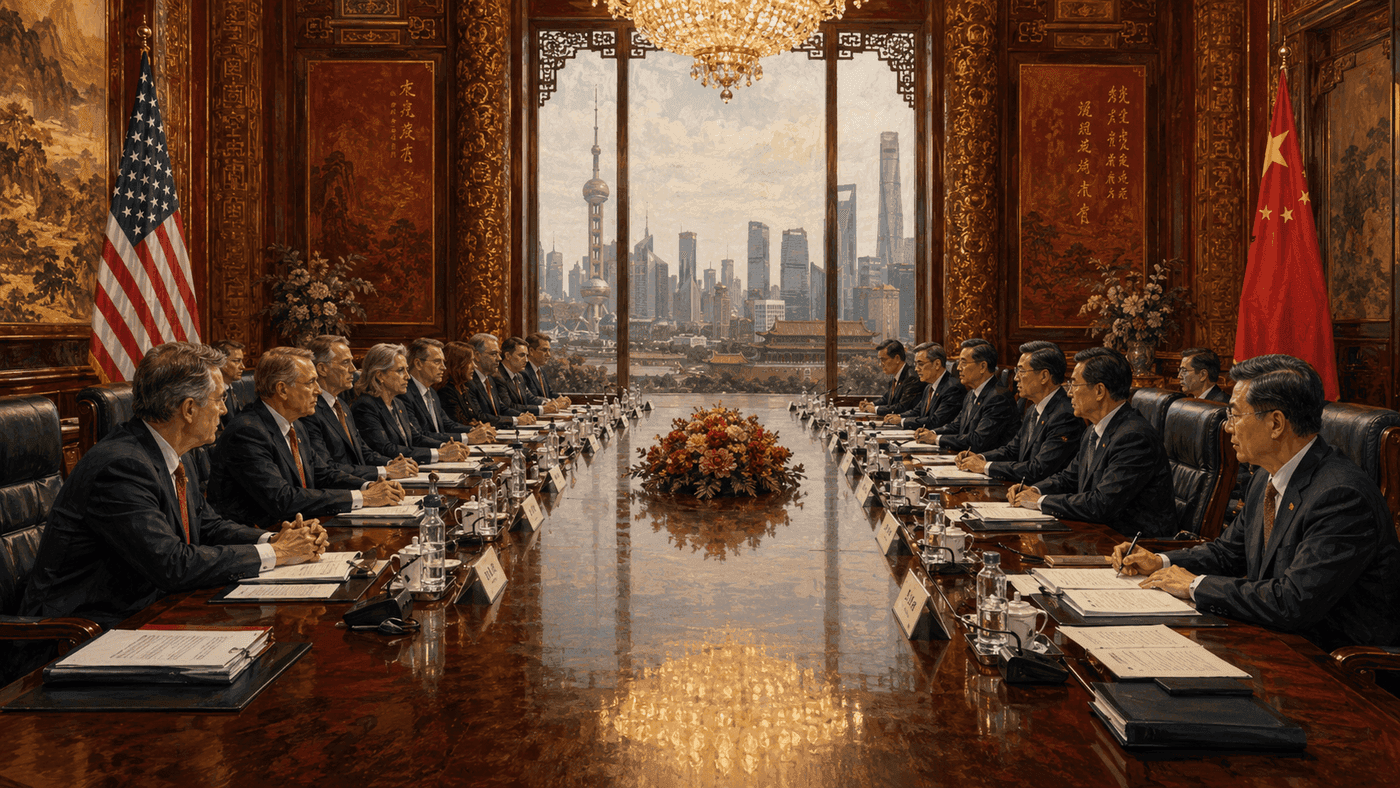
Nixon called his 1972 visit "the week that changed the world" — a phrase that, 54 years later, historians still debate. The visit produced the Shanghai Communiqué and eventually full diplomatic recognition in 1979; it also produced the deliberate ambiguity on Taiwan that every subsequent administration has inherited and that is now being actively renegotiated. It opened China to the world and provided the ideological cover for the economic reforms of the 1980s that transformed China from an isolated communist state into the greatest economic expansion in human history — and, ultimately, into the strategic competitor that now hosts American presidents as a matter of routine. What Nixon began in 1972 is, in many respects, what Trump and Xi are managing in 2026: the consequences of an opening that changed more than anyone anticipated, with stakes that no one fully mapped. The outcomes of this week's conversations — on Iran, on Taiwan, on trade, on the technologies that will shape the next century — will be parsed by historians for decades. They are happening right now, in rooms the world cannot see, with consequencesthat will take years to fully understand. That is what this kind of week always looks like. Nixon knew it in 1972. The world is watching again today.