June 8: Two Leagues Become One, A Porsche Is Born in Austria, Justice Arrives at Heathrow
June 8 is a date that understands the long game. The NFL-AFL merger announced on this day in 1966 would not be fully complete for four more years, but its announcement set in motion a consolidation that turned professional football into an institution so large and so embedded in American life that it is difficult to remember the country without it. The first Porsche, tested on Austrian roads in 1948, was the beginning of a brand that would take decades to become the cultural symbol it is today. And the arrest of the man who killed Martin Luther King Jr. at London's Heathrow Airport in 1968 was not justice — it was the beginning of a legal process that would deliver a partial accounting of one of the decade's most devastating crimes. Three stories about the gap between an event and its full meaning, and the patience required to let the distance close.
One League to Rule Them All
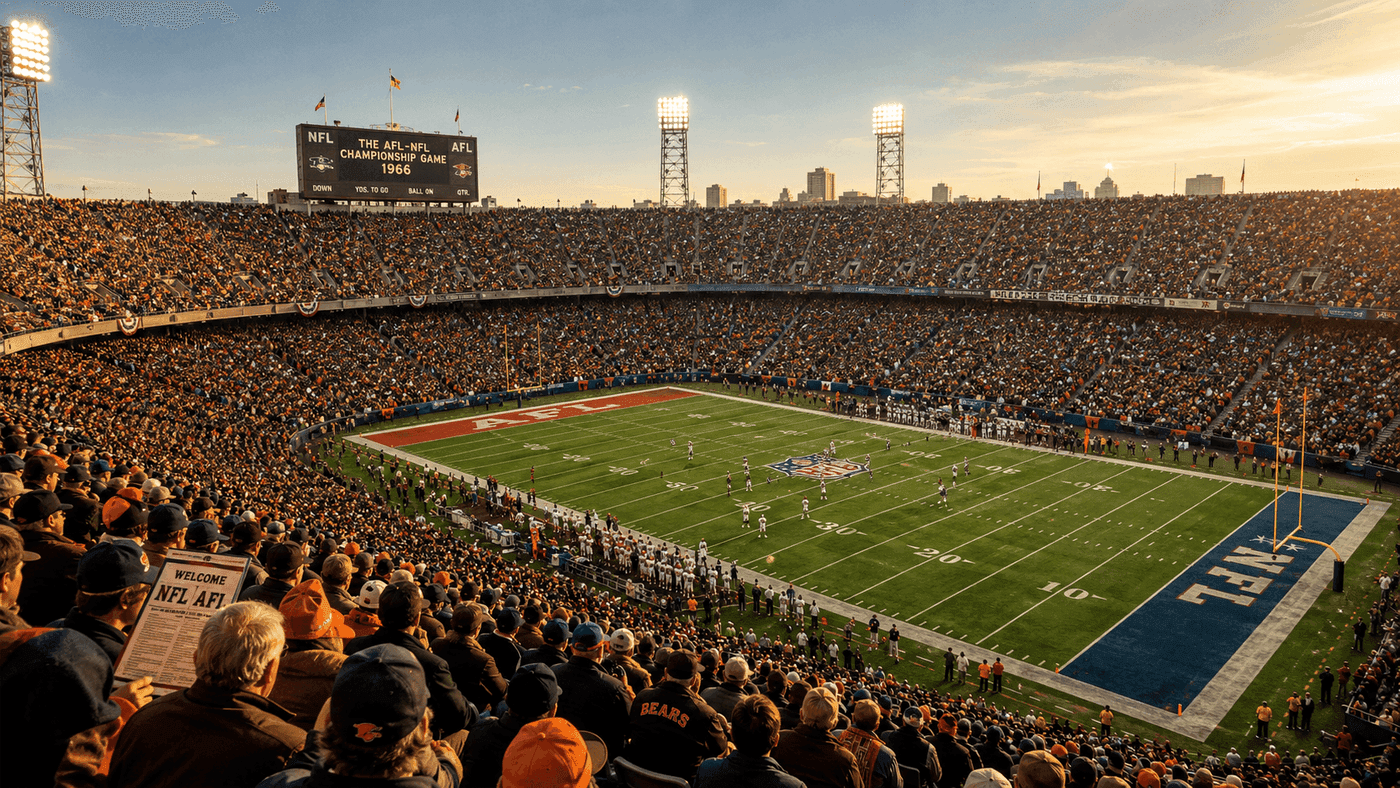
On June 8, 1966, NFL Commissioner Pete Rozelle and AFL Commissioner Al Davis announced that the two rival professional football leagues would merge into a single organization, effective with the 1970 season. The AFL had been founded in 1960 by a group of team owners who had been denied NFL franchises, and its six years of existence had been defined by escalating competition with the established league for players, television contracts, and fan loyalty. The AFL had secured a lucrative television deal with NBC, signed star players away from NFL teams with larger contracts, and proven itself sufficiently competitive to force the merger rather than simply fold. The agreement negotiated between the two leagues called for the AFL's ten teams to join the existing sixteen NFL teams, a combined championship game — which would become the Super Bowl — to begin immediately, and full league integration including a common draft and shared scheduling by 1970.
The merger announcement on June 8, 1966 is, in retrospect, one of the most consequential decisions in American sports history. The unified NFL that emerged from it — with its revenue-sharing model, its national television contracts, and its careful management of scarcity through a hard salary cap — became the most financially successful sports league in the world, generating revenues that by the 2020s exceeded $18 billion annually. The Super Bowl, born directly from the merger agreement, became the single most-watched annual television event in the United States, drawing audiences of 100 million or more and commanding advertising rates that function as a barometer of American commercial culture. Professional football's dominance of American sports media — its displacement of baseball as the national pastime in the public's affection, its penetration into every week of the American calendar from September through February — can be traced directly to the structural decisions made in the merger agreement of June 8, 1966. The two men who announced the deal that day could not have fully imagined what they were building.
Number One
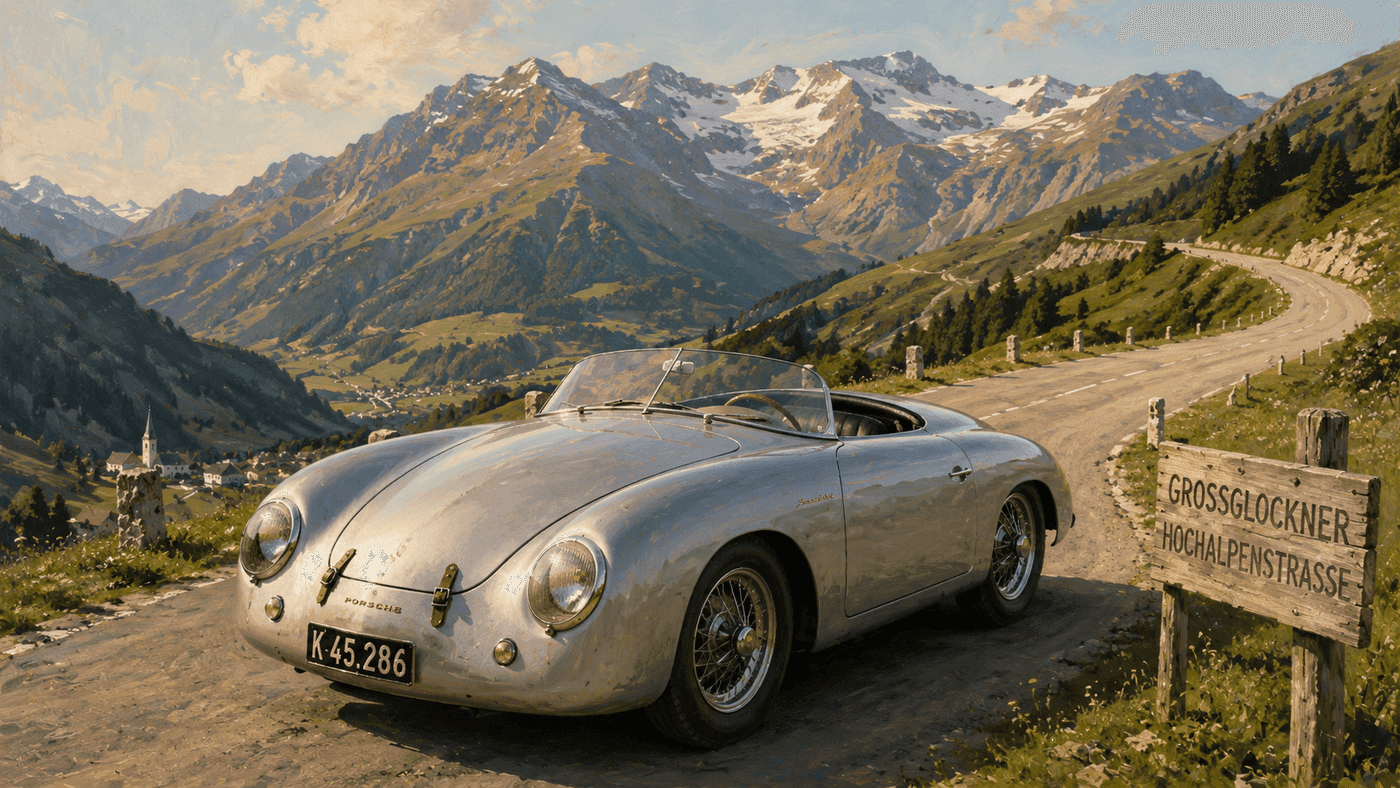
On June 8, 1948, in the Austrian town of Gmünd — where Ferdinand "Ferry" Porsche had established a workshop after the war, in a former sawmill, far from the bombed-out Stuttgart facilities his father's engineering firm had occupied before 1945 — the first Porsche automobile took to the road. The car, registered as "Porsche 356 No. 1 Roadster," was a hand-built two-seat open vehicle constructed largely from Volkswagen components: suspension, gearbox, and a rear-mounted air-cooled flat-four engine producing approximately 35 horsepower. It weighed less than 1,300 pounds. Ferry Porsche had designed it because, as he later explained, he could not find a car that he wanted to buy — so he built one himself. The prototype received its official road registration on June 8, 1948, and Ferry Porsche drove it that day on Austrian mountain roads, covering approximately 1,800 miles of testing in the days and weeks that followed.
The 356 that began with that single prototype in a Gmünd sawmill went into limited production in Austria before the company moved back to Stuttgart in 1950 and expanded manufacturing. By the time production ended in 1965, 76,000 examples had been built — extraordinary for a small sports car manufacturer rebuilding in postwar Europe. The 911 that followed in 1963 became the model that cemented the brand's identity, and the rear-engine, air-cooled architecture that Ferry Porsche had adopted from Volkswagen necessity in 1948 was carried forward, with considerable refinement, until the 911's air-cooled engines were finally replaced in 1998. The car that took its first drive on June 8, 1948, began a lineage that is still in production more than seventy-five years later — built from compromise and borrowed parts, in a sawmill in the Austrian mountains, by a man who couldn't find what he wanted and decided to make it instead.
Heathrow, June 8
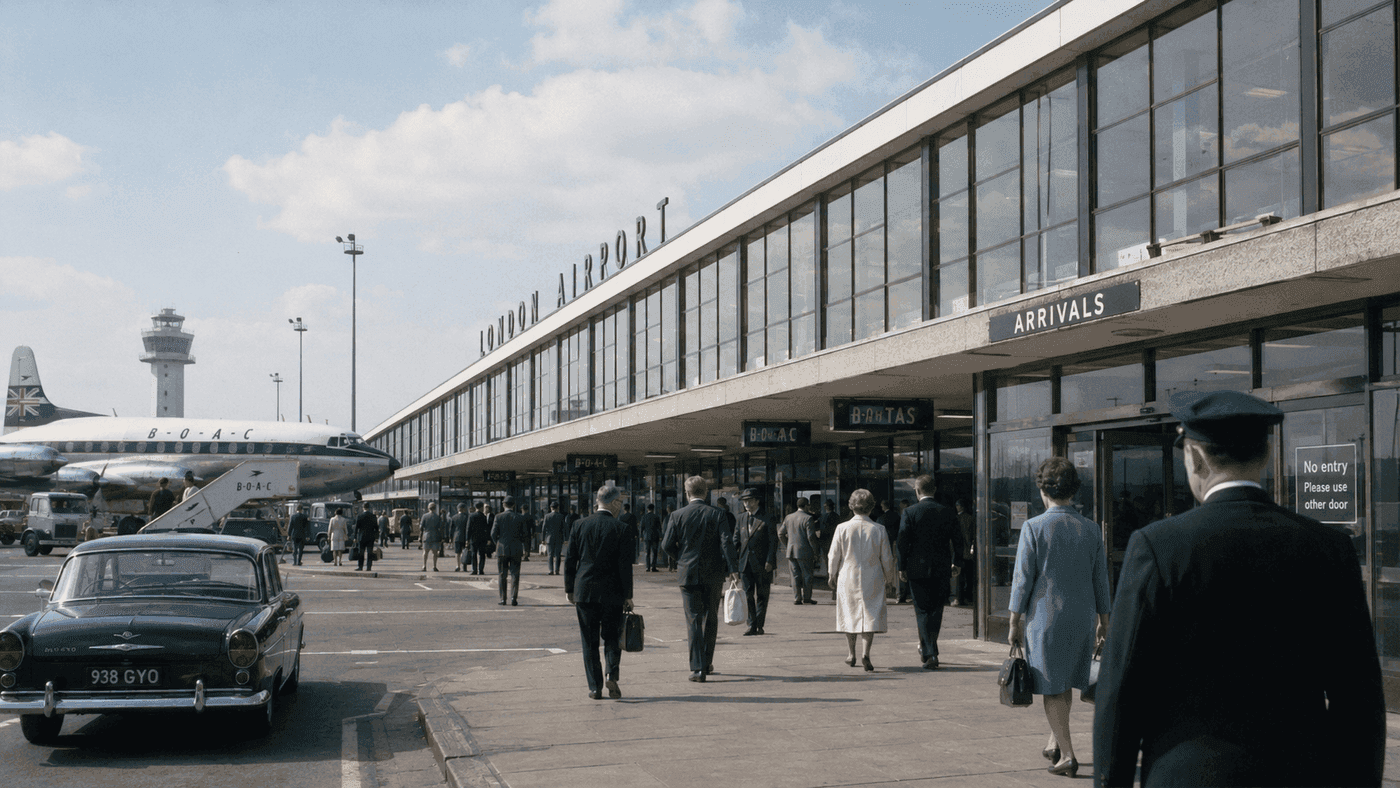
On June 8, 1968 — sixty-two days after the assassination of Dr. Martin Luther King Jr. in Memphis, Tennessee — James Earl Ray was arrested by British police at London's Heathrow Airport while attempting to board a flight to Brussels. Ray had been traveling on a Canadian passport under a false name and was carrying a second false passport. He had left the United States in the days after the April 4 shooting, crossed into Canada, traveled to Portugal, and made his way to London, eluding what had become one of the largest manhunts in American law enforcement history. His capture came after FBI fingerprint experts identified him from prints taken from a rifle found near the scene of the shooting and traced his movements through a complex trail of alias documentation. He was extradited to the United States in July 1968 and pleaded guilty to the murder of Dr. King in March 1969, receiving a ninety-nine-year sentence.
The legal resolution of the King assassination has never fully satisfied the questions it raised. Ray recanted his guilty plea three days after entering it and spent the remaining thirty years of his life — he died in prison in 1998 — claiming that he had been part of a conspiracy rather than a lone actor. The King family, in a remarkable and deeply controversial position, came to believe that Ray had not acted alone and that a conspiracy involving elements of the U.S. government had been responsible for the assassination. A 1999 civil trial brought by the King family returned a verdict finding that Memphis businessman Loyd Jowers and unspecified "government agencies" had been part of a conspiracy — a finding that the Justice Department investigated and rejected in 2000. The official conclusion remains that Ray acted alone. Whatever the full truth, the arrest at Heathrow on June 8, 1968, produced the only judicial accounting the assassination ever received — a guilty plea entered, recanted, and carried to the grave by the man who made it.