June 7: First to the Top of North America, Royals on American Soil, Banking Gets a Drive-Through
June 7 is a date that rewards the patient and the practical in roughly equal measure. Two men stood atop the highest peak on the North American continent after weeks of brutal cold and effort, looking out at a view no human being had ever seen from that angle. Two British monarchs stepped off a train in Washington, D.C., and quietly began the work of persuading an isolationist America that the coming war in Europe was also, in some meaningful sense, theirs. And a Swiss bank decided that if the customer couldn't conveniently come inside, the bank would find a way to come to the customer — a small innovation that turned out to reflect something large about how the twentieth century was rearranging the relationship between institutions and the people they served. Three very different June 7s, each one asking the same quiet question: what does it take to get there?
The High One
On June 7, 1913, Hudson Stuck — an Episcopal archdeacon based in Fairbanks, Alaska, who had spent years traveling the Alaskan interior by dogsled administering to remote communities — stood on the summit of Denali with Harry Karstens, Robert Tatum, and the Athabascan guide Walter Harper, completing the first confirmed ascent of the highest peak in North America. It was Harper, at twenty-one years old, who stepped onto the summit first. The team had set out in March 1913 and spent more than two months working their way up the mountain in conditions of extraordinary cold and technical difficulty, managing a route through the Muldrow Glacier and the Northeast Ridge that Karstens, a superb Alaskan woodsman, had spent weeks clearing after a 1912 earthquake had broken and jumbled the ice ridge they needed to traverse. Stuck later wrote that he would rather have climbed Denali than done anything else he could think of — and for a man who had crossed hundreds of miles of Alaskan wilderness by dogsled, that was saying something.
Denali — the name comes from the Athabascan language and means "the high one" or "the great one," though the peak was officially called Mount McKinley from 1917 until the federal government restored its traditional name in 2015 — presents challenges distinct from those of higher peaks like Everest. Its base-to-summit rise of approximately 18,000 feet is the largest of any mountain on Earth measured from base to peak, making the physiological demands of altitude acute at lower absolute elevations than climbers encounter on Himalayan peaks. Its subarctic latitude produces weather of extraordinary brutality; temperatures on the mountain have been recorded below minus 75 degrees Fahrenheit. The first ascent in 1913 was accomplished without the oxygen supplementation, modern equipment, or weather forecasting that subsequent climbers have relied on — by four men, one of them a twenty-one-year-old of Athabascan descent, who simply kept climbing until there was nowhere left to go.

Their Majesties in America
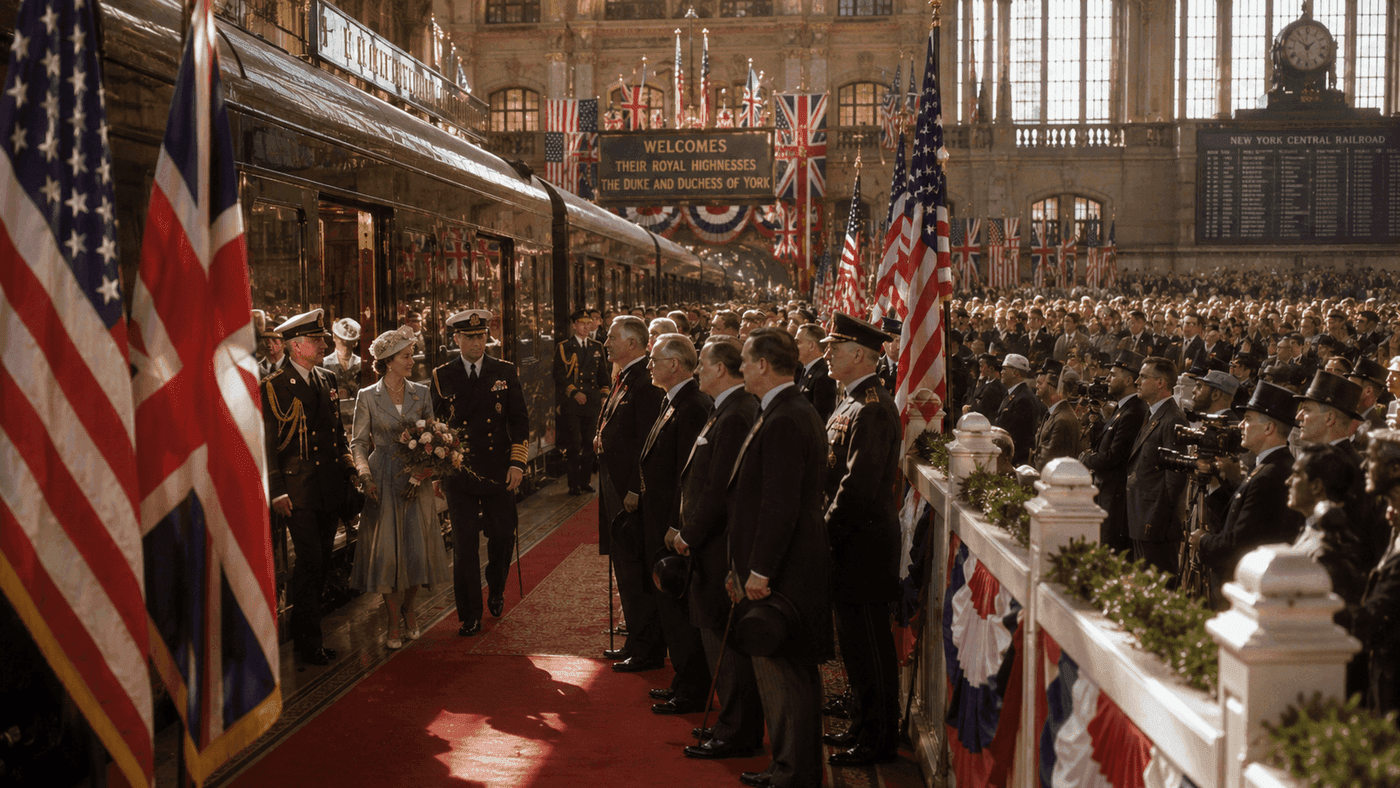
On June 7, 1939, King George VI and Queen Elizabeth arrived in Washington, D.C., by train — becoming the first reigning British monarchs ever to set foot on American soil. The visit had been arranged through a correspondence between President Franklin Roosevelt and the king, and its timing was not accidental: war clouds over Europe were building rapidly, Germany had occupied Czechoslovakia in March, and Britain was acutely conscious that its survival in any coming conflict might depend on whether the United States could be persuaded to abandon the isolationism that had kept it out of European affairs since the end of World War I. The royal couple spent four days in the United States — visiting Washington, New York, and Roosevelt's Hyde Park estate — and managed, through a combination of genuine charm and careful diplomatic staging, to make themselves enormously popular with the American public while never making an explicit request for anything.
The Hyde Park visit was particularly significant. Roosevelt served the king and queen American hot dogs at a picnic on the lawn — a deliberate piece of informality that generated enormous press coverage and suggested that the British monarchy and the American presidency were on the kind of easy, friendly terms that implied a natural partnership. The king and Roosevelt talked privately and at length about American support in the event of war; no commitments were made, but a relationship was established that would prove genuinely consequential. When Germany invaded Poland in September 1939 and Britain declared war, Roosevelt was able to work from the personal connection the Hyde Park visit had built toward the Lend-Lease program and the Atlantic Charter — the practical mechanisms of Anglo-American cooperation that sustained Britain through its most dangerous years. George VI and Elizabeth arrived in Washington on June 7, 1939, as ambassadors conducting diplomacy through their presence. They succeeded.
Stay in the Car
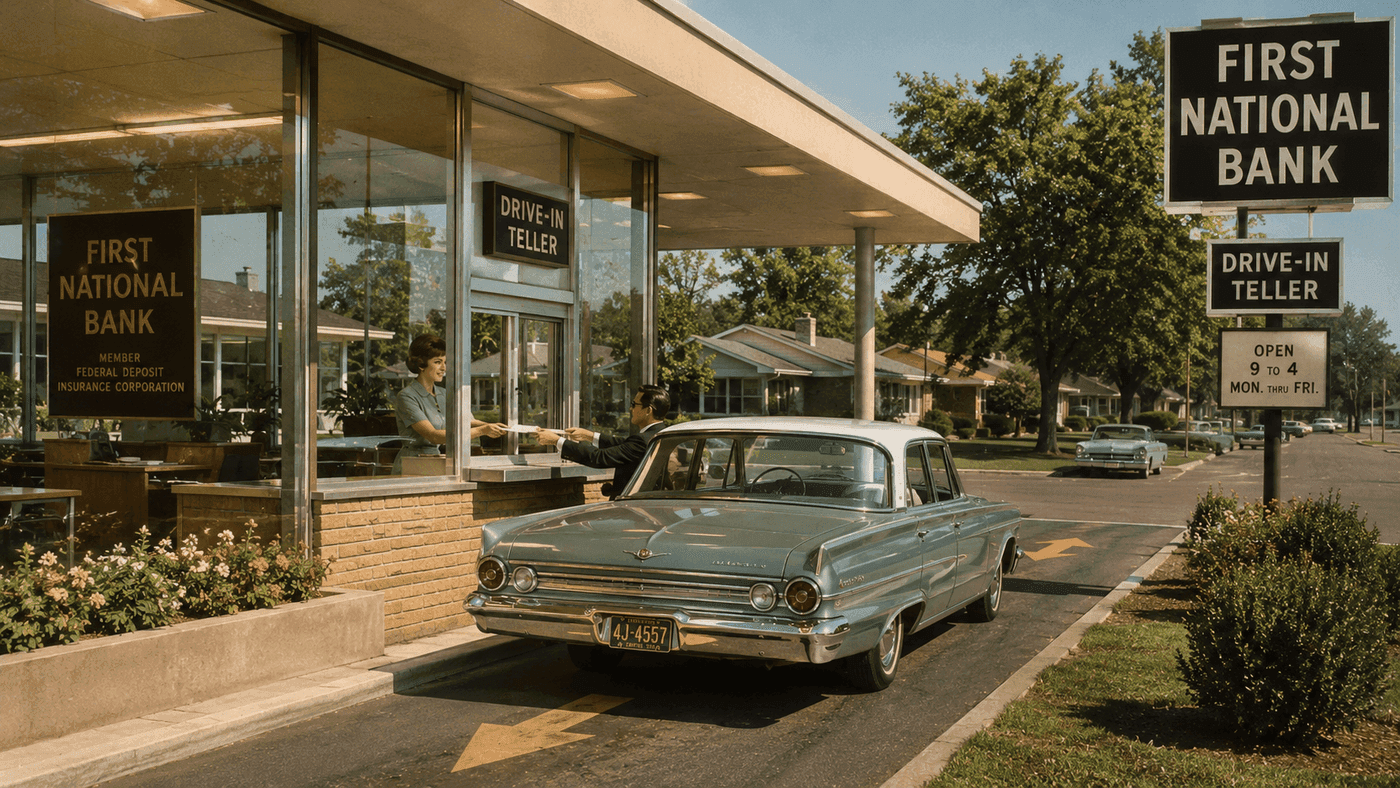
On June 7, 1962, a Swiss bank opened what was described as a drive-through banking facility — a window-based service point allowing customers to conduct routine transactions from their vehicles without entering the branch. The concept of bringing the bank counter to the car rather than requiring the customer to park, enter, and queue had been developing in the United States since the mid-1940s and had spread significantly through American suburbs in the 1950s as car ownership became near-universal and suburban banking branches multiplied. The Swiss adoption of the format in 1962 represented the concept's broader diffusion into European banking culture, which had traditionally favored more formal in-person service relationships. Whether or not this particular opening constituted a genuine first in its market, it reflected a shift in how mid-century institutions of all kinds were beginning to understand their relationship with customers who had cars and valued their time.
The drive-through bank window belongs to a mid-century cluster of innovations — the drive-in theater we covered on June 6, 1933, the drive-through restaurant pioneered in the 1940s and 1950s — that collectively reflected a single underlying reality: the automobile had restructured American (and increasingly European) life so thoroughly that institutions which required their customers to leave their cars were at a competitive disadvantage. Banking, in particular, was well suited to the drive-through model because so many of its routine transactions — deposits, withdrawals, check cashing — required no complex consultation, only a physical exchange of cash and paper across a counter. The drive-through bank window was a solution to a problem that the car had created by making parking and queuing feel like impositions rather than ordinary parts of daily life. It endures today, stubbornly, alongside ATMs and mobile banking apps, as evidence that some conveniences, once offered, are very difficult to take back.