June 5: A Report That Named a Crisis, Another Kennedy Fallen, Love in Los Angeles
June 5 holds its stories at very different registers — the clinical understatement of a government health report that described five cases of a rare pneumonia and did not yet know it was naming the beginning of a global epidemic; the terrible familiarity of a political assassination that came five years after Dallas and felt, to those who lived through it, like something the country had done to itself again; and the private ceremony between two Latin artists whose union was entirely their own business and became, in the way celebrity always does, everyone else's as well. Three stories about what it means to be seen — by history, by a nation in grief, by a culture still learning to represent itself fully. June 5 asks something different of each of them.
Five Cases
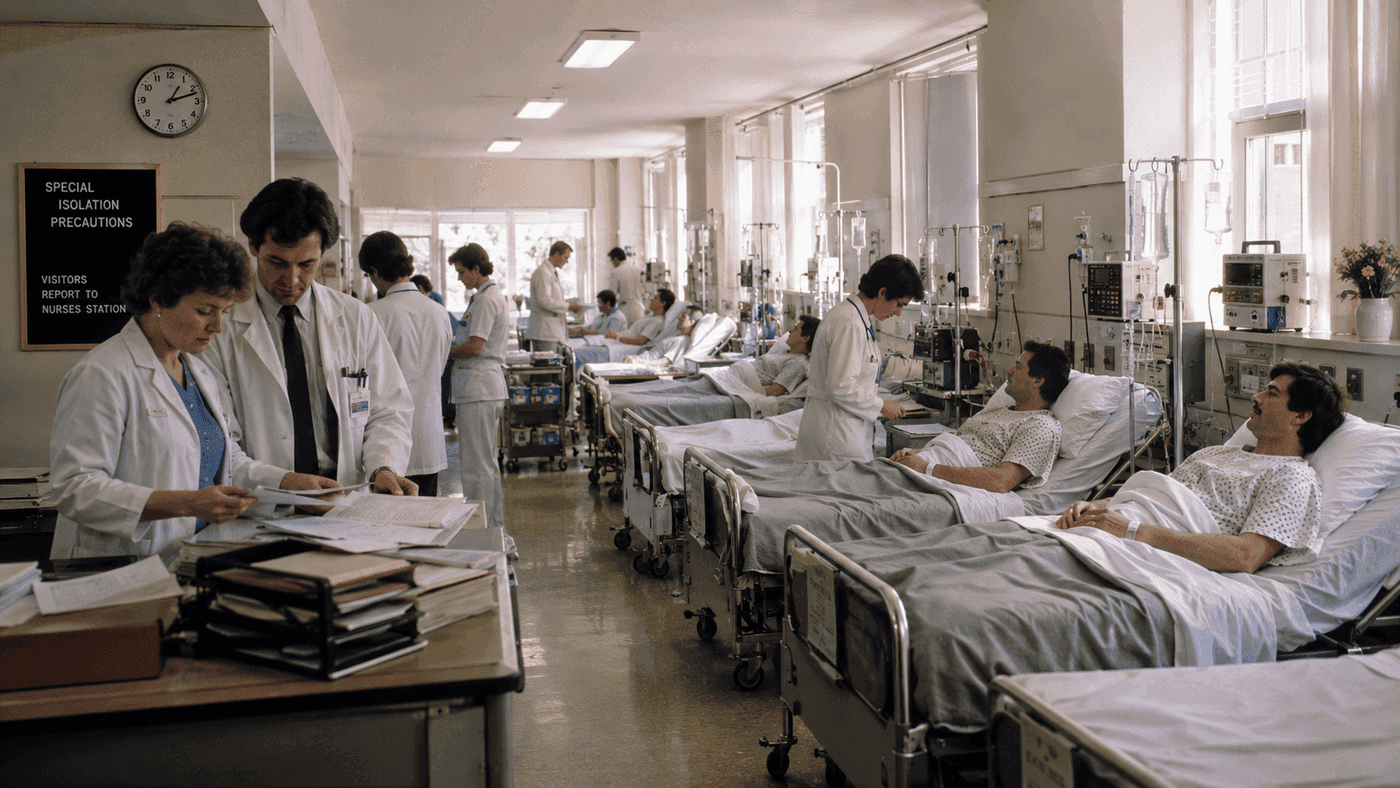
On June 5, 1981, the Centers for Disease Control and Prevention published a five-paragraph notice in its Morbidity and Mortality Weekly Report — a routine public health publication read primarily by physicians and epidemiologists — describing five cases of Pneumocystis carinii pneumonia in young, previously healthy gay men in Los Angeles. All five had severely depleted immune systems with no apparent cause. Two had already died. The report, written by Dr. Michael Gottlieb and colleagues at UCLA, used careful, understated clinical language and concluded only that the cases were unusual enough to warrant surveillance. It did not know what it was describing. No one in June 1981 knew that the virus that would eventually be named HIV had already been spreading silently for years, that it had already infected tens of thousands of people in the United States and was already present on multiple continents, or that the report published on June 5 was the first public record of what would become one of the most devastating epidemics in human history.
The distance between the clinical restraint of that five-paragraph notice and the scale of what it was quietly announcing is almost incomprehensible. By the end of 1981, the CDC had identified 270 cases of severe immune deficiency in gay men, with 121 deaths. By 1995 — the epidemic's peak year in the United States — more than 50,000 Americans were dying annually. Globally, the AIDS epidemic has claimed an estimated 40 million lives to date. The early years of the crisis were marked by a federal response that many activists and historians have characterized as criminally inadequate — President Reagan did not publicly acknowledge AIDS by name until 1985, by which time more than 5,000 Americans had died. The community of gay men most immediately affected organized its own response with remarkable speed and discipline, building advocacy organizations, care networks, and political movements that transformed both the epidemic's management and the broader landscape of LGBTQ rights in America. The five cases published on June 5, 1981, were the first sentence of a story that took forty years and millions of lives to tell — and is not yet finished.
The Ambassador Hotel
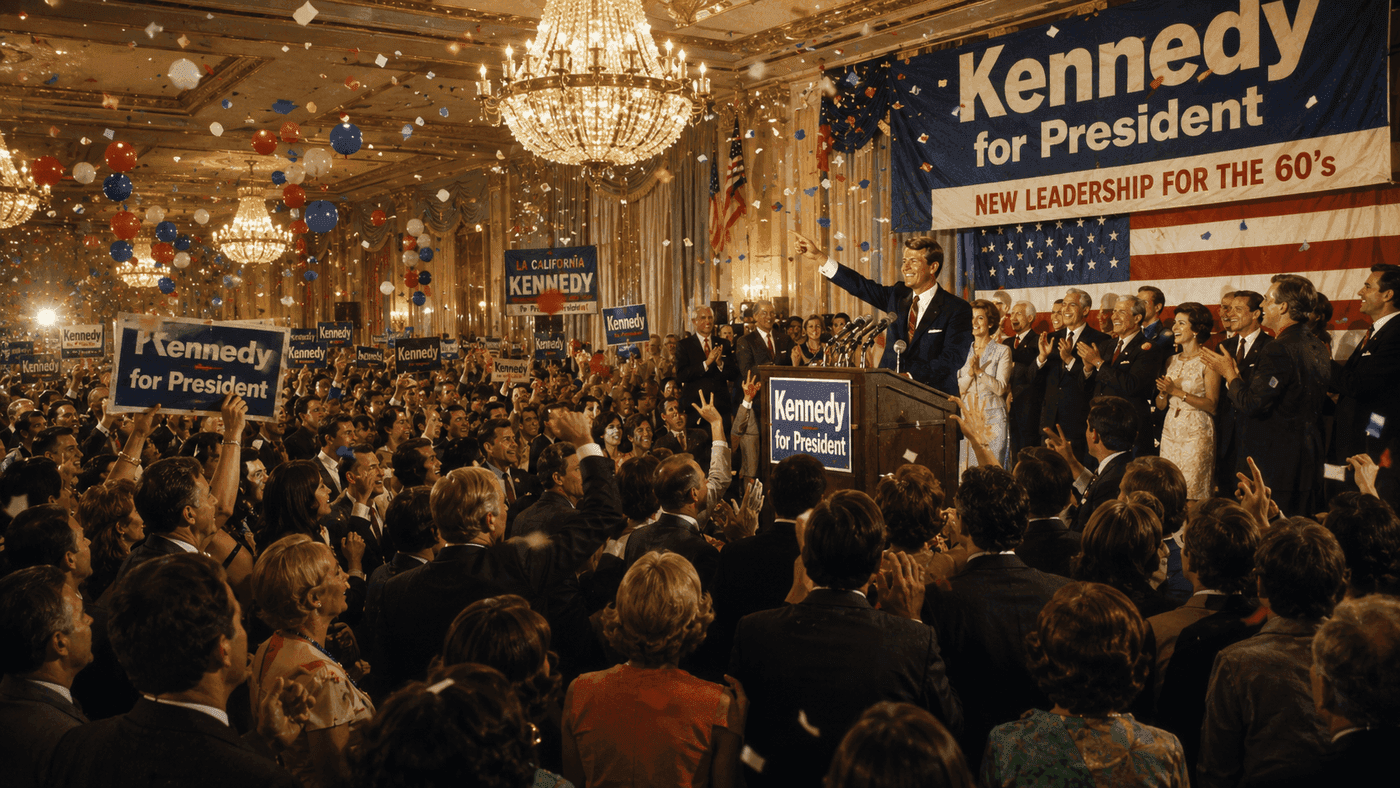
Just after midnight on June 5, 1968, Robert F. Kennedy finished his victory speech in the ballroom of the Ambassador Hotel in Los Angeles — having won the California Democratic presidential primary, a result that put him in a strong position to secure the nomination — and was led by his aides through the hotel kitchen as a faster route to a press conference. In the kitchen pantry, Sirhan Bishara Sirhan shot him at close range. Kennedy was struck three times; a bullet lodged in his brain behind his right ear. He was taken to Good Samaritan Hospital and died twenty-six hours later, early on the morning of June 6, 1968. He was forty-two years old. The year 1968 had already delivered Martin Luther King Jr.'s assassination in April; the country was also living through the Tet Offensive, the collapse of Lyndon Johnson's political coalition, and urban upheaval on a scale not seen since the Civil War. Kennedy's death felt, to those who experienced it, like the final foreclosure on whatever possibility the decade had still seemed to contain.
We encountered the sentencing of Kennedy's assassin — Sirhan Sirhan — on April 23, 1969, in this series. The shooting itself on June 5, 1968, is the wound that required the sentence. Kennedy had been, in the final weeks of his campaign, something that American politics rarely produces: a candidate who seemed to be speaking directly to communities in fundamental conflict with each other — Black Americans who had found in him an advocate who took their grievances seriously, and white working-class voters who felt the Democratic Party had abandoned them — and persuading both that he understood what they needed. Whether he could have delivered on that promise, had he lived and won, is one of the great unanswerable questions of American political history. What is answerable is that the pantry of the Ambassador Hotel on June 5, 1968, was the place where that possibility ended — and that the country, standing at the edge of an extraordinarily difficult year, had now lost two of the voices most capable of speaking across the divisions that year had made visible.
Jennifer and Marc
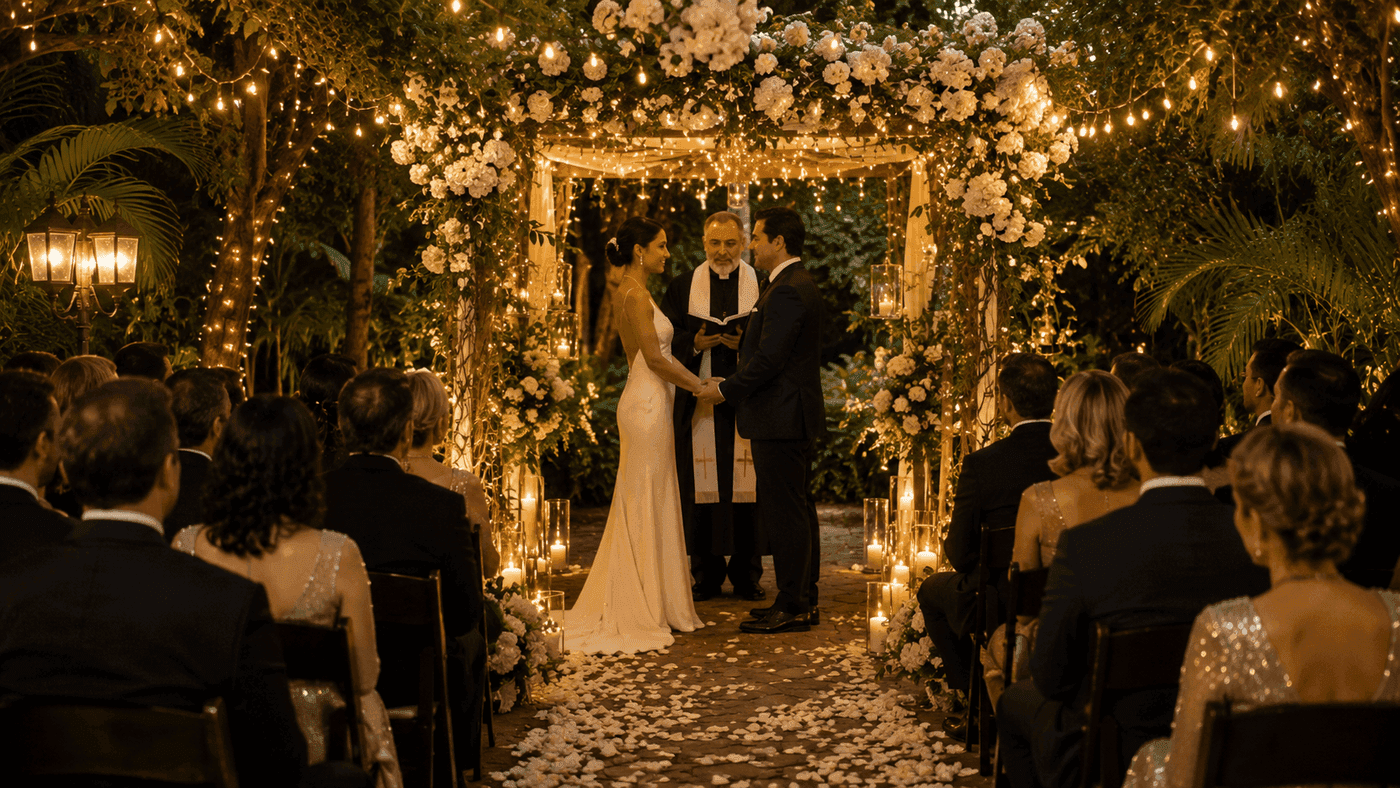
On June 5, 2004, Jennifer Lopez and Marc Anthony were married in a private ceremony at Lopez's home in Los Angeles, joining two of the most commercially successful Latin artists in the history of American popular music at what was, by any measure, the peak of both their careers. Lopez had by then established herself as a performer, actress, and brand of genuinely unusual reach — a Puerto Rican woman from the Bronx who had built a global celebrity across music, film, and fashion with a visibility that made her one of the most discussed public figures in American culture. Anthony, a New York-born salsa and pop artist of Puerto Rican descent, was at the height of his recording career, having won multiple Grammy Awards and sold out arenas across Latin America and the United States. Their wedding, kept private enough to limit media intrusion but sufficiently known to generate enormous coverage, was received in the Latin community as a cultural milestone — two titans of Latin artistic achievement, together.
The marriage lasted seven years, ending in divorce in 2011. In the context of the celebrity culture that surrounded both of them, the relationship's arc — the private wedding, the shared children, the eventual separation — was covered with the thoroughness that public figures at their level have no power to prevent. What remains, apart from the personal history, is the cultural significance of the moment: in 2004, the presence of two Latin artists of Lopez's and Anthony's stature at the center of American popular culture represented a visibility that was still relatively recent and still actively contested. Lopez in particular had carved out a position in American entertainment that no Latina performer before her had occupied — crossing between Spanish-language and English-language markets, between music and film, between performer and mogul — in ways that opened space for those who came after her. The wedding on June 5, 2004, was a private event between two people. The public dimension of it was a reflection of something the culture was still in the process of becoming.