June 4: Midway Turns the Tide, Ford's First Drive, The Sub That Changed the War
June 4 belongs to the kind of moments that look, in retrospect, like obvious turning points but that were anything but obvious to the people living through them. A naval battle in the central Pacific that American intelligence had helped engineer was still, in its opening hours, desperately uncertain — and the pilots who flew into the teeth of Japanese antiaircraft fire were doing so without the knowledge that their sacrifice would change the war's direction. A machinist rolling down a Detroit alley in a gasoline-powered contraption had no way of knowing he was inaugurating an industry that would reshape American geography, economy, and culture. And the sailors who boarded a sinking German submarine in the Atlantic were working fast enough that they had no time to appreciate the intelligence windfall they were pulling from the sea. Three June 4 stories about consequential actions whose full significance took time to become visible.
Midway
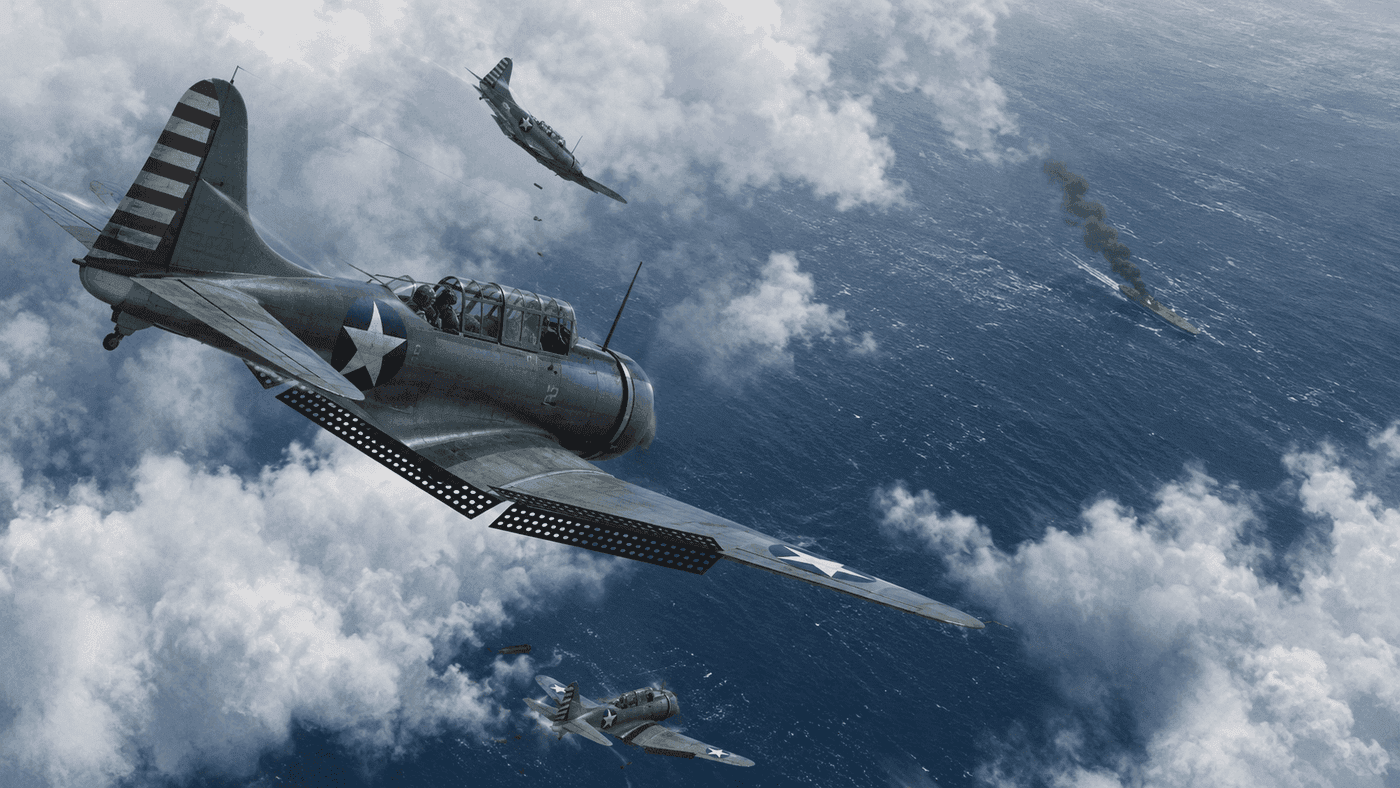
On June 4, 1942 — six months and one day after Pearl Harbor — American carrier-based aircraft attacked the Japanese fleet northwest of Midway Atoll in the central Pacific, and in the space of approximately five extraordinary minutes, dive bombers from USS Enterprise and USS Yorktown struck three Japanese fleet carriers almost simultaneously, turning Kaga, Akagi, and Soryu into burning wrecks. A fourth carrier, Hiryu, survived to launch counterstrikes before being mortally damaged later that afternoon. The loss of all four carriers — along with hundreds of the Imperial Japanese Navy's most experienced aviators, irreplaceable in ways that Japan's pilot training pipeline could not quickly address — was a catastrophe from which Japanese naval aviation never recovered. American codebreakers under Commander Joseph Rochefort had deciphered enough of Japan's operational plans to allow Admiral Chester Nimitz to position his three available carriers precisely where they could intercept the Japanese striking force, converting what Japan had intended as a knockout blow into an ambush.
The human cost of Midway was enormous on both sides. The American torpedo bomber squadrons that attacked early in the battle — flying obsolete TBD Devastators into withering antiaircraft fire and Zero fighter cover — were nearly annihilated; Torpedo Squadron 8 from Hornet lost all fifteen of its aircraft and all but one of its pilots. Their sacrifice, and the sacrifice of the other torpedo squadrons, drew the Japanese fighters down to low altitude and left the skies above the Japanese carriers clear for the dive bombers that arrived minutes later and found them loaded with fuel and ordnance — precisely the most vulnerable moment in their rearming cycle. Whether this timing was tactically deliberate or fortunate convergence has been debated by historians ever since. What is beyond debate is the outcome: before June 4, 1942, Japan held the initiative in the Pacific. After June 4, it never held it again.
The Quadricycle
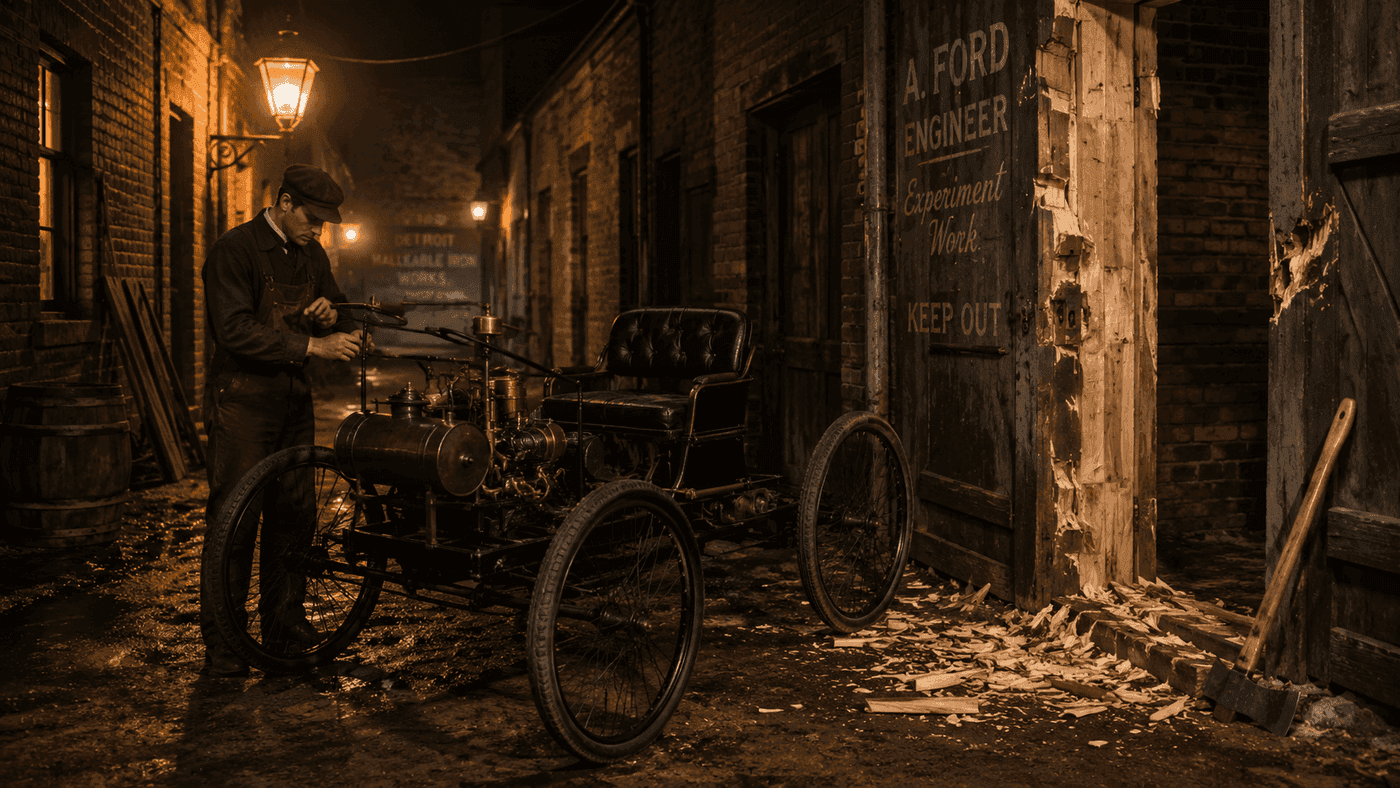
On June 4, 1896, Henry Ford emerged from the shed at 58 Bagley Avenue in Detroit, having discovered that the vehicle he had spent two years building in his spare time was too wide to fit through the shed's door. He knocked the door frame out with an axe, rolled the machine into the alley, and drove it through the dark streets of the city — approximately one mile before returning home. The Quadricycle, as it came to be known, was a simple open frame mounted on four bicycle wheels, powered by a two-cylinder ethanol engine that produced approximately four horsepower, steered by a tiller, and capable of reaching approximately twenty miles per hour on a good surface. Ford was thirty-two years old, working as chief engineer at the Edison Illuminating Company, and building automobiles in his spare time the way another man might have built furniture. He sold the Quadricycle for $200 to fund his next project and kept building.
The drive through Detroit on June 4, 1896, was not the invention of the automobile — Benz, Daimler, and others had built working gasoline-powered vehicles in Europe in the 1880s — but it was the beginning of the career that would produce the Model T, the moving assembly line, the five-dollar workday, and the transformation of American life that came from making personal transportation available to people who could not previously have afforded it. By 1927, when the Model T was discontinued after fifteen million units, the car had become so embedded in American geography — in the roads built for it, the suburbs organized around it, the drive-ins and motels and service stations that serviced it — that the country would have been unrecognizable to the man who knocked down a door frame in Detroit thirty years earlier. Ford's personal legacy is complicated by his virulent anti-Semitism, his hostility to labor unions, and the working conditions in his factories that the famous wages were partially designed to offset. The Quadricycle he rolled into the alley on June 4, 1896, was merely the start of a story whose full dimensions — good and terrible — would take decades to become clear.
U-505
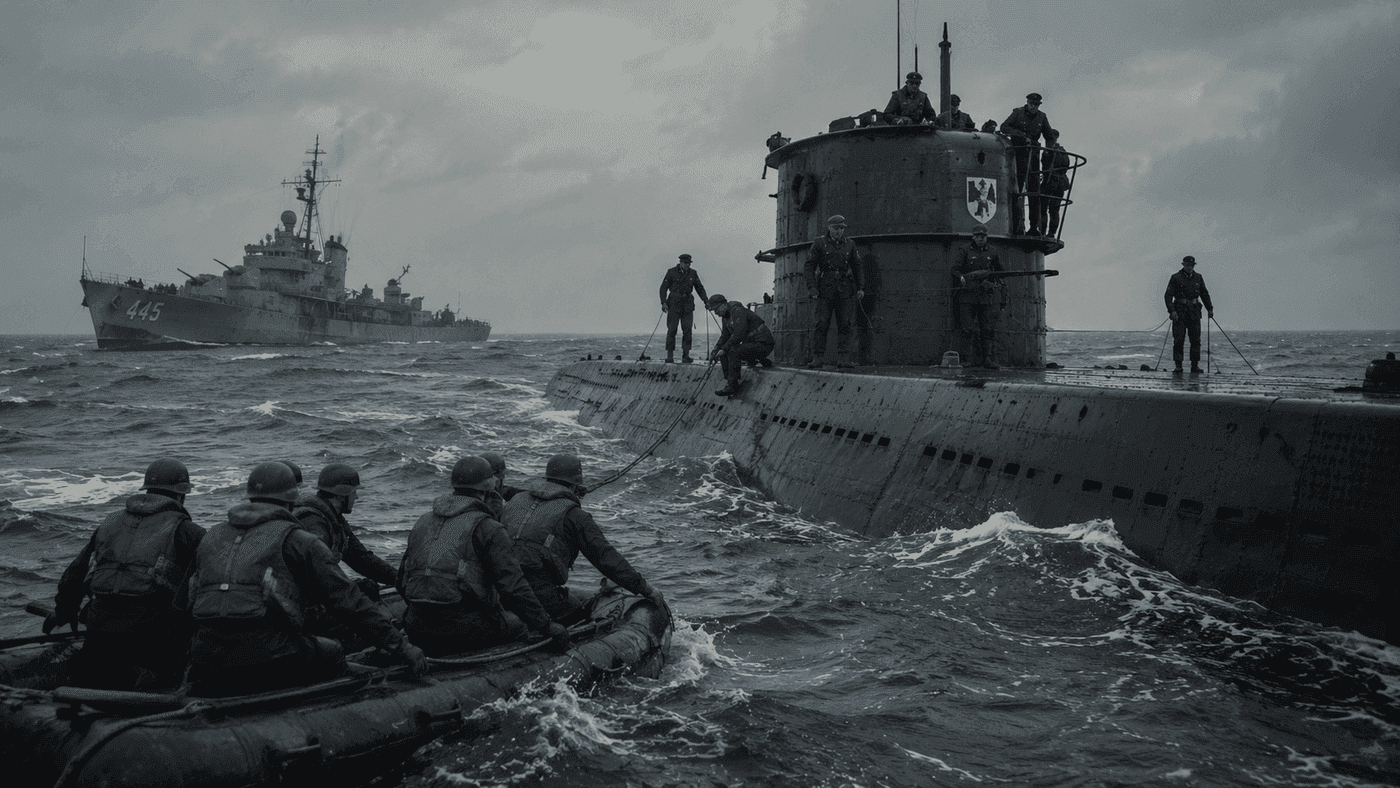
On June 4, 1944 — two days before D-Day — a U.S. Navy hunter-killer task group under Captain Daniel Gallery located and attacked a German Type IXC submarine, U-505, in the Atlantic Ocean off the coast of West Africa. Depth charges forced the submarine to the surface; its crew began abandoning ship and opened the sea cocks to scuttle her. Gallery's boarding party, led by Lieutenant Albert David, reached the submarine before it sank, disabled the scuttling charges, secured a trove of intelligence material — Enigma cipher machines, codebooks, charts, and technical documents — and kept the submarine afloat. The capture was kept secret from the Germans to prevent them from realizing their codes were compromised; U-505's crew were held in isolation in Bermuda for the remainder of the war, cut off from all communication. It was the first capture of an enemy vessel on the high seas by the U.S. Navy since the War of 1812.
The intelligence haul from U-505 was extraordinary. The Enigma materials and codebooks allowed Allied codebreakers to read German naval communications with a precision that significantly accelerated the defeat of the U-boat campaign in the Atlantic, which had been one of the war's most strategically critical and costly theaters. The Battle of the Atlantic had cost the Allies an enormous number of merchant ships and their crews since 1939; the intelligence advantage provided by the U-505 capture, combined with improved anti-submarine tactics and technology, helped tip the balance decisively. Lieutenant David received the Medal of Honor for his role in the boarding. After the war, Captain Gallery campaigned successfully to have U-505 preserved as a museum exhibit rather than scrapped; the submarine has been on permanent display at the Museum of Science and Industry in Chicago since 1954, where it remains the only German submarine on display in the United States. The crew of forty-eight Germans who abandoned her on June 4, 1944, never knew, until after the war ended, what their submarine had given the Allies.