
The Collision That Could Be a First
At approximately 7:15 a.m. yesterday morning, the pilot of JetBlue Flight 948 — an Airbus A321 inbound from Las Vegas — radioed air traffic control while on final approach to John F. Kennedy International Airport. "We collided with a drone back there in the turn," the pilot reported, according to audio captured by ATC.com. When the controller asked him to confirm, he was unambiguous: "Yep, it hit us right, right above the cockpit." The aircraft, roughly 10 to 12 miles from JFK and descending through 3,000 feet, continued its approach without incident and landed safely at 7:21 a.m. Passengers deplaned normally. A post-flight inspection found no visible damage. The Federal Aviation Administration has opened a formal investigation — and if the collision is confirmed, aviation officials say it would mark one of the first documented instances of a drone striking a U.S. commercial passenger jet in flight.
A Risk the Skies Have Been Building Toward
Commercial drones have proliferated explosively over the past decade, transforming from expensive novelty devices into consumer products available for a few hundred dollars at any electronics retailer. The FAA has tracked the risk that proliferation poses to manned aviation for years: the agency now receives more than 100 reports of drone sightings near airports every single month, a volume that has made near-misses between drones and aircraft an almost routine occurrence in American airspace, even as confirmed physical collisions have remained, until now, vanishingly rare. Just three days before yesterday's JetBlue incident, the crew of a United Airlines flight approaching Newark Liberty International Airport reported a close encounter with a drone during its descent — a sighting, not a collision, but one more data point in a pattern that aviation officials have warned is approaching a tipping point. Operating a drone near an airport or aircraft is illegal under federal law, punishable by significant fines and potential criminal prosecution, including jail time. Enforcement against anonymous operators piloting devices from the ground, however, remains extraordinarily difficult.
The timing carries its own significance. Drone activity has been under unusually intense scrutiny across the country this summer, as the FIFA World Cup has brought heightened security restrictions to host cities nationwide — federal officials announced this week that law enforcement had seized 500 unauthorized drones found operating in restricted airspace across the tournament's 11 American host cities alone. Aviation safety experts have cautioned that not every suspected drone strike turns out to be one; previous incidents initially attributed to drones have later been traced to bird strikes or mechanical anomalies, and the FAA's investigation into yesterday's JetBlue incident will need to definitively establish what the aircraft actually struck before any historical first can be confirmed. But the pilot's radio call was clear, the timing precise, and the broader pattern of drone incursions into controlled airspace is now undeniable. Whatever the investigation concludes, the incident has placed an urgent question back at the center of American aviation policy: how does a sky shared by millions of consumer drones and thousands of daily passenger flights remain safe for both?
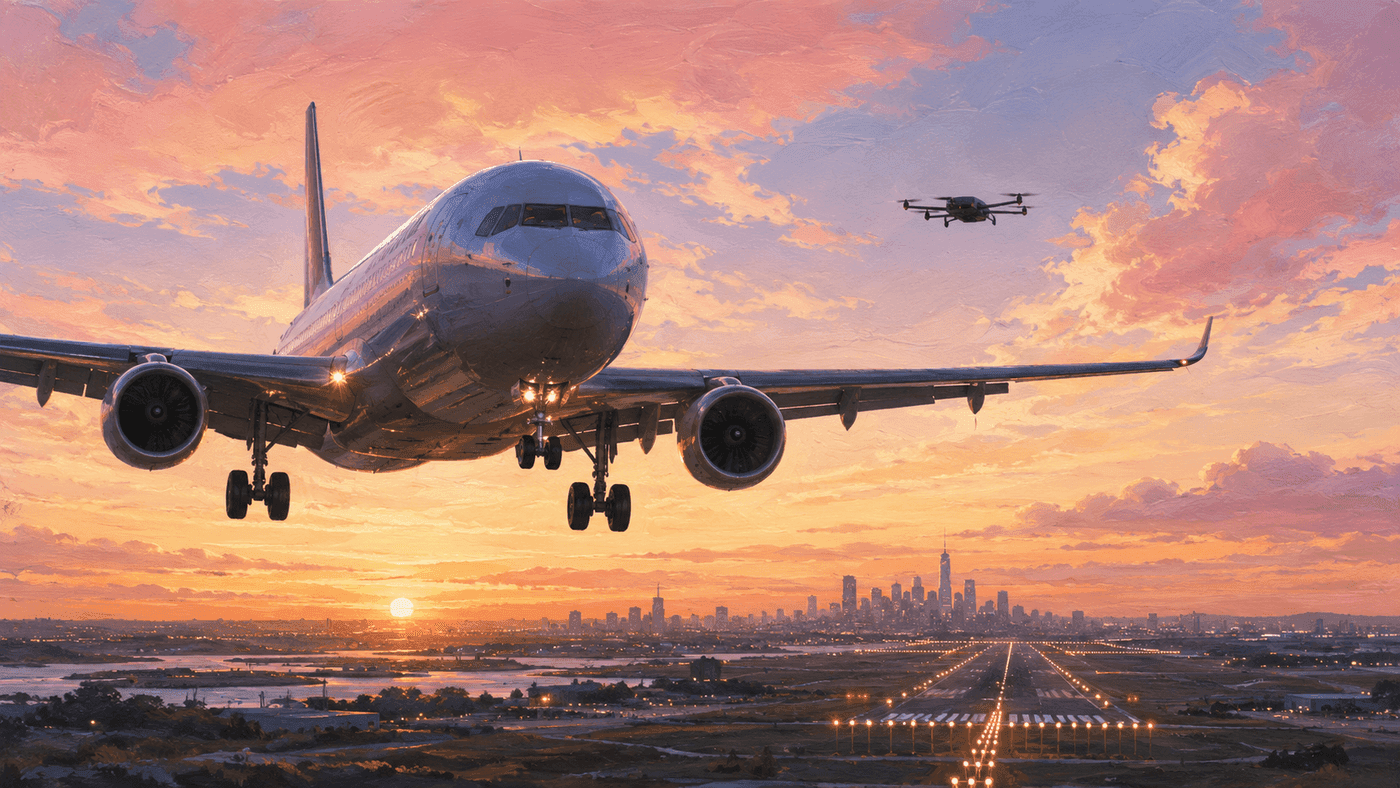
For now, what's certain is reassuring: the aircraft sustained no detectable damage, every passenger landed safely, and the flight crew handled the moment with the calm professionalism that has made commercial aviation one of the safest forms of travel ever devised, despite skies that grow more crowded with new kinds of traffic every year. What the FAA's investigation determines in the coming days and weeks may end up as a footnote, or it may mark the moment American aviation regulators were forced to treat consumer drones as a confirmed, rather than theoretical, threat to passenger jets. Either way, the radio call from JetBlue 948 yesterday morning — calm, direct, unmistakable — will likely be studied for a long time to come.