
The Worst in 125 Years
At 6:04 p.m. local time on June 24, a 7.2-magnitude earthquake struck northwestern Venezuela near San Felipe, in Yaracuy state. Thirty-nine seconds later, before the shaking had stopped, a 7.5-magnitude mainshock hit the same area — the strongest earthquake to strike Venezuela in 125 years. The twin earthquakes sent buildings collapsing across Caracas and devastated the coastal state of La Guaira, where entire neighborhoods were reduced to rubble. Five days later, with the 72-hour window for finding survivors alive now closed, at least 1,430 people are confirmed dead, more than 3,200 are injured, and more than 51,000 remain missing across a country that was already in profound humanitarian crisis before the ground moved. Over 58,000 buildings were damaged or destroyed. The scale of what has happened to Venezuela this week is difficult to absorb — and the hardest part of the response, the long reconstruction ahead, has barely begun.
Why This Earthquake Hit So Hard
Venezuela sits along a broad, complex boundary zone between the Caribbean Plate and the South American Plate — one of the most seismically active regions in South America, though major earthquakes have been relatively rare in recorded history. The 1900 San Narciso earthquake, which this week's mainshock has now surpassed in magnitude, killed thousands and reshaped the country's northern coastline. The 1967 Caracas earthquake — a 6.5-magnitude event that struck directly beneath the capital — killed more than 200 people and destroyed the upper floors of several modern high-rise buildings, an event that exposed the fatal mismatch between the city's construction standards and the forces the earth could produce. This week's earthquakes were both shallower and more powerful than either predecessor, and they struck in rapid succession — denying buildings and their occupants the seconds between tremors that sometimes allow for partial evacuation. The destruction amplified by that sequence was catastrophic. In La Guaira alone, more than 1,400 buildings were destroyed, and the main airport serving Caracas was so heavily damaged that aid flights were delayed for days until repair teams partially restored a runway.
The human response has been enormous. More than 1,600 international rescue workers arrived from two dozen nations, including elite urban search-and-rescue teams from the United States — teams from Fairfax County, Virginia, and Los Angeles County deployed by the State Department, the first such full dual deployment in over a decade. Teams from Spain, Mexico, El Salvador, Qatar, and the Netherlands joined Venezuelan rescue workers in the critical first days. Salvadoran rescuers located a 15-year-old girl alive on the ninth floor of a collapsed building in Catia La Mar. American teams reported finding survivors in the hours before the golden window closed. FIFA held moments of silence across all World Cup matches on June 26 and 27. The UN Development Programme estimated the direct physical damage at between $4.7 and $8.7 billion — in a country whose economy had already been shattered by a decade of political crisis and whose hospital system ran out of emergency supplies within hours of the disaster.
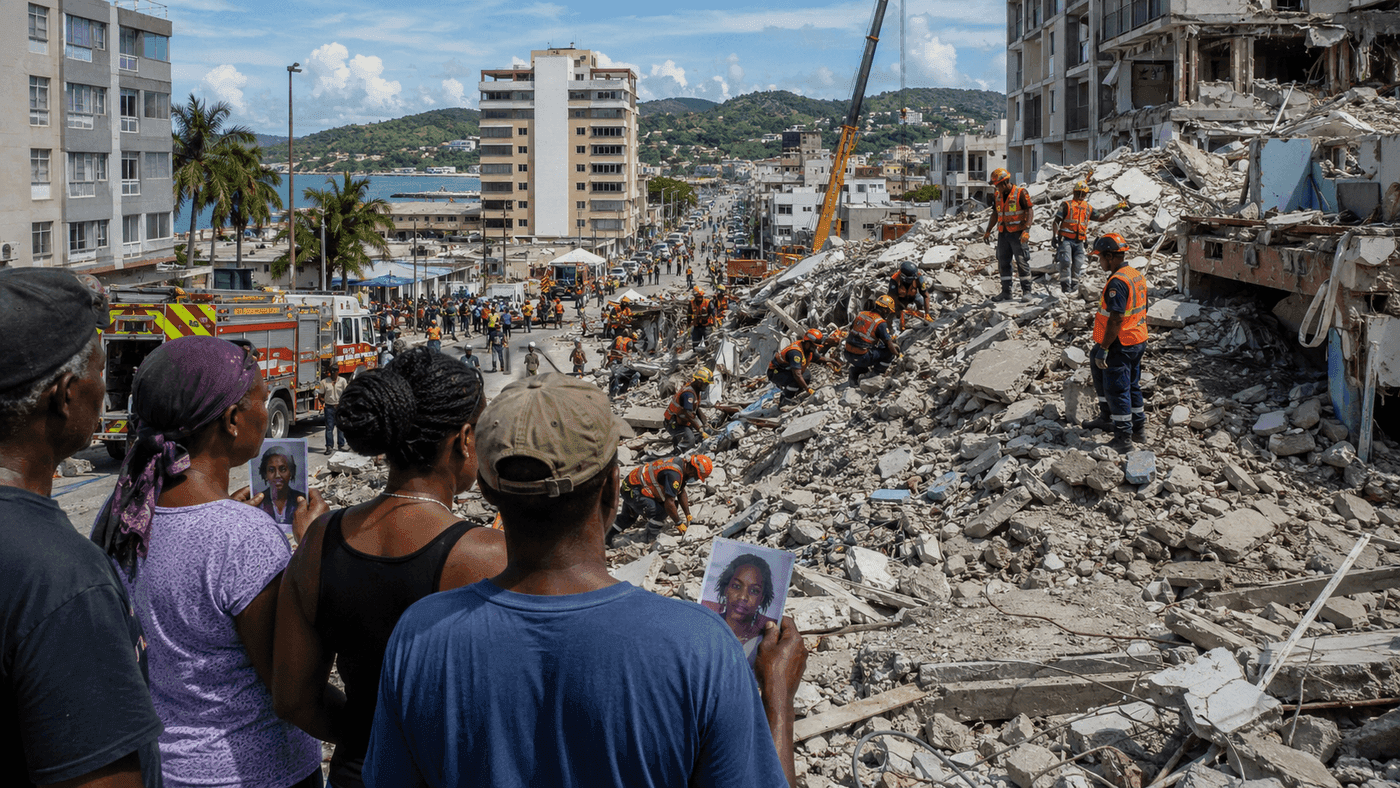
What comes next for Venezuela will be measured in years, not days. The UNDP's damage estimate does not include the cost of rebuilding the 58,000-plus damaged structures, restoring telecommunications and road networks, or rebuilding the hospital system that was overwhelmed within hours. Up to 6.76 million Venezuelans — nearly a quarter of the country's total population — may ultimately be affected, according to the International Organization for Migration. Acting President Delcy Rodríguez has created a $200 million reconstruction fund and appealed to the International Monetary Fund for additional support. For the families still searching missing-persons databases on WhatsApp and Instagram, still posting photographs of loved ones in the hope of an answer, the scale of those numbers is beside the point. Venezuela is a country that was already carrying more than it could bear. The ground moved, and it is carrying more still. The world is watching, and sending what it can.