July 22: A Door Opens on Horror, a Festival Burns, and a Prince Arrives
July 22 has held some of the most jarring contrasts the calendar offers. In 1991, Milwaukee police responding to a routine call opened an apartment door and discovered evidence of a thirteen-year killing spree that would traumatize even hardened investigators. Eight years later, a festival conceived as a tribute to peace and music descended into the kind of chaos its namesake had been celebrated for avoiding. And in 2013, in a London hospital, a newborn's first cry confirmed the next link in a royal succession that traces back centuries, drawing celebration across an entire Commonwealth. Three July twenty-seconds. Three moments of discovery, collapse, and continuity, each one unfolding with no relation to the others except the date itself.
924 North 25th Street
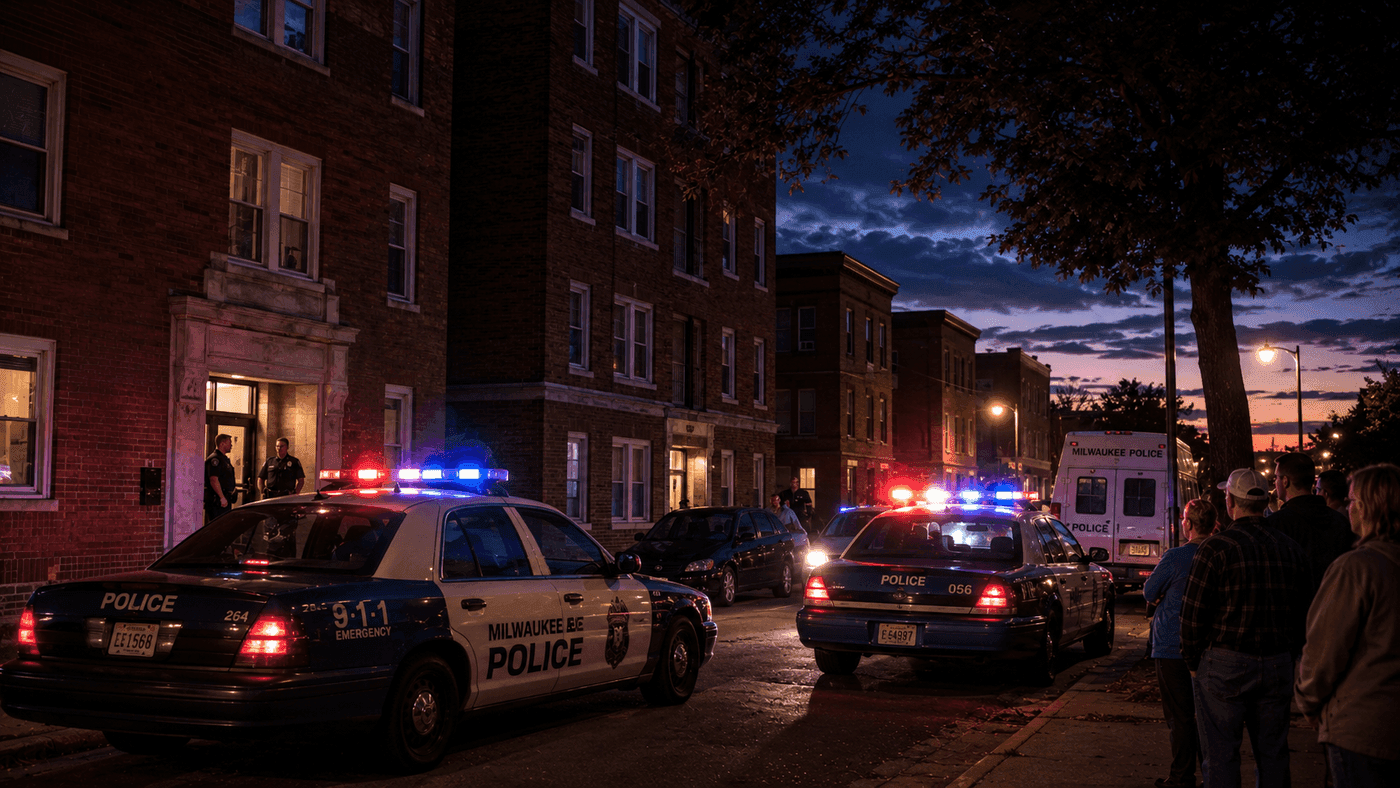
On the evening of July 22, 1991, Milwaukee police officers responded to a call involving a man who had escaped from a nearby apartment, handcuffed and disoriented, and led them back to apartment 213 at 924 North 25th Street. What they found inside, once they gained entry, was evidence of a crime scene so extensive that experienced investigators struggled to process it: photographs of dismembered bodies, human remains stored in the refrigerator and elsewhere throughout the apartment, and the unmistakable signs of a killing operation that had been running, undetected, for years. The man living there, thirty-one-year-old Jeffrey Dahmer, a worker at a local chocolate factory, was arrested on the spot. Over the following days, investigators determined that Dahmer had murdered at least seventeen men and boys over a thirteen-year span beginning in 1978, most of the victims young men he had lured to his apartment from gay bars and the surrounding neighborhood.
The case that unfolded after Dahmer's arrest exposed disturbing institutional failures alongside the horror of the crimes themselves. Most significantly, Milwaukee police had been called to Dahmer's apartment building just months earlier, in May 1991, after a fourteen-year-old victim escaped briefly into the street — and officers, after a brief investigation, returned the boy to Dahmer's custody, accepting his explanation that the encounter was a domestic dispute between adult partners. The boy was murdered shortly afterward. That failure, and the broader pattern of police inattention to crimes against gay men and men of color in the neighborhood, became a significant part of the public reckoning that followed Dahmer's arrest. Dahmer was convicted in 1992 and sentenced to fifteen consecutive life terms; he was killed by a fellow inmate in prison in 1994. The case remains one of the most studied and discussed in the history of American criminology, both for the scale of the violence and for what it revealed about whose victimization the system was prepared to take seriously.
Woodstock '99
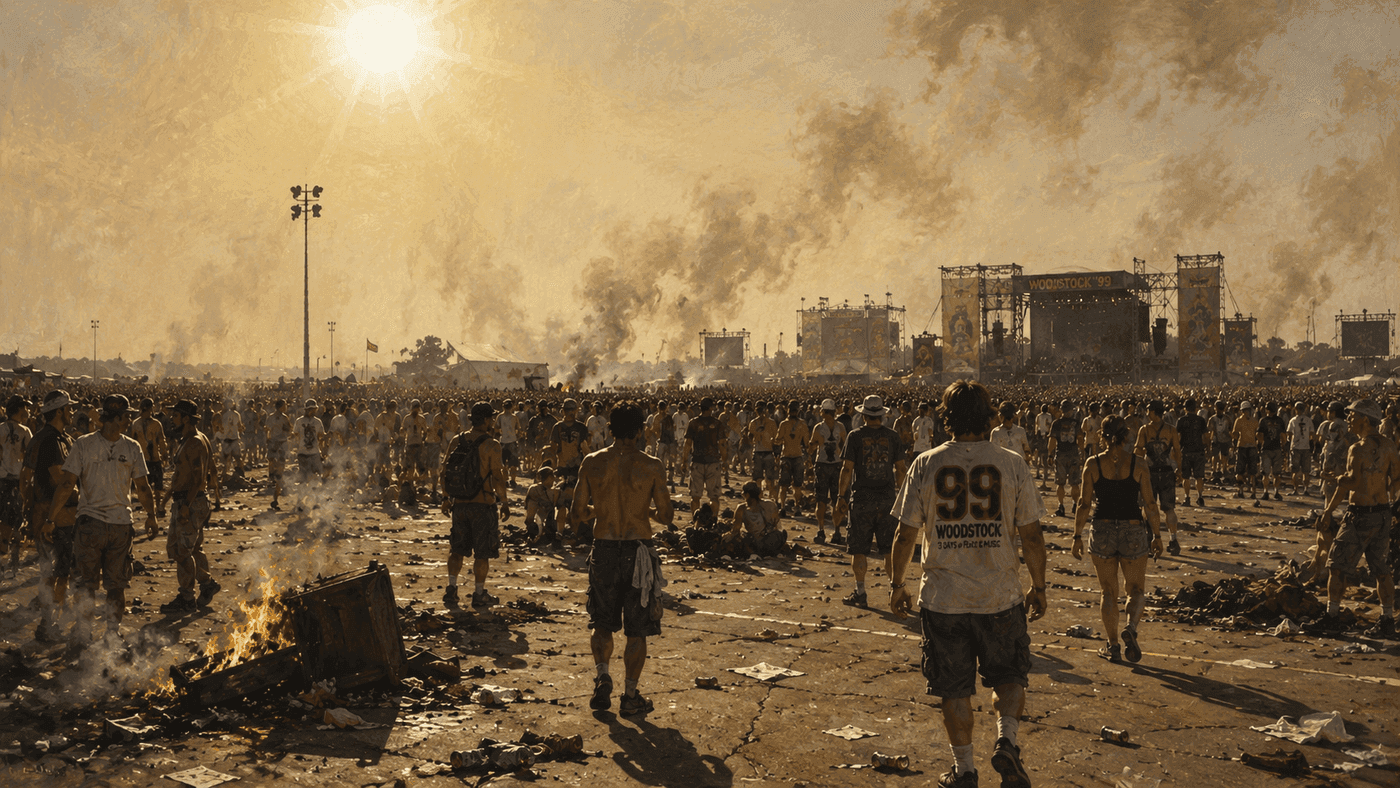
From July 22 to July 25, 1999, organizers staged Woodstock '99 at the decommissioned Griffiss Air Force Base in Rome, New York, intending the festival as a thirtieth-anniversary tribute to the original 1969 gathering that had become shorthand for an entire era's countercultural ideals. What unfolded over those four days instead became a case study in nearly everything that could go wrong at a large-scale music event. Temperatures soared past 100 degrees on cracked airfield asphalt with inadequate shade or medical infrastructure. Organizers charged exploitative prices for water and food while reportedly restricting attendees from bringing their own, generating resentment that compounded as the heat and crowding intensified. Reports of sexual assaults during the festival, including during performances by acts whose sets organizers had failed to manage appropriately, surfaced both during and after the event, drawing intense scrutiny and criticism of festival security.
The festival's final night descended into outright chaos: bonfires intended as a symbolic gesture during the closing performance spiraled out of control, vendor booths and sound towers were set ablaze, ATMs and trailers were looted, and what had been billed as a celebration of peace and music ended with attendees fleeing a literal conflagration. The contrast with the festival's 1969 namesake — itself imperfectly organized but remembered for a spirit of communal goodwill amid adversity — was so stark that Woodstock '99 became a cultural shorthand for corporate mismanagement and the curdling of a once-idealistic brand into pure commercial exploitation. Multiple documentaries examining the festival's failures were produced in the years that followed, treating the event as a case study in how a celebration of a generation's values could collapse so completely when profit motives overtook basic planning and care for attendee safety. No subsequent Woodstock anniversary festival has been attempted on a comparable scale.
A Future King
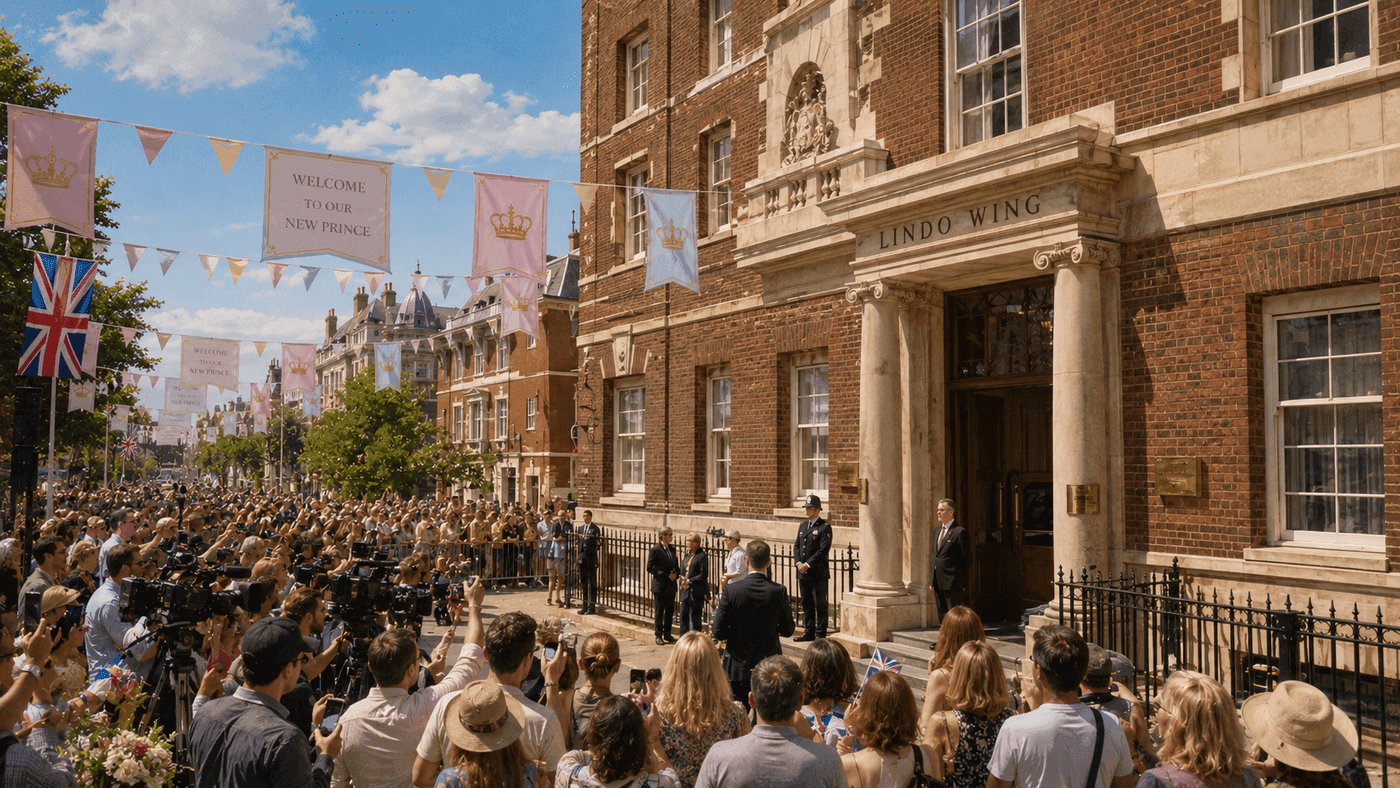
On July 22, 2013, at 4:24 in the afternoon, Catherine, Duchess of Cambridge, gave birth to Prince George Alexander Louis at the Lindo Wing of St. Mary's Hospital in London, the first child of Prince William and Catherine and third in line to the British throne behind his grandfather Charles and his father William. The birth had been anticipated with the particular intensity reserved for British royal arrivals: crowds gathered outside the hospital and Buckingham Palace for days in advance, international media maintained round-the-clock coverage, and the announcement of the birth was delivered through the centuries-old tradition of a formal notice posted on an easel in the forecourt of Buckingham Palace, even as digital media simultaneously carried the news instantaneously around the world. Prince George weighed 8 pounds, 6 ounces.
The birth of a male heir who would, under modern succession law, have inherited the throne regardless of gender — a change enacted by the Succession to the Crown Act 2013, which abolished male-preference primogeniture for descendants of Queen Elizabeth II born after October 2011 — carried particular symbolic weight as the first birth under the new rules. Prince George's arrival ensured the continuation of the House of Windsor's direct line for at least another generation and was celebrated across the Commonwealth realms, from London to Sydney to Ottawa, where the monarch remains the constitutional head of state. He has since been joined by two younger siblings, Princess Charlotte and Prince Louis, and continues to be raised with the carefully managed combination of privacy and public visibility that has characterized the upbringing of heirs to the British throne for generations. The quiet hospital room where he was born on July 22, 2013, was, for a brief afternoon, one of the most closely watched rooms in the world.