July 21: Illusions Shattered, a Writer Born, and the Last Page Turned
July 21 has a habit of correcting expectations. In 1861, Union troops marched toward Virginia confident of a quick, decisive victory that would end the rebellion in a single afternoon — and instead discovered, in humiliating fashion, exactly how long and how bloody the war ahead would actually be. Thirty-eight years later, a baby was born in a quiet Illinois suburb who would grow up to strip American prose of its ornament and teach an entire literary tradition to write in shorter, harder sentences. And in 2007, at midnight, millions of readers around the world opened the final volume of a seven-book saga simultaneously, closing a chapter of childhood and reading culture together in one of publishing's most extraordinary shared moments. Three July twenty-firsts. Three moments when the story people expected was not the story they got.
Bull Run
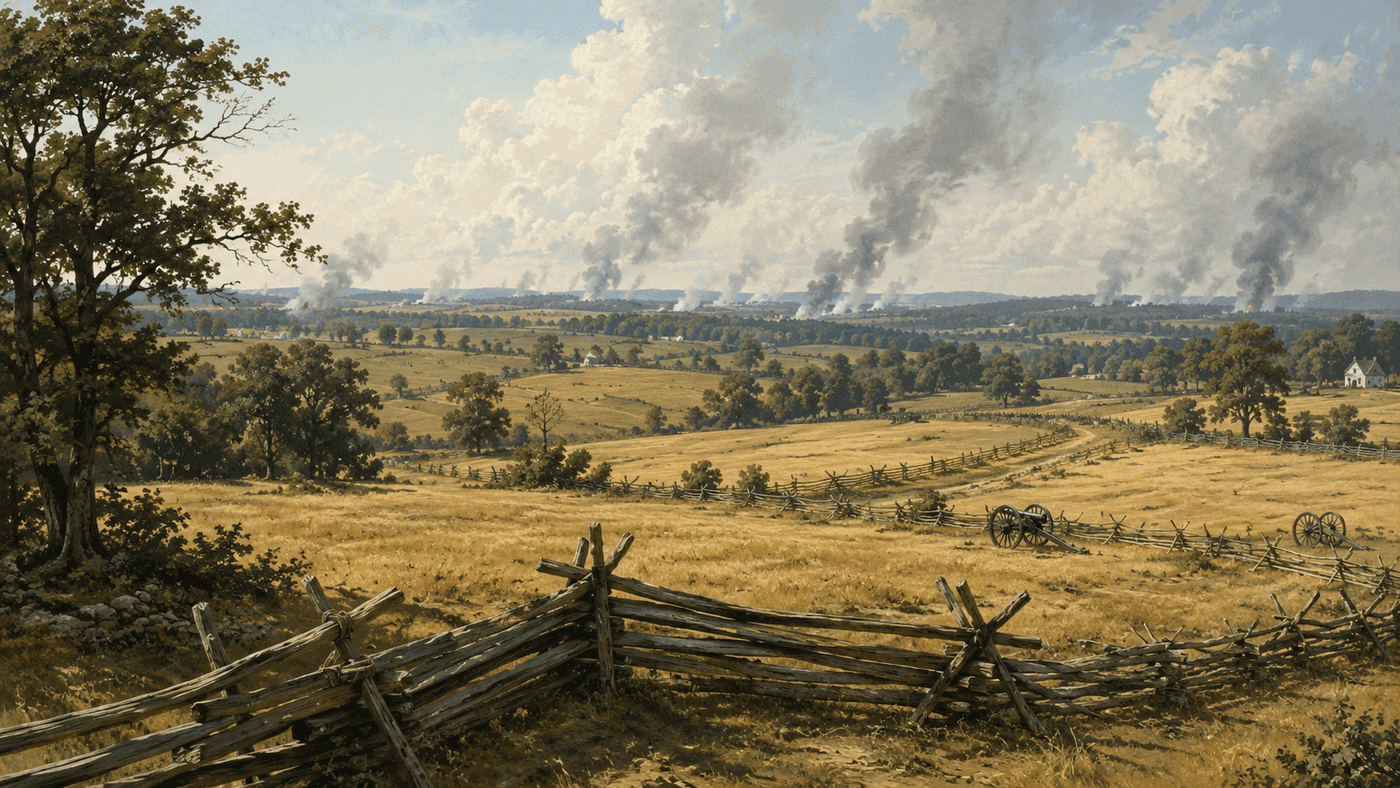
On July 21, 1861, approximately 35,000 Union troops under General Irvin McDowell engaged Confederate forces near Manassas Junction, Virginia, in what became known as the First Battle of Bull Run — the first major land battle of the Civil War, and an event so anticipated as an easy Union triumph that crowds of civilian spectators, including members of Congress, rode out from Washington with picnic baskets to watch what they expected to be a decisive rout of the rebellion. The battle began favorably for Union forces, who pushed back Confederate lines through the morning. But Confederate reinforcements arriving by rail, combined with a stubborn defensive stand by Brigadier General Thomas J. Jackson's brigade — which earned Jackson the nickname "Stonewall" for holding his ground "like a stone wall" — turned the tide by late afternoon. The Union retreat collapsed into a chaotic rout, tangled further by the civilian spectators and their carriages clogging the roads back to Washington.
The defeat at Bull Run shattered the widespread assumption, common in the North, that the rebellion would be crushed within ninety days by a single decisive engagement. The battle produced roughly 5,000 combined casualties — a toll that stunned a country that had not yet absorbed the lesson that this war would not be brief, glorious, or bloodless. President Lincoln, recognizing the scale of the miscalculation, immediately called for the enlistment of 500,000 additional three-year volunteers and replaced McDowell with General George McClellan to reorganize and professionalize the Union Army. The Confederacy, meanwhile, drew dangerous overconfidence from the victory that would shape its strategic thinking for the next several years. The First Battle of Bull Run did not determine the war's outcome, but it determined its character: a prolonged, devastating conflict that would ultimately claim more American lives than any war before or since.
Oak Park
On July 21, 1899, Clarence and Grace Hemingway welcomed their second child, a son they named Ernest Miller Hemingway, into a comfortable Victorian home in Oak Park, Illinois — a Chicago suburb that Hemingway would later describe, with characteristic bluntness, as a town of "wide lawns and narrow minds." His father was a physician with a passion for the outdoors who introduced young Ernest to hunting and fishing on family trips to northern Michigan, experiences that would surface repeatedly throughout his fiction. His mother, a trained musician, had artistic ambitions for her son that clashed, sometimes painfully, with the more rugged temperament he was already developing. Hemingway left for Europe as an ambulance driver during the First World War, was seriously wounded in Italy, and returned home a changed man whose subsequent writing would attempt, again and again, to render the experience of violence and its psychological aftermath without sentimentality.
The literary style Hemingway developed over the following decades — spare, declarative, stripped of ornamentation, built on the theory that what was omitted from a story could carry as much weight as what was included — became one of the most influential prose styles in the history of American literature. Novels including The Sun Also Rises, A Farewell to Arms, and The Old Man and the Sea established him as a defining voice of twentieth-century fiction, and he won the Nobel Prize in Literature in 1954. His personal life was as dramatic as his fiction: four marriages, war reporting on three continents, a reputation for bravado that he cultivated as deliberately as his prose. He died by suicide in 1961, struggling with the depression and physical decline that had shadowed the later years of a life lived, by design, at considerable extremity. The baby born in a quiet Oak Park bedroom on July 21, 1899, grew into one of the few writers whose name became an adjective for an entire way of seeing and describing the world.

Midnight, Everywhere
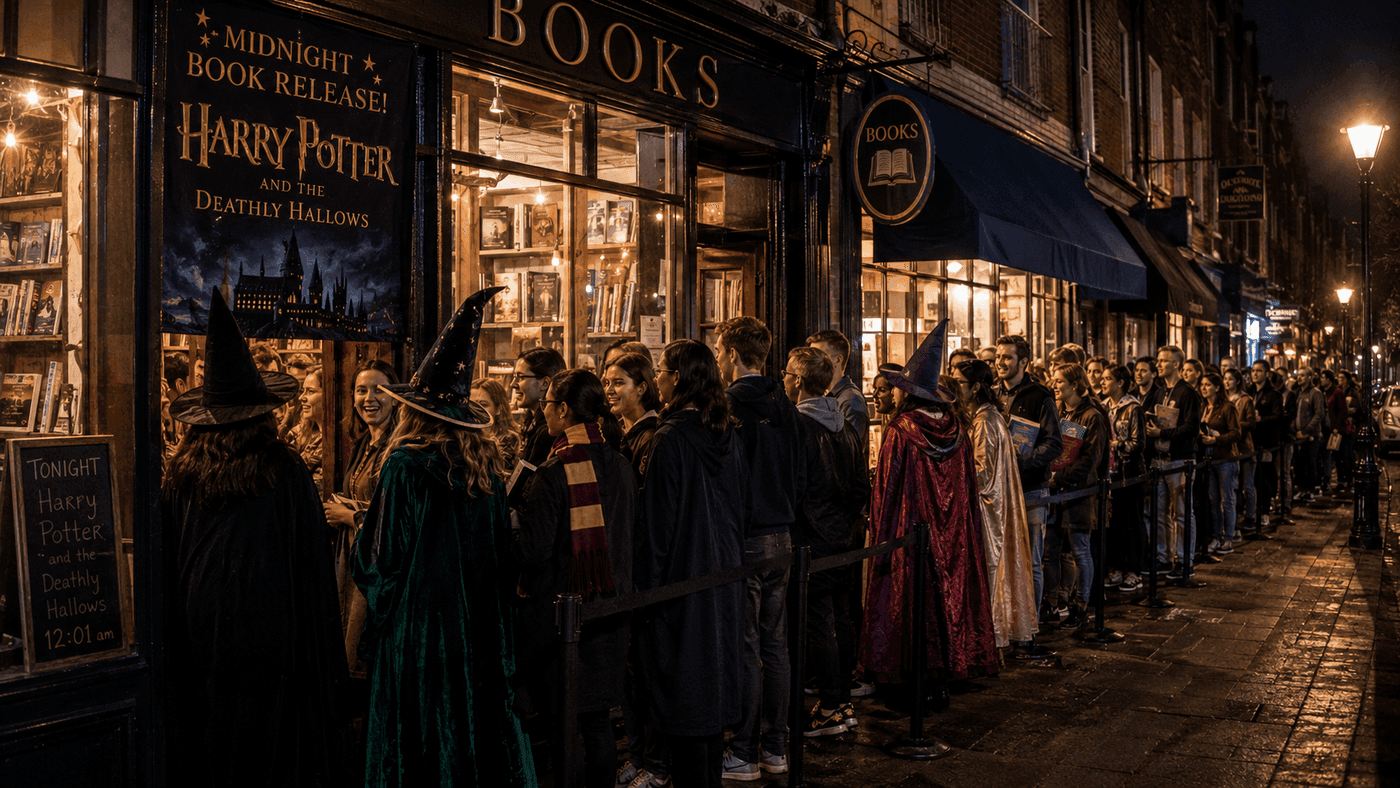
At midnight on July 21, 2007, bookstores across the globe released Harry Potter and the Deathly Hallows, the seventh and final volume of J.K. Rowling's series, in a coordinated global event without real precedent in publishing history. Bookstores from London to Sydney to Tokyo hosted elaborate midnight release parties, with fans — children and adults alike — arriving hours in advance dressed as Hogwarts students, wizards, and the series' beloved characters, waiting in lines that stretched for blocks for the chance to be among the first to learn how Rowling would resolve the story that had defined an entire generation's childhood reading experience. The book sold 11 million copies in the United States alone within twenty-four hours of release, and an estimated 44 million copies worldwide within its first year — figures that placed it among the fastest-selling books of all time.
The release of Deathly Hallows on July 21, 2007, marked the conclusion of a publishing phenomenon that had begun a decade earlier with the considerably more modest launch of Harry Potter and the Philosopher's Stone in 1997. Across seven books, the series sold more than 600 million copies worldwide, was translated into more than eighty languages, and was adapted into a film franchise that became one of the highest-grossing in cinema history. More significantly, the series was widely credited with reinvigorating reading among children and young adults at a moment when literacy advocates worried that television and early digital media were displacing books entirely. The midnight gatherings around the world on July 21, 2007, represented something increasingly rare in a fragmenting media landscape: millions of people, across dozens of countries and time zones, experiencing the same story at precisely the same moment, bound together by nothing more than the shared desire to know how it ended.