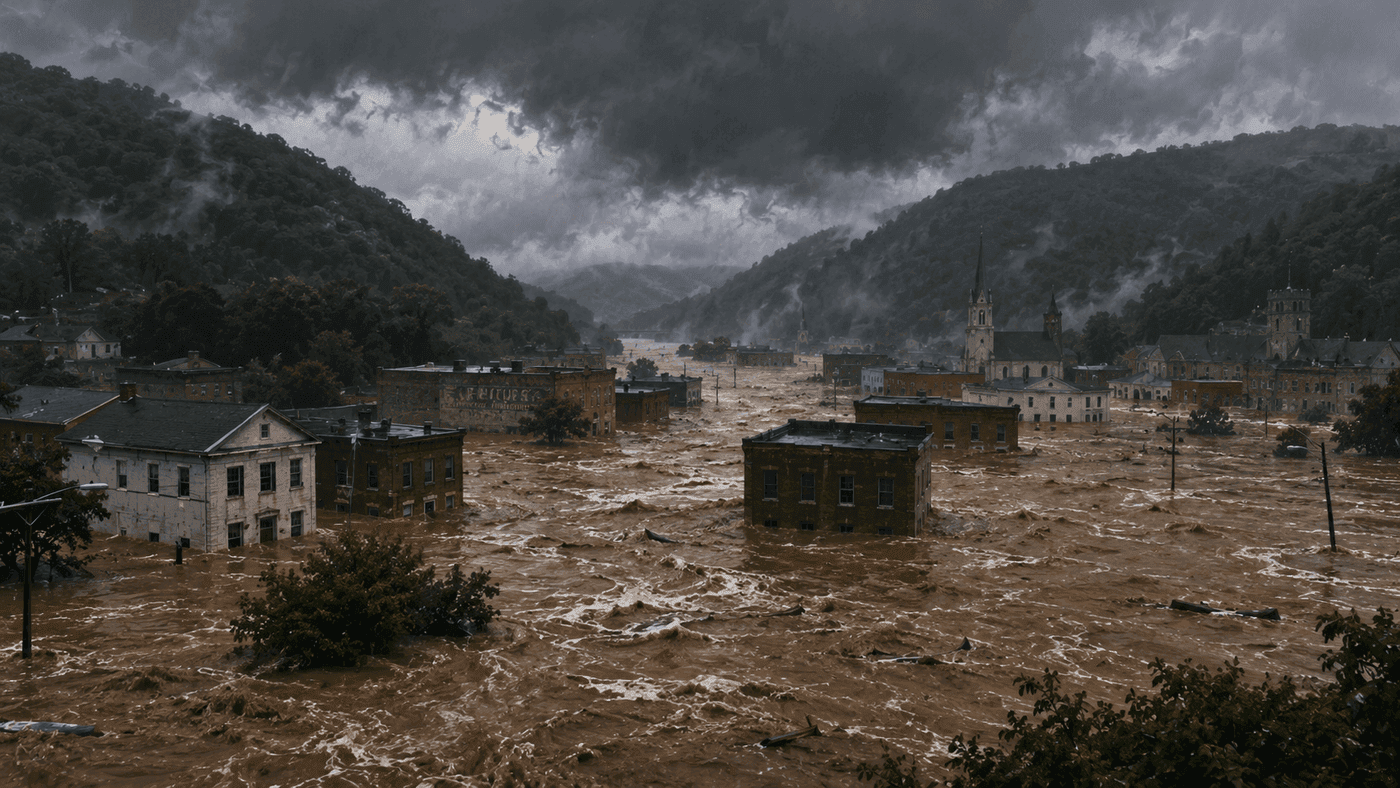
July 20: One Small Step, One Red Planet, and a Valley Underwater Again
July 20 carries more weight than almost any other date on the calendar. In 1969, a human being walked on the surface of another world for the first time, fulfilling a promise made eight years earlier and watched by roughly a fifth of the planet's population in real time. Seven years later to the day, NASA's Viking 1 became the first American spacecraft to land successfully on Mars and transmit images home, extending humanity's reach to a second world in a single decade. And in 1977, in the valley town of Johnstown, Pennsylvania — a place that had already suffered the deadliest flood in American history nearly a century earlier — the Laurel Run Dam failed during a violent storm and the water came again, killing 84 people who had believed, reasonably, that the worst had already happened to their town. Three July twentieths. Two reaching for the stars, one reminding the world how little control it actually has.
One Small Step
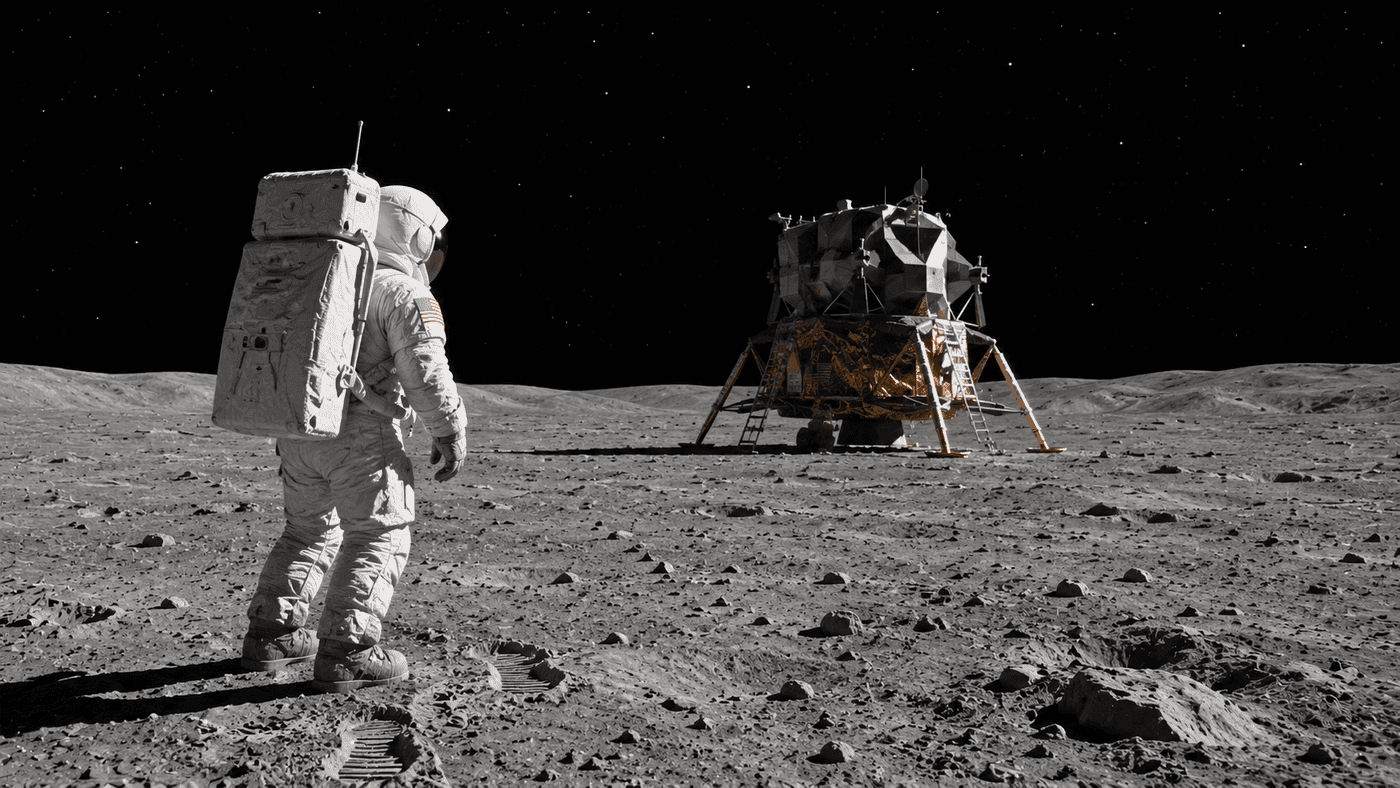
On July 20, 1969, at 10:56 p.m. Eastern time, astronaut Neil Armstrong descended the ladder of the lunar module Eagle and became the first human being to set foot on the surface of the moon, declaring to an estimated 600 million people watching on television around the world: "That's one small step for man, one giant leap for mankind." Armstrong was joined nineteen minutes later by Buzz Aldrin, while command module pilot Michael Collins orbited overhead alone — famously the most isolated human being in existence at that moment, passing behind the far side of the moon and losing all radio contact with both his crewmates and Earth. Armstrong and Aldrin spent roughly two and a half hours on the lunar surface, collecting 47 pounds of rock and soil samples, planting an American flag, and deploying scientific instruments before returning to the module for the journey home.
The moon landing fulfilled a commitment President Kennedy had made before Congress in 1961, when the United States trailed the Soviet Union badly in the space race and the goal of a crewed lunar landing within the decade seemed, to many engineers at the time, close to impossible. The Apollo program that achieved it cost an estimated $25 billion — roughly $150 billion in today's dollars — and employed nearly 400,000 people at its peak across NASA and its contractors. Apollo 11 was followed by five more successful crewed lunar landings through 1972, after which the program ended, leaving twelve men who have walked on the moon and none since. The moon landing remains, by most measures, the most widely regarded singular achievement in the history of human exploration — a moment when the species demonstrably extended its physical reach beyond the planet that had produced it.
The Red Planet
On July 20, 1976 — exactly seven years after Apollo 11's lunar landing — NASA's Viking 1 spacecraft touched down successfully on the surface of Mars and transmitted the first clear images ever taken from the Martian surface back to Earth. The mission's landing site, Chryse Planitia, was selected after extensive analysis of orbital photography intended to identify terrain flat and stable enough for a safe touchdown, a process complicated by the limited resolution of available imagery and the genuine uncertainty about Martian surface conditions. Viking 1 had launched nearly a year earlier, in August 1975, and had spent months in orbit around Mars before the lander separated from the orbiter and descended to the surface — a far more delicate operation than the Apollo landings, conducted entirely by automated systems with no human pilot aboard and a radio delay too long to allow real-time control from Earth.
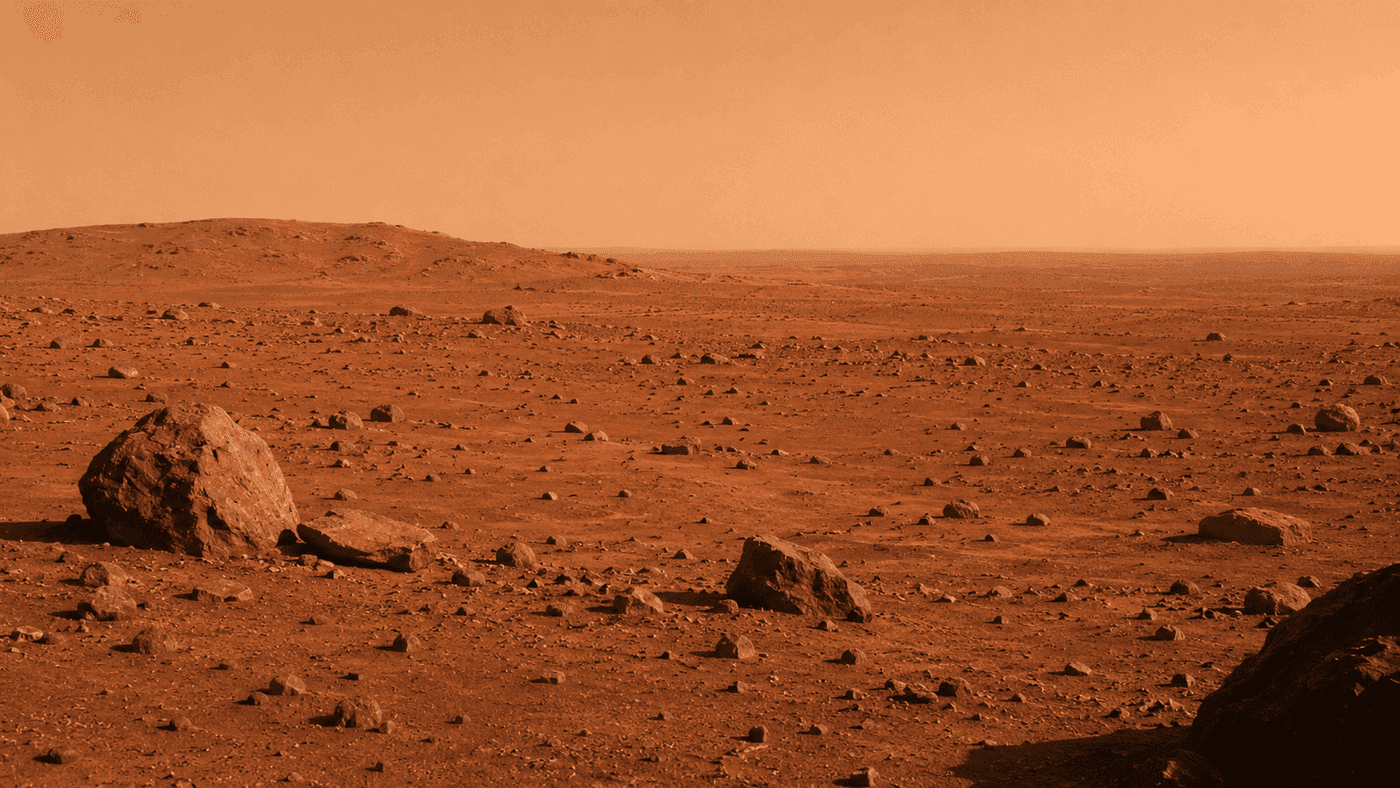
Viking 1 operated on the Martian surface for more than six years, far exceeding its planned 90-day mission, conducting soil analysis, recording weather data, and capturing thousands of images of the Martian landscape — a rust-colored, rock-strewn plain beneath a pale butterscotch sky that no human eye had ever directly observed. Its sister craft, Viking 2, landed six weeks later at a separate site. Together, the two missions represented the first sustained American presence on the surface of another planet, and their data — including inconclusive but tantalizing results from experiments designed to detect microbial life in Martian soil — shaped the direction of Mars exploration for the half century that followed, from Pathfinder and Sojourner in 1997 through the Spirit, Opportunity, Curiosity, and Perseverance rovers. The landing on July 20, 1976, extended humanity's physical presence to a second world within a single decade of having reached its first.
Johnstown, Again
On July 20, 1977, intense thunderstorms dropped nearly a foot of rain on the hills above Johnstown, Pennsylvania, in a matter of hours, overwhelming the region's dams and waterways and causing the Laurel Run Dam, among several others, to fail catastrophically. Walls of water tore through the valley with little warning, submerging neighborhoods, sweeping away homes and vehicles, and killing 84 people. The flood struck a town whose very name had become synonymous with disaster nearly a century earlier: the Great Flood of 1889, caused by the catastrophic failure of the South Fork Dam, had killed more than 2,200 people and remains one of the deadliest disasters in American history. Johnstown had rebuilt, endured, and gone on to suffer a second major flood in 1936 before the events of July 1977 arrived to demonstrate, with brutal clarity, that the valley's vulnerability to water had never actually been resolved.
The 1977 flood prompted renewed scrutiny of dam safety standards and watershed management across Pennsylvania and the broader Appalachian region, contributing to a national reassessment of aging dam infrastructure that gained further urgency after subsequent failures elsewhere in the country in the years that followed. For Johnstown itself, the 1977 flood compounded decades of economic decline as the regional steel industry contracted, adding disaster recovery to a list of challenges the community was already struggling to address. The town has continued to commemorate both the 1889 and 1977 floods through museums and memorials, a community whose identity has been shaped, in significant part, by its repeated and devastating encounters with water it could not control. On the same date that had twice sent American spacecraft to new worlds, Johnstown was reminded that the oldest dangers — rain, gravity, failing infrastructure — had not gone anywhere at all.