July 16: A Flash in the Desert, a Plane Lost at Sea, a Garage in Bellevue
July 16 has witnessed humanity at its most destructive, its most vulnerable, and its most quietly ambitious. In 1945, in the predawn dark of the New Mexico desert, scientists detonated the first atomic weapon and watched a new and terrible capability enter the world. Fifty-four years later, a small plane carrying John F. Kennedy Jr. and two others vanished into the Atlantic, and a nation that had watched him grow up in public grieved a loss that felt, somehow, inevitable and impossible at once. And in 1995, a website launched from a garage in suburban Washington state with no fanfare at all, selling books to a tiny number of early internet users — the opening move of a company that would eventually reshape how the entire world buys things. Three July sixteenths. Three moments of transformation, each one unfolding at a completely different scale.
Trinity
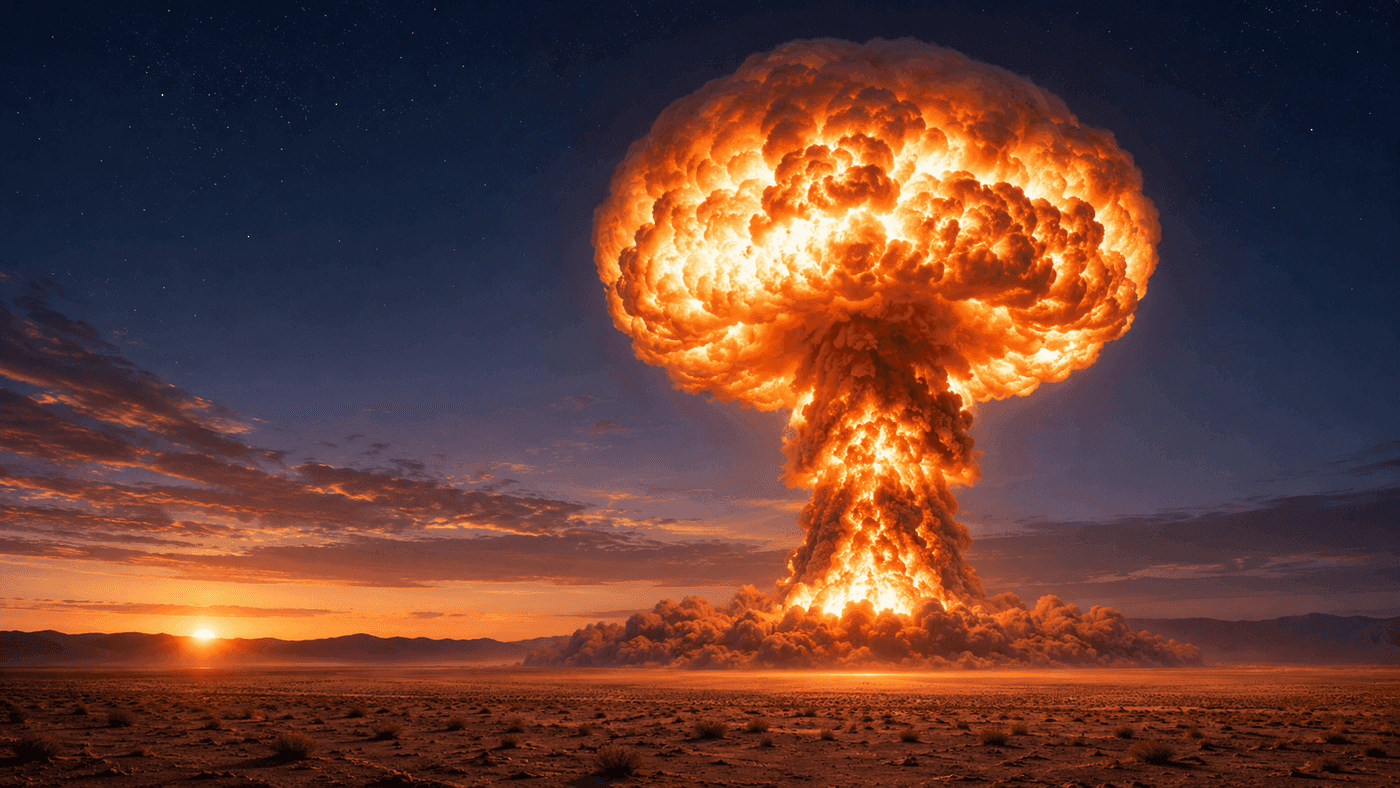
At 5:29 a.m. on July 16, 1945, in the remote Jornada del Muerto desert of southern New Mexico, scientists of the Manhattan Project detonated the world's first nuclear weapon in a test codenamed Trinity. The device, a plutonium implosion bomb of the same design that would be used against Nagasaki three weeks later, released energy equivalent to roughly 21,000 tons of TNT — vaporizing the steel tower it had been mounted on, fusing the desert sand below into a glassy green substance later named trinitite, and sending a mushroom cloud more than 40,000 feet into the predawn sky. The light from the explosion was visible from more than 150 miles away; residents as far as Albuquerque reported seeing the flash and feeling the shockwave. J. Robert Oppenheimer, the scientific director of the project, later recalled that a line from the Bhagavad Gita came to him in the moment: "Now I am become Death, the destroyer of worlds."
The successful test at Trinity confirmed that the implosion-design weapon would function as theorized, clearing the way for the atomic bombings of Hiroshima and Nagasaki in early August 1945 — attacks that killed more than 200,000 people and brought about Japan's surrender, ending the Second World War. The scientists who witnessed Trinity were divided in their reactions: relief that years of effort had succeeded, and a dawning horror at what they had built. Some, including Oppenheimer himself, would spend the rest of their lives wrestling publicly with the moral weight of having created a weapon capable of ending civilization. The Trinity test marked the opening of the nuclear age — an era of arms races, mutually assured destruction, and the permanent knowledge that humanity now possessed the technical capacity for its own annihilation. The site where it happened, now part of White Sands Missile Range, is opened to the public twice a year. The desert sand there still carries faint traces of radioactivity, eight decades on.
Lost Off Martha's Vineyard
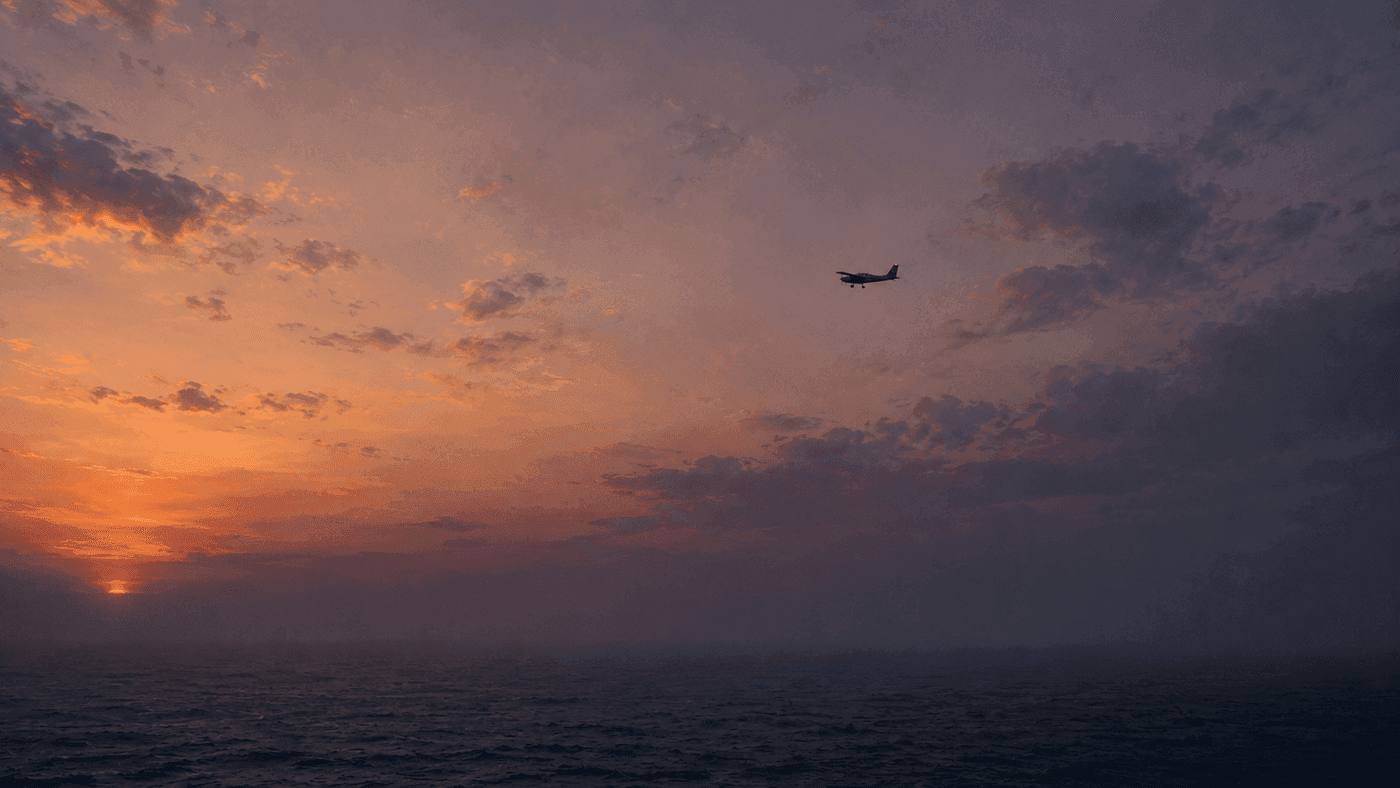
On the evening of July 16, 1999, a small Piper Saratoga aircraft piloted by John F. Kennedy Jr. disappeared from radar over the waters off Martha's Vineyard, Massachusetts, carrying Kennedy, his wife Carolyn Bessette Kennedy, and her sister Lauren Bessette. The plane had departed Fairfield, New Jersey, en route to Martha's Vineyard, where Kennedy planned to drop off Lauren before continuing to a family wedding. Visibility deteriorated into haze as the flight progressed, and investigators later concluded that Kennedy, a relatively inexperienced pilot who was not certified for instrument flying, had likely become spatially disoriented in the darkness over open water — a phenomenon in which a pilot loses the ability to distinguish up from down without visual reference points. The plane descended into the Atlantic at high speed. There were no survivors.
The crash and the five-day search that followed transfixed the nation in a manner that reflected Kennedy's singular place in American public life. He had become a figure of national affection as a toddler, photographed saluting his father's casket in 1963, and had grown up entirely within the glare of public attention — a magazine publisher, a sometime actor, a man whose every public appearance was treated as a referendum on whether he might one day seek the political office his family had so thoroughly defined. His death at thirty-eight, alongside his wife and sister-in-law, registered as the latest and in some ways the most poignant chapter in what the press had long called the Kennedy curse — a family narrative of extraordinary promise repeatedly interrupted by sudden, public tragedy. The bodies were recovered from the ocean floor days after the crash and cremated; their ashes were scattered at sea, off the coast where the plane had gone down.
A Bookstore in a Garage
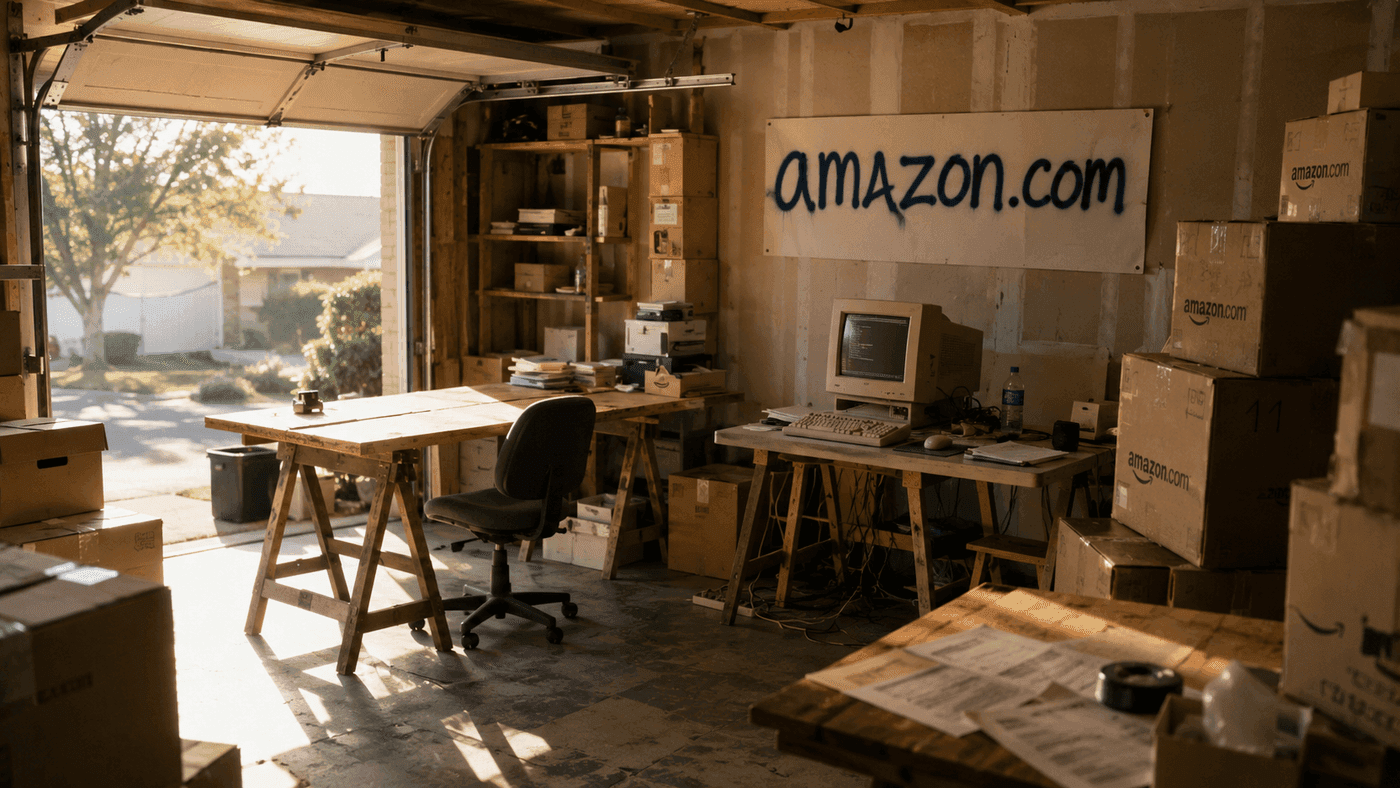
On July 16, 1995, Amazon.com went live as an online bookstore, operating out of a rented house with a garage in Bellevue, Washington, where founder Jeff Bezos and a handful of early employees had set up desks made from wooden doors and sawhorses. Bezos, who had left a comfortable Wall Street career to pursue the idea, had chosen books as his opening category for specific strategic reasons: there were more individual book titles in print than any other product category, no single retailer could possibly stock them all in physical stores, and an online catalog could offer a selection that no brick-and-mortar bookstore could match. The website's first month of operation generated $12,000 in sales nationwide and internationally — modest, almost invisible numbers that gave no indication of what the company would become.
The company that began in that Bellevue garage on July 16, 1995, has grown into one of the largest and most consequential corporations in the history of global commerce. Amazon expanded beyond books within a few years, eventually selling nearly every category of consumer product, building the cloud computing infrastructure that now powers a substantial portion of the internet through Amazon Web Services, and fundamentally altering the economics of retail in ways that have reshaped shopping malls, downtown commercial districts, and the logistics industry worldwide. Bezos became, at various points, the wealthiest person on earth. The company's labor practices, market dominance, and environmental footprint have made it a subject of intense ongoing scrutiny and regulatory attention. Whatever judgment history ultimately renders on Amazon's impact, the scale of the transformation traces back to a quiet July morning in 1995, when a website nobody had heard of began selling books out of a garage.