
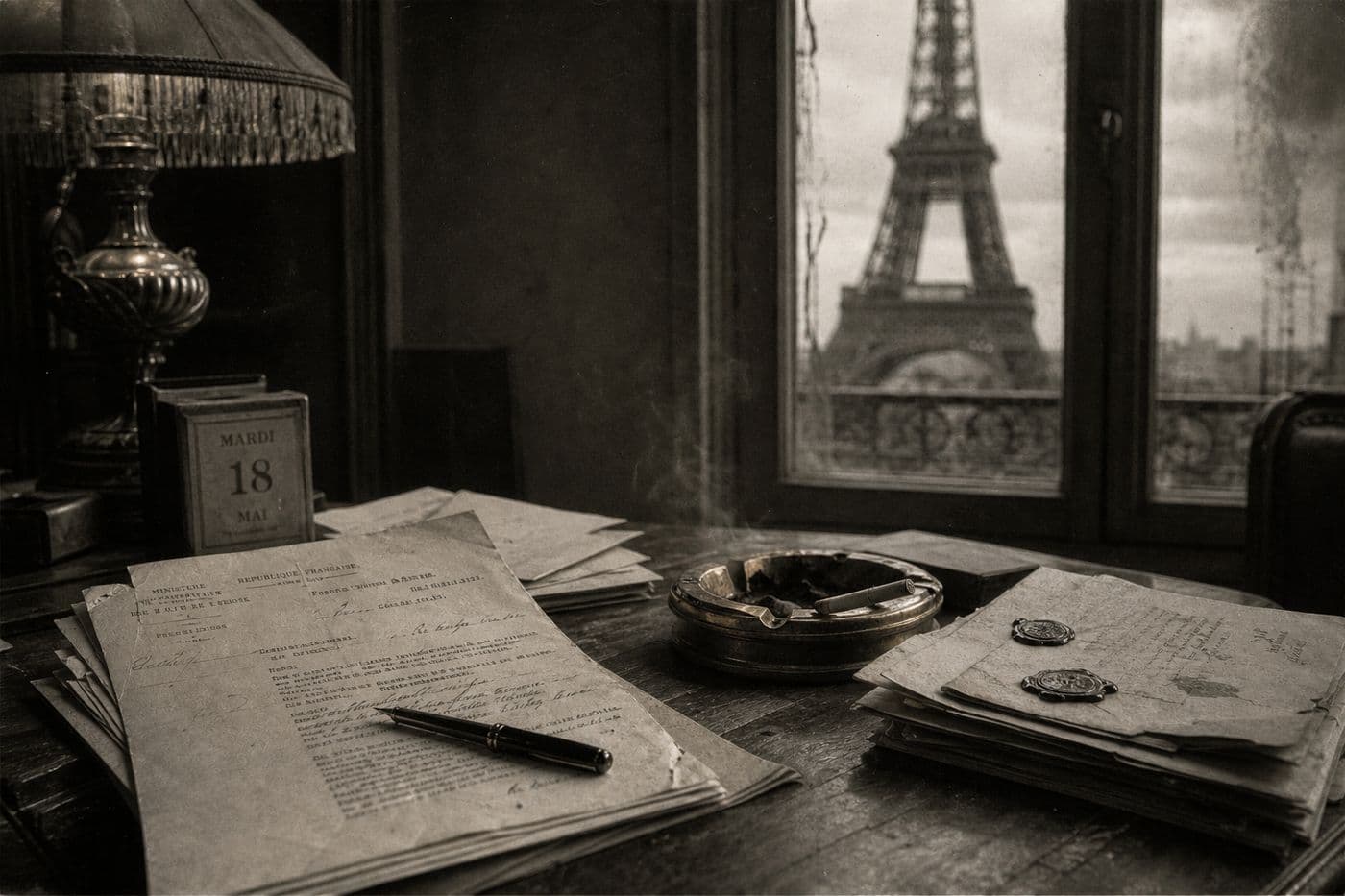
In 1925, the Eiffel Tower was rusting badly and Paris was quietly debating whether the aging structure was too costly to keep standing. Newspapers speculated it might be torn down for good.
A conman named Victor Lustig read those rumors and saw an opportunity nobody else in Paris had thought to chase. He decided the tower's supposed demolition could become his next payday.
Lustig forged official government stationery, posed as a deputy director from the Ministry of Posts, and quietly invited six scrap metal dealers to a private meeting at a luxury hotel.
He explained that Paris wanted the tower dismantled and sold for scrap, but the plan had to stay secret to avoid a public backlash. He then requested sealed, competitive bids for the job.
One dealer, André Poisson, was so eager to win the contract that he secretly paid Lustig an extra bribe, fully convinced he had landed a legitimate piece of French history.
Lustig disappeared with the money before Poisson ever discovered the tower had never actually been for sale. Humiliated, Poisson never reported the scam to police.
Emboldened by getting away clean, Lustig returned to Paris months later and tried the identical con on a fresh set of dealers, proving his nerve was as unreal as the scheme itself.