
1 What It Means
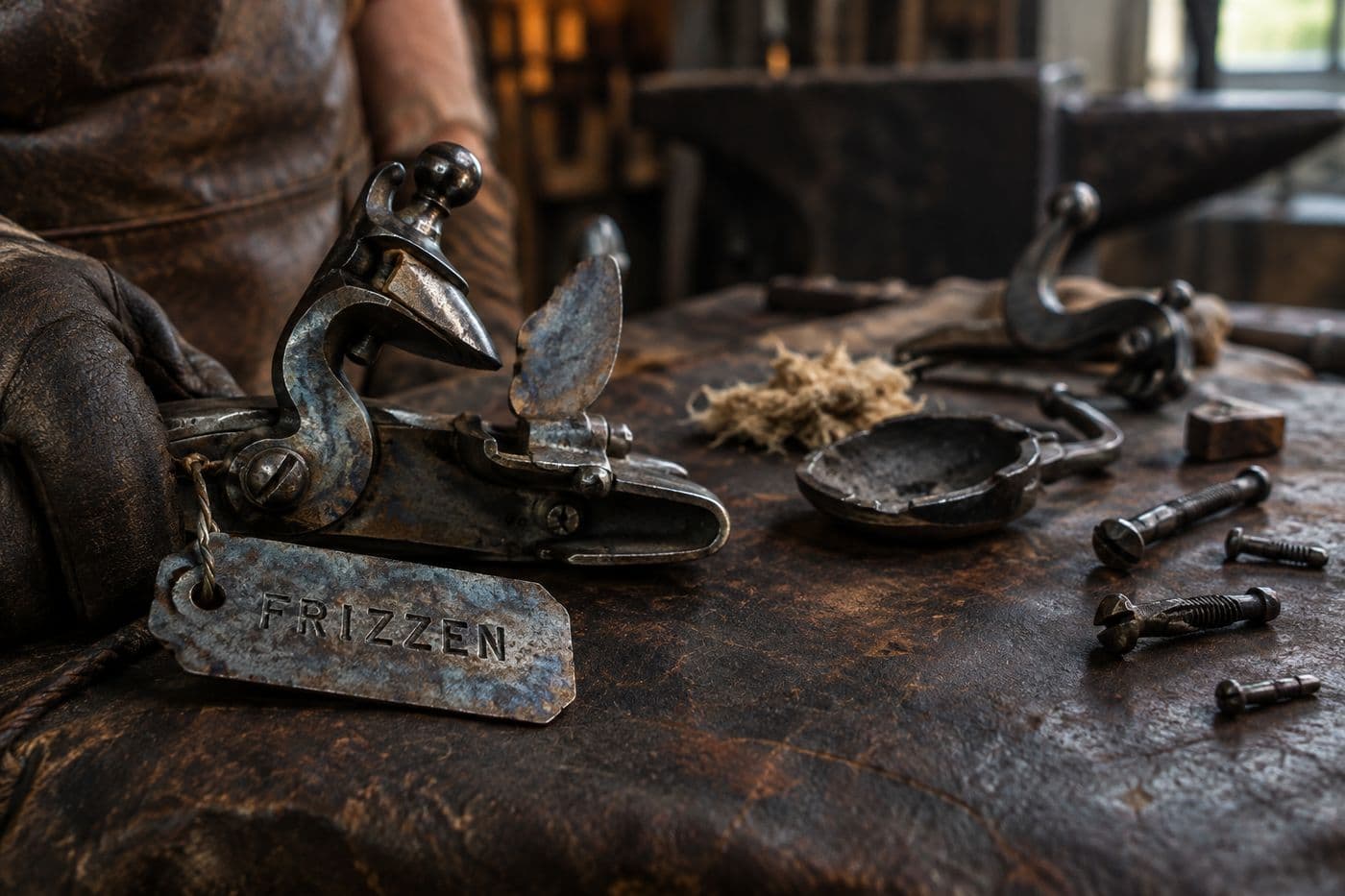
The hinged steel plate on a flintlock firearm that the flint strikes to throw sparks into the powder pan and fire the weapon.
2 Caught in the Wild
Check the frizzen for pitting before you touch off a load; a scarred face throws a weak spark and a hangfire.
Illustrative usage · Undated
3 Where It Comes From
Frizzen traces to the flintlock's rise in the 1600s, though its exact linguistic root is murky, possibly a corruption of an English dialect word for the steel plate itself. It never spread past the trade because the flintlock's working life was short. By the mid-1800s, percussion caps replaced flint entirely, and the whole vocabulary of flints, frizzens, and priming pans went with them into the narrow world of gunsmiths, historical armorers, and hobbyist shooters, where it survives today as pure trade shorthand nobody outside needed.
4 The World Behind the Word
A flintlock fires through a small chain reaction. Pulling the trigger releases a spring-loaded cock holding a flint, which snaps forward and strikes the frizzen, a curved steel plate mounted on a hinge above the priming pan. The strike does two things at once: it scrapes hot steel shavings off the frizzen's face, and the impact knocks the frizzen open, exposing the pan of fine gunpowder beneath. Those sparks fall into the pan, the powder flashes, and the flash travels through a small touch hole to ignite the main charge in the barrel. Gunsmiths case-harden the frizzen's face specifically so it wears evenly and keeps throwing hot sparks strike after strike, because a soft or pitted frizzen means misfires.
5 Use It Yourself
This one stays firmly inside its lane. Reach for it if you shoot black powder, reenact, or restore antique arms, where it signals real fluency. Outside that circle it will just get you a blank stare, so save it for the one friend who owns a musket rather than the group chat planning brunch.
Try it out loud
He swapped in a new frizzen after the old one lost its spark on every third shot.
🗝️The Deep Cut File
The frizzen's case-hardened face was such a point of pride that 18th-century gunsmiths sometimes signed or stamped their initials directly onto it, treating the part as a small advertisement for their skill. Modern flintlock competitors still debate frizzen steel hardness the way sailors argue rope fiber, and a poorly hardened replacement part is considered a mark of a cheap reproduction rather than an authentic build.