
1 What It Means
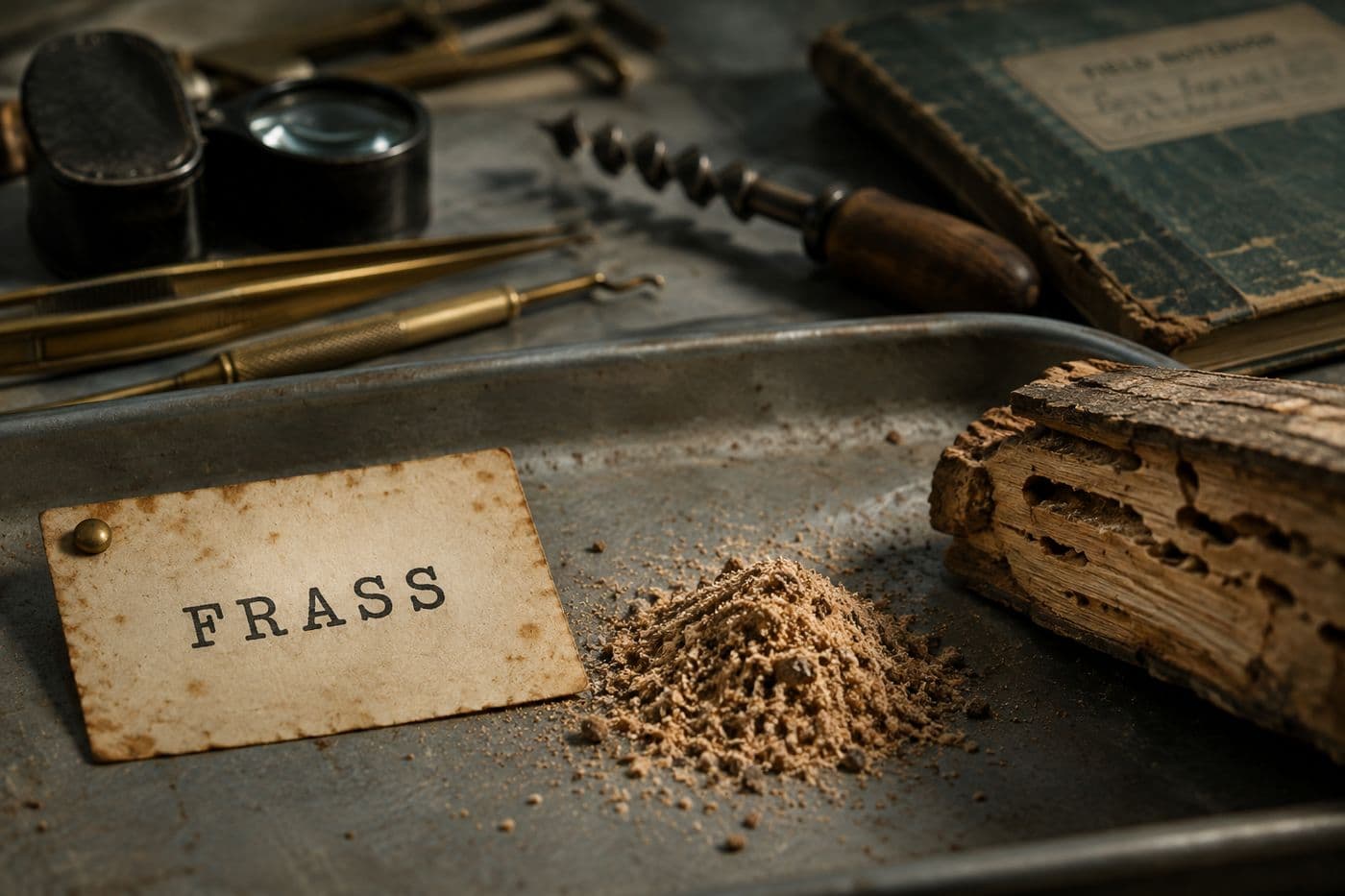
The fine powdery excrement and wood debris left behind by wood-boring insect larvae as they tunnel through timber.
2 Caught in the Wild
Piles of fine frass beneath the joist confirmed active powderpost beetle infestation rather than old, inactive damage.
Illustrative usage · Undated
3 Where It Comes From
Frass comes from the German Fraß, meaning eating or food consumed, itself rooted in fressen, to devour. English entomologists borrowed it in the early 1800s because they needed a word that meant specifically insect leavings from feeding and tunneling, not general debris. It never migrated into everyday English because homeowners who find the stuff just call it sawdust or dust and move on. Only the people whose job is to tell active infestation from old damage needed a word precise enough to separate frass, which signals a living insect still chewing, from ordinary wood dust, which signals nothing at all.
4 The World Behind the Word
Pest inspectors and entomologists rely on frass because it tells them something sawdust cannot: whether an infestation is current. Powderpost beetles, carpenter ants, and certain moths tunnel through wood or stored grain, and as larvae chew their way through, they push out a mix of digested wood fiber and droppings behind them. Fresh frass is fine, light-colored, and often forms small mounds or trails beneath the exit holes. Old, dry, compacted frass with no fresh material on top usually means the insects have moved on or died. An inspector who cannot tell fresh frass from stale is telling a homeowner to treat a house that has already stopped being a problem, or worse, missing one that is still actively being eaten.
5 Use It Yourself
Drop this the next time someone asks what that weird dust trail near the baseboard is, or during a home inspection when the contractor points at a beam and says nothing helpful. It sounds gross enough to be funny but it is not an insult or slang, just the correct word, so you can use it with total confidence at a dinner party.
Try it out loud
The inspector found fresh frass under the porch beam and said the beetles were still active.
🗝️The Deep Cut File
The word frass has a quiet second life in botany and mycology, where it can describe similar granular leavings from certain fungi and plant pests, though entomology remains its home turf. Structural engineers who inspect old barns and historic buildings learn to read frass piles almost like tea leaves, judging moisture content and color to estimate how recently the wood was being actively eaten. Some termite inspection contracts in the United States specifically define frass evidence as grounds for a active infestation finding, which means the word has quietly ended up written into real legal and insurance paperwork, not just field guides.