
logo

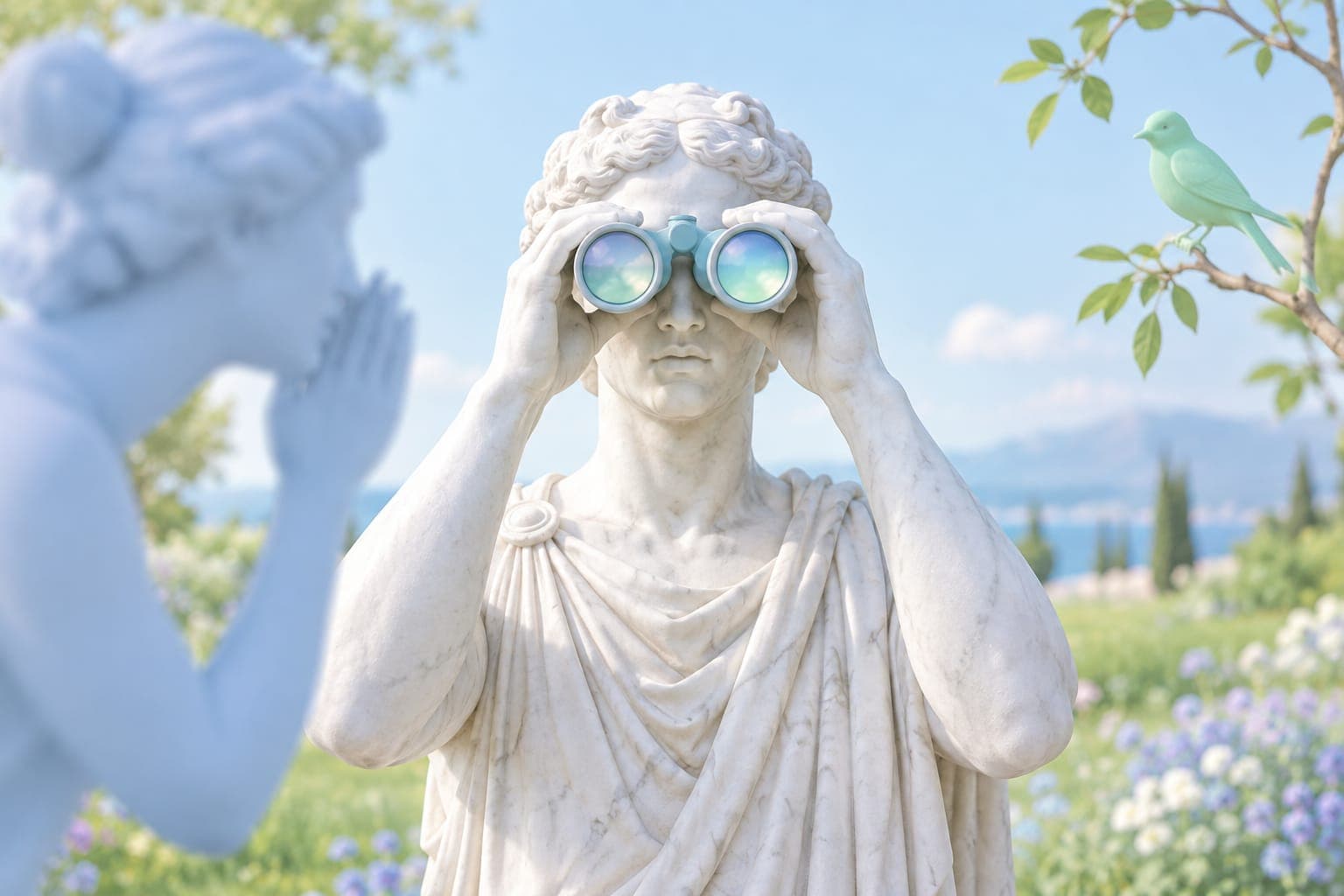
Dear Socrates: My Husband Narrates My Birdwatching Walks

Some questions are worth asking twice, especially before sunrise.
Ancient Wisdom, Modern Problem

My Husband Narrates My Birdwatching Walks

Dear Socrates,

I retired in March and finally took up birdwatching, binoculars and all. The problem is my husband insists on coming along and narrating everything in a loud whisper, including guesses about birds he cannot identify, like the great flappy one or the loud orange guy. I have seen exactly one actual bird in six weeks. Should I tell him to stay home, Socrates?

— Flustered in Flagstaff

Socrates Replies

Socrates, Athenian philosopher known through Plato's dialogues (c. 470 to 399 BC)

Dear Flustered in Flagstaff,

Tell me, friend, what did you actually want from these mornings in the field. Was it the bird, or was it the quiet? I ask because I suspect you have been chasing one thing while blaming your husband for ruining another. A man who loves you enough to rise before dawn is not your enemy. But he may be answering a question you never asked him.

You say you want birds, but perhaps what you want is a version of yourself who notices things, who is patient, who is not narrated at. That is worth examining honestly rather than resenting quietly. As I said when questioned about how I lived, the unexamined life is not worth living, and a hobby adopted without examining your own wishes will always feel sabotaged by someone else.

So examine it. Ask yourself plainly: do you want solitude, or do you want company that behaves differently. If solitude, say so directly and go alone some mornings. If company, teach him the quiet whisper is optional, that silence itself is part of the watching. Do not let an unspoken wish curdle into irritation at a man who only wanted to be included.

This week, go once alone and once together, and notice which walk you preferred and why. Then tell him plainly what you discovered. Clarity, not complaint, is the better bird to catch.

— Socrates

In Socrates's Own Words

“The unexamined life is not worth living.”

— Socrates, Plato's Apology

At his trial, facing a death sentence, Socrates explained why he could not stop questioning himself and others even to save his life. Examining one's beliefs and desires, he argued, was not optional decoration but the whole point of being human. The line fits any modern frustration rooted in wanting one thing while chasing another without ever asking why.

Who Was Socrates?

Socrates left no writings of his own; we know him through his student Plato, who recorded his trial and final days in dialogues like the Apology, Crito, and Phaedo. He spent his life in Athens questioning citizens about virtue and knowledge, a habit that made him famous and eventually got him condemned to death by hemlock in 399 BC. His method of relentless questioning remains the foundation of how philosophy is taught today.

Try This Today

Before your next solo errand, hobby, or walk, ask yourself one honest question: what do I actually want from this half hour. Write the answer down in five words or less. Then notice whether your actions this week match that answer, or whether you have been quietly chasing something else entirely.

Your Turn

What is one activity you do regularly without ever asking yourself what you truly hope to get from it?

PERSONAL GROWTH
SELF-KNOWLEDGE
CLARITY

Letters are composites written by the Lifted Words editors. Replies are written in the spirit of each thinker; the quote in the blue box is their own.