
1 What It Means
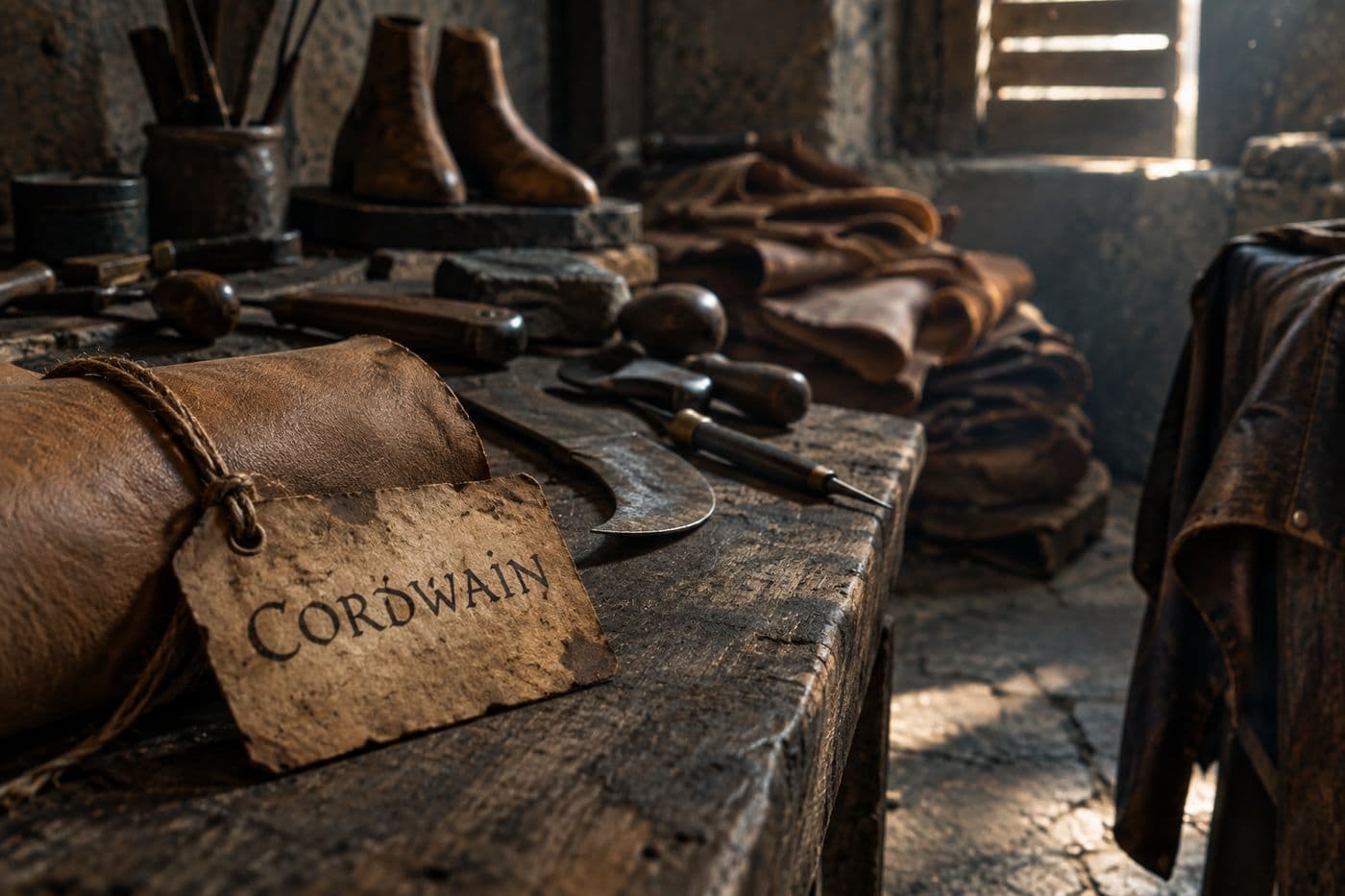
A fine, soft leather made from goatskin, originally imported from Cordoba, Spain, and prized by shoemakers for quality footwear.
2 Caught in the Wild
The cordwainers of the city were bound by charter to use only true cordwain in their best boots, not sheepskin passed off as goat.
Illustrative usage · Undated
3 Where It Comes From
Cordwain traces to Cordoba, Spain, a center of leatherworking under Moorish rule where goatskin was tanned and dyed with techniques unmatched elsewhere in medieval Europe. English traders imported the material and the name together by the 1300s. The word gave rise to cordwainer, the proper term for a shoemaker who worked in new leather, as opposed to a cobbler who only repaired old shoes. Once industrial tanning erased the distinction between goatskin and other leathers, and shoemaking moved into factories, the material stopped needing its own name. The word survived only where guild tradition kept old titles alive, long after ordinary buyers stopped caring where their leather came from.
4 The World Behind the Word
Medieval shoemaking split sharply between two trades that modern English has flattened into one. Cordwainers made new shoes from new leather and held higher guild status, while cobblers repaired old shoes and were legally barred in some cities from touching new material at all. Cordwain leather mattered because goatskin took dye and shaping better than cowhide, letting cordwainers produce the soft, close-fitting boots that separated a wealthy client from someone in stiff, ill-fitting cowhide shoes. Guilds enforced strict rules about which leather could be called cordwain, since cheaper substitutes were a constant temptation. The distinction shaped labor law, apprenticeship rules, and even where you were allowed to set up your stall in a market town.
5 Use It Yourself
You will not order cordwain at a shoe repair counter, but the word is a fun one to drop if you ever visit a historical guild hall or read about medieval trade law. It also explains why English has both cobbler and cordwainer as surnames, one term for mending, one for making, a distinction most people carrying those last names have long forgotten.
Try it out loud
The museum plaque explained that the duke's boots were made from true cordwain, not the cheaper leather nobles complained about.
🗝️The Deep Cut File
The word cordwainer is why several English and French surnames like Cordwainer, Cordonnier, and even some versions of Curtin trace back to shoemaking ancestors. London still has a Cordwainers' Company, one of the ancient livery companies, founded by 1272, which continues today as a charitable and ceremonial body long after its members stopped touching leather for a living. The distinction between cordwainer and cobbler was once serious enough that cobblers could be fined or prosecuted for using new leather, a boundary that protected the higher guild's monopoly on quality footwear for centuries.