
The Trial That Could Change the Internet
Today in federal court in Oakland, California, U.S. District Judge Yvonne Gonzalez Rogers begins the process of selecting eight jurors for a trial that has been building for years and that the technology industry has been dreading since the first lawsuits were filed. The case pits Meta — the parent company of Facebook, Instagram, and WhatsApp — against a bipartisan coalition of 29 state attorneys general who allege the company "harnessed powerful and unprecedented technologies to entice, engage, and ultimately ensnare youth and teens," deliberately engineering its platforms to be addictive, targeting children in violation of federal privacy law, and lying to the public about what it knew. Opening statements are scheduled for August 18. The trial is expected to last seven weeks. Mark Zuckerberg is expected to testify. This is not the first social media addiction trial — a Los Angeles jury found Meta and Google liable for $6 million in damages in March — but it is by far the largest, the most consequential, and the one whose verdict will ripple across every platform, every feed, and every teenager's phone in America.
From Frances Haugen's Documents to a Federal Courtroom
The legal assault on Meta's treatment of young users has its origins in October 2021, when a former Facebook product manager named Frances Haugen testified before the U.S. Senate, having provided thousands of internal documents — quickly dubbed the "Facebook Files" — to The Wall Street Journal and federal regulators. Those documents revealed, among other things, that Facebook's own internal research had found Instagram to be harmful to a significant proportion of teenage girls, particularly around body image and mental health, and that the company had repeatedly chosen engagement optimization over user wellbeing when the two came into conflict. The testimony produced the kind of bipartisan congressional outrage that is genuinely rare in the current political environment: senators from both parties competed to express their alarm and demand action. Haugen's documents became the evidentiary foundation for litigation that eventually consolidated into the multidistrict proceeding now beginning in Oakland — more than 3,000 cases filed by states, municipalities, school districts, and individual families, all alleging variations of the same core claim: that Meta knew its platforms were harming children, chose not to adequately address the harm, and is legally liable for the consequences. The March verdict in Los Angeles — $6 million in damages, a jury that specifically cited Zuckerberg's inconsistent testimony as a factor — was the first crack in what Meta's lawyers had argued was an airtight legal defense. Today's trial is the second. The stakes are categorically larger.
The specific allegations in today's case are threefold. First, that Meta deliberately designed features — infinite scroll, push notifications, algorithmic amplification of emotionally provocative content, the variable-reward mechanics of likes and comments — to maximize engagement time in ways that constitute addiction, particularly for the developing brains of adolescents. Second, that Meta illegally collected and used data from children under 13 without verifiable parental consent, in violation of the Children's Online Privacy Protection Act — a 1998 federal law that has been the primary legal framework for children's online privacy for more than 25 years. Third, that Meta misled the public about what its internal research showed regarding harms to young users. The defense is expected to argue that the causal link between platform design and mental health harm has not been established with scientific certainty, that social media reflects rather than causes the social pressures adolescents face, and that existing federal law — specifically Section 230 of the Communications Decency Act, which grants platforms broad immunity for content their users post — bars many of the plaintiffs' claims. The Section 230 question may ultimately be the most consequential legal issue in the trial: if Judge Rogers rules that it does not protect the specific design choices being challenged, it would open the entire social media industry to a new category of liability that Section 230 has previously insulated.
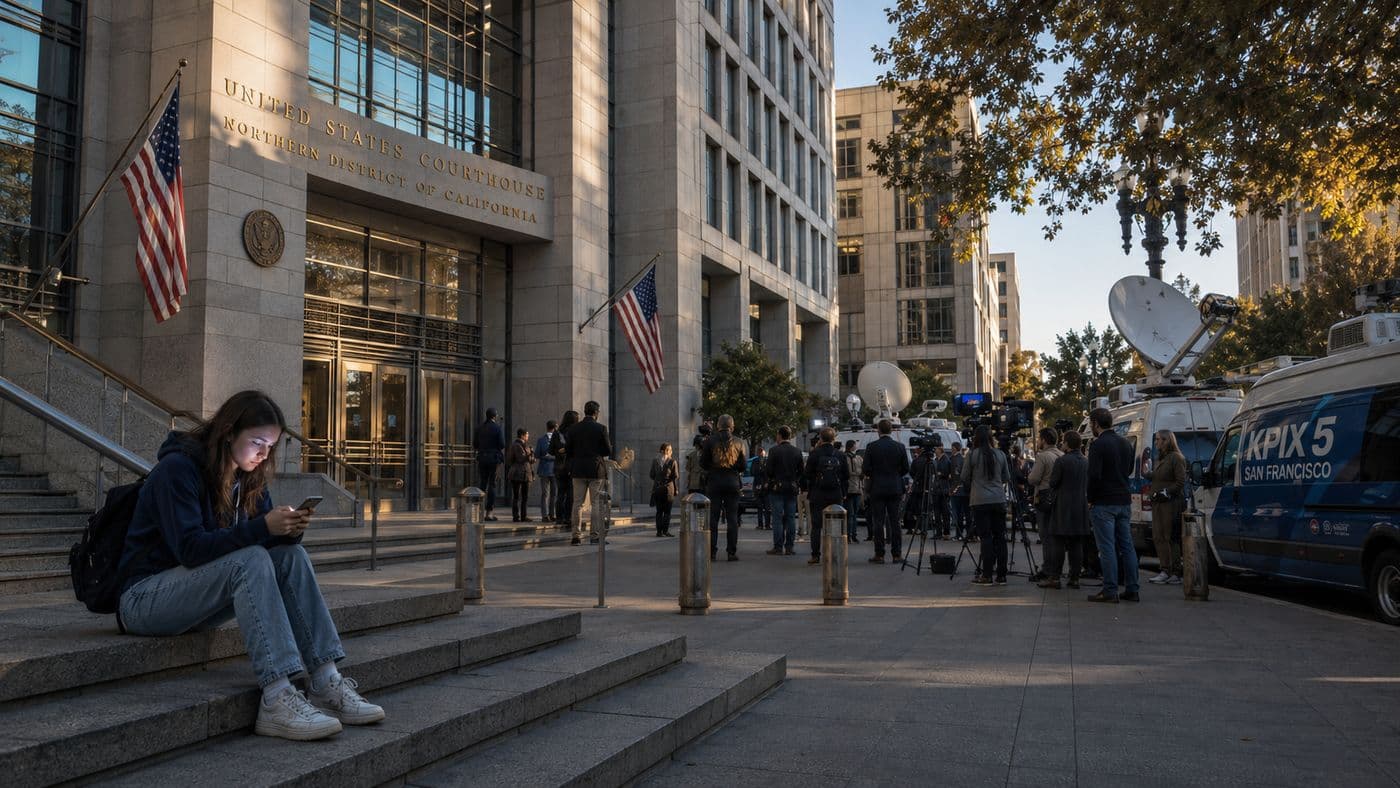
Judge Gonzalez Rogers — a Barack Obama appointee who has previously ruled against Apple in an antitrust case — told the jury pool on Wednesday that "we all have bias; the question is do you know what you have and can you set it aside." She asked potential jurors whether they owned Meta stock and how often they used Facebook or Instagram. An overwhelming majority of Americans — 85 percent, according to a Reuters/Ipsos poll taken last week — believe social media can be addictive for children. Sixty-one percent believe social media companies need firmer oversight. Whether those beliefs constitute bias that disqualifies a juror, or simply reflect the state of public knowledge about the issue being tried, is itself a question the selection process will have to resolve. The trial beginning in Oakland today is not, technically, the trial that will determine Meta's ultimate fate across its 3,000-plus pending cases. It is the test case — the first major jury verdict under the MDL framework that will establish what these cases are worth, what evidence moves juries, and whether the legal theories the states are advancing hold up under cross-examination by Meta's legal team. The internet that teenagers use today was built in the absence of that accountability. The trial beginning today is the first serious attempt to build it.