
The Strait That Refuses to Open
On Saturday, Iran's Supreme National Security Council issued a blunt statement: the Strait of Hormuz would not reopen until the United States "corrects its behavior." The list of required corrections was specific and sweeping — the U.S. must lift its naval blockade of Iranian ports, permanently end the war, withdraw its military from the region, lift all sanctions, and "unconditionally" release frozen Iranian assets, estimated at $7 billion, while also compensating Iran for the damage its infrastructure has sustained in more than five months of conflict. On Sunday, Iranian Foreign Minister Abbas Araghchi made the diplomatic situation plain: "There are no ongoing negotiations between Tehran and Washington," he said. "The intermediaries are still making efforts to find ways to resume negotiations." The 60-day window for a permanent settlement established by the June 15 memorandum of understanding — the agreement that prompted Trump to declare "ships of the world, start your engines" — expires in approximately one week. It has produced no deal. The strait, which carried roughly 20 percent of the world's oil before the war, remains effectively closed for the 167th consecutive day.
How We Got Here — and What the Calendar Now Demands
The arc of this conflict since February 28 has been a series of military escalations, partial agreements, collapsed ceasefires, and resumed fighting — a pattern that has made the global oil market one of the most volatile in modern history. The war began with nearly 900 American and Israeli strikes in the first 12 hours of Operation Epic Fury, targeting Iranian nuclear facilities, military infrastructure, and regime leadership. Iran responded with missile and drone attacks across the region and effectively closed the Strait of Hormuz to commercial traffic. A two-week ceasefire in April briefly allowed some shipping through; it collapsed. The June 15 MOU, brokered through Pakistani intermediaries and announced triumphantly by Trump on Truth Social, established a 60-day window for deeper negotiations. By July 14, Trump had reinstated the naval blockade and ordered strikes on Iranian air defenses, declaring the United States "THE GUARDIAN OF THE HORMUZ STRAIT" and announcing a 20-percent toll on cargo transiting the waterway — a proposal that violated existing international law and drew condemnation from allies and adversaries alike. Since then: Oman has been mediating a separate navigation agreement with Iran that appeared close to completion this past week, until Saturday's hardline statement from the Supreme National Security Council effectively derailed it. A UAE vessel owned by ADNOC was struck by an Iranian missile on Saturday while transiting the strait — the fourteenth ADNOC vessel attacked since February. The Strait of Hormuz has now been effectively closed for longer than it was closed during the entire Tanker War of the 1980s.
The economic consequences have been accumulating for months in ways that are only now becoming fully visible. Brent crude oil prices, which spiked above $130 a barrel in the immediate aftermath of the February strikes, have settled into a volatile range between $95 and $110 — high enough to generate significant inflationary pressure across every economy that imports oil, which is most of them. Asian nations that depend heavily on Persian Gulf crude — Japan, South Korea, China, India — have spent months accelerating long-term diversification plans that, if sustained, could permanently reduce Persian Gulf producers' market share regardless of how this conflict resolves. Saudi Arabia, whose oil exports must pass through the Strait of Hormuz, has lost an estimated $200 million per day in revenue since February — a figure that has put extraordinary pressure on the Kingdom's fiscal position and strained the U.S.-Saudi relationship that has been the foundation of Persian Gulf security since Franklin Roosevelt met Ibn Saud aboard the USS Quincy in 1945. The Tanker War of 1984–1988, in which Iraq and Iran attacked each other's shipping in the Persian Gulf and briefly disrupted oil flows, is the closest historical parallel — and it lasted four years before resolving, with the United States ultimately intervening militarily on the side of Kuwait to protect Kuwaiti tankers reflagged as American vessels. That conflict never closed the strait entirely. This one has.
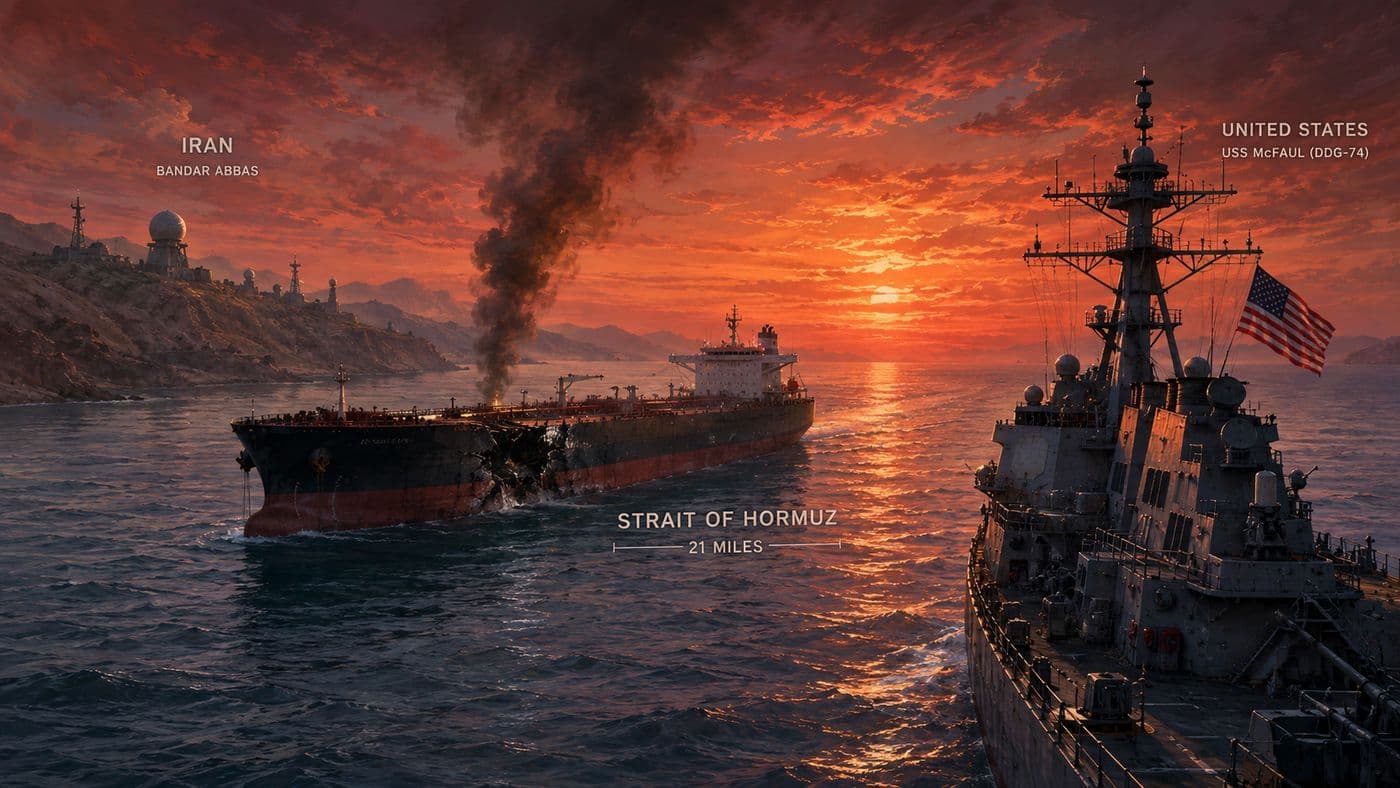
Trump called off threatened heavy bombing of Iran in early August to allow negotiations to continue — a signal that the administration still prefers a diplomatic resolution to further military escalation. But the gap between what Iran is demanding and what Washington has shown any willingness to offer remains enormous. Iran wants the war declared permanently over, sanctions lifted, assets released, and compensation paid — all before the first ship passes through the strait. The U.S. has offered a phased approach in which some shipping resumes while negotiations continue on the larger political settlement. Saturday's statement from the Supreme National Security Council suggests that the faction within Iranian leadership that prefers maximum pressure over incremental concessions has, at least for now, gained the upper hand. The intermediaries — Oman, Pakistan, Qatar — are still working. The clock on the June 15 MOU is running out. The 21-mile passage between Iran and Oman that carries a fifth of the world's oil has been closed longer than any stretch in its modern history. What opens it, and when, remains the most consequential unanswered question in the global economy.