
A Day for Peace, in a Year Without Much of It
Today, September 21, marks the United Nations' International Day of Peace — a day devoted, at least in principle, to a global ceasefire and 24 hours of non-violence. The observance has been part of the UN calendar since the General Assembly established it in 1981, later fixing it to this date in 2001. This year's theme, "Invest in Peace: For Everyone, Everywhere, Every Day," arrives at a moment that makes the day's aspiration feel especially distant: an active U.S.-Iran war, continued fighting in Ukraine, and unrest disrupting shipping across the Red Sea, all unfolding simultaneously as world leaders gather in New York for the UN General Assembly's high-level session.
A Bell Ringing Over a Loud World
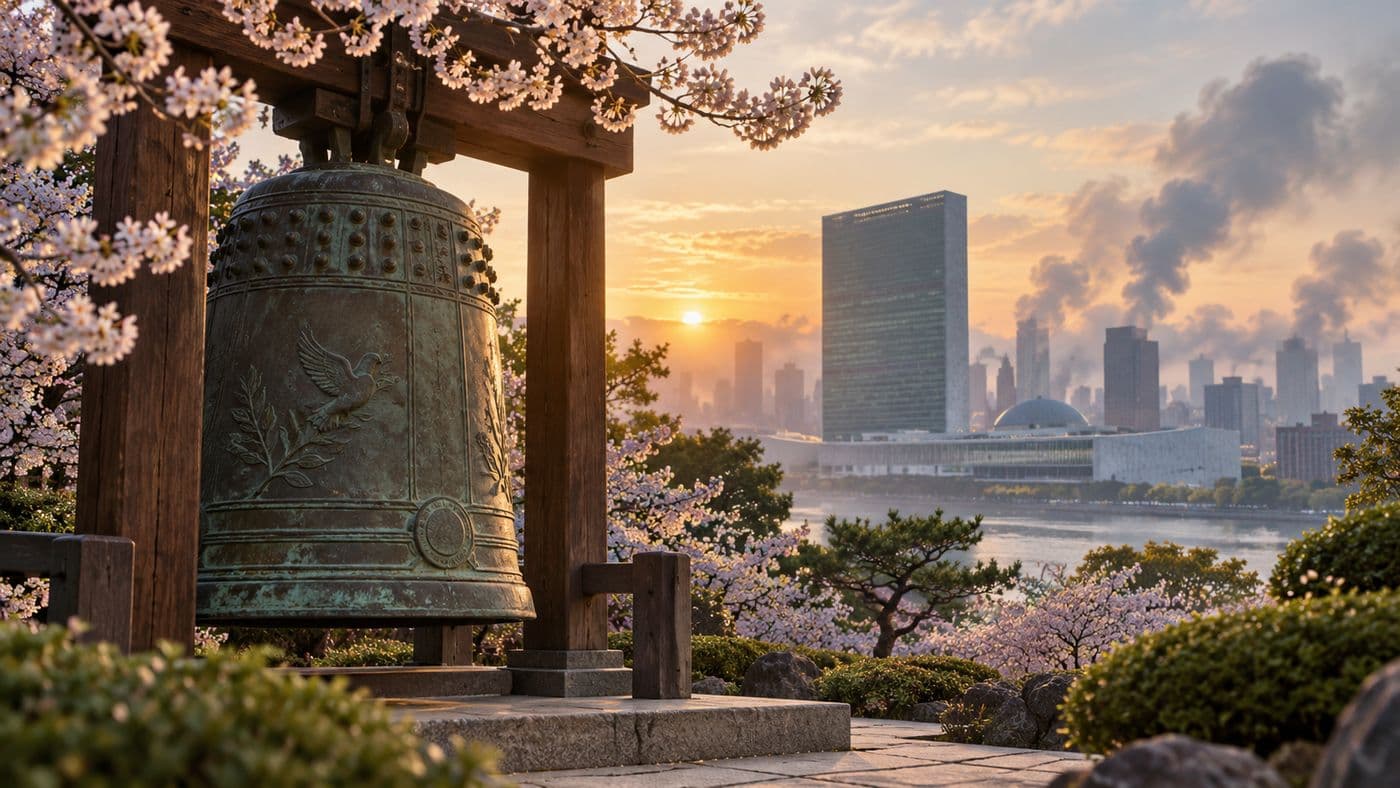
Traditionally, the day opens with the ringing of the UN's Peace Bell at its New York headquarters — a bell cast from coins donated by children in 60 countries, rung each year as a physical reminder that peace, as UN organizers put it, is built collectively rather than declared by any single nation. In his message marking the day, Secretary-General António Guterres described a world facing "staggering volatility," where conflicts are "growing in scale and complexity, spilling across borders and inflicting enormous suffering," even as he pointed to volunteers, peacekeepers, and civil society leaders as evidence that ordinary people are still "building peace from the ground up." This year's theme deliberately shifts the day's focus away from grand diplomatic gestures and toward that everyday, local work — a recognition, in the UN's own framing, that with formal ceasefires proving elusive this year, peace may need to be built in smaller pieces.
The contrast between the day's aims and the world's actual state is difficult to ignore. Since late February, the U.S. and Iran have remained locked in open conflict, with strikes and counterstrikes disrupting global energy markets for months. Russia's war in Ukraine continues without resolution nearly four years after it began. And Houthi forces have repeatedly targeted shipping through the Red Sea and Bab al-Mandab Strait, threatening one of the world's most critical maritime trade routes. None of these conflicts are expected to pause today, ceasefire appeal or not — a reality the day's organizers have never pretended otherwise about. The International Day of Peace has always functioned less as an enforceable mandate than as an annual marker: a moment to measure, honestly, how far the world remains from the thing it's asking for.
Every year the International Day of Peace lands somewhere on the spectrum between hopeful and ironic, depending on the state of the world that September. This year tilts firmly toward the latter. But there's an argument, made implicitly by the day's very persistence since 1981, that the observance matters most precisely in years like this one — not because it changes anything by itself, but because it insists, once a year, that the world keep naming what it's failing to achieve. Whether that naming amounts to anything more than ceremony is, as always, up to what happens on every other day of the year.